Hi, I need a sanity check please.
Developed a pinhole leak in a watts etx-30 expansion tank, about a year old.
Contractor is coming back today to replace it. Googling the model, it appears this is a non-potable unit.
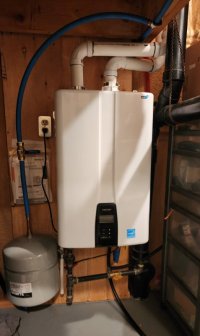
However, it's been installed on a branch of the cold water line that connects to the tankless heater (see photo). Upstream from that branch the same cold water line is feeding all the faucets in my home.
Does this seem right? Why would they use a non-potable unit at any point in my home? Worried that drinking water has been contaminated for the last year.
Thank you in advance.
Developed a pinhole leak in a watts etx-30 expansion tank, about a year old.
Contractor is coming back today to replace it. Googling the model, it appears this is a non-potable unit.
However, it's been installed on a branch of the cold water line that connects to the tankless heater (see photo). Upstream from that branch the same cold water line is feeding all the faucets in my home.
Does this seem right? Why would they use a non-potable unit at any point in my home? Worried that drinking water has been contaminated for the last year.
Thank you in advance.