Call A Real Plumber ! ! !:d
|
|
|
Hello I'm installing a utility sink in my basement. The plumbing in my apartment is fairly simple i think. The kitchen and downstairs bathroom share a wall and the upstairs bathroom is right above that one. In my basement directly below there is a cast iron drain pipe that goes from the ceiling straight down into the cement floor, most of it is 4" in diameter. The main hot and cold water shutoffs are on the celling a couple feet away.
My washing machine currently is located against the wall, its just to the right side of the drain pipe and a couple feet behind it . The cold and hot water hookups for the washer are above the washing machine on the wall. On the left side of the iron pipe, 9 inches above the floor is a flat 6 sided threaded iron plug with 2" black abs pieces sticking out. Theres a few inches straight out then a small trap with a tall vertical piece on it . Its stands as tall as my washing machine but is not very rigid. My 5' washing machine drain hose just stretches across and up to it.
My plan is to move the washing machine several feet to the right and to place a utility sink where the washer is now. Longer washer supply hoses (7ft) will reach the washer. Im thinking about upgrading to the noburst kind. Why are washer hoses such a problem but not all the other supply hoses, like the kind beneath my sinks and toilets? It it because of the speed the washer shuts off or the large screw on couplings? Actually the braid on the hoses under my bathroom sinks are really really rusty, maybe i do have something to worry about there too? I believe i should put some y-thingy on the hot and cold and run supply hoses for both the washer and sink What I'm not so clear on is how i should run the drains for the sink and washer??? Whats the best way to do that?
Call A Real Plumber ! ! !:d
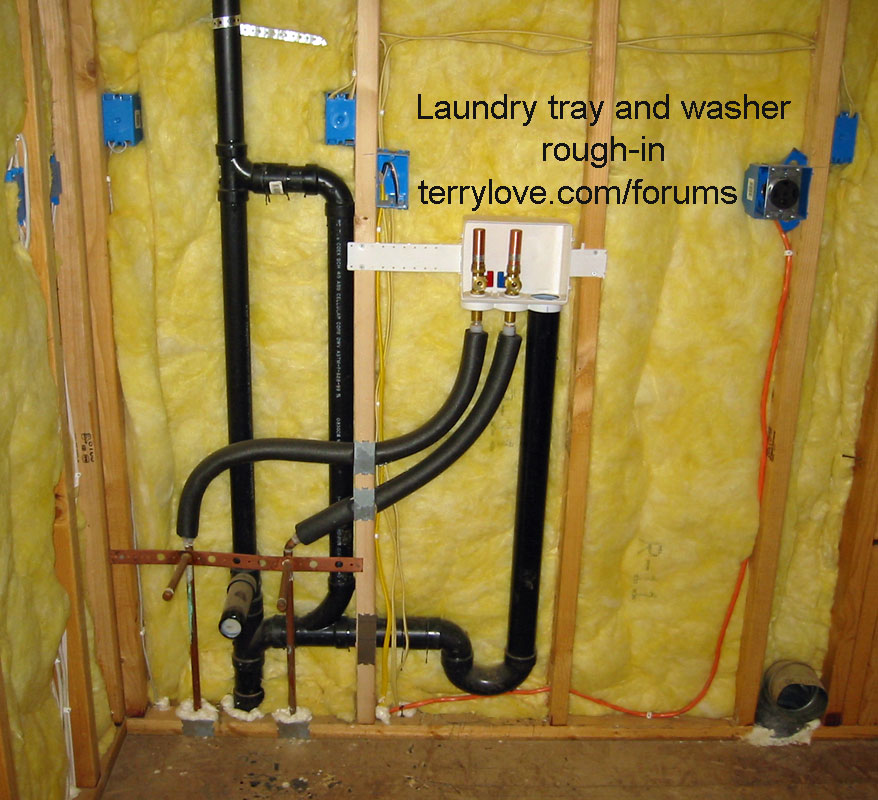
A typical washer and laundry sink rough-in.
Washers have very quick shutoffs, which puts pressure on the hoses when the fill cycle ends.
The vertical pipe in paralel with but less than a foot away from the main pipe looks kind of strange to me in that picture.
It vents the washing machine line. If the sink wasn't there it wouldn't be required.
In my situation the 4" cast iron soil stack is 4' from the wall and the only connection spot is 9" up. Does that limit what i can do?
Cast iron pipe, like any pipe, can be cut.the 4" cast iron soil stack is 4' from the wall and the only connection spot is 9" up.
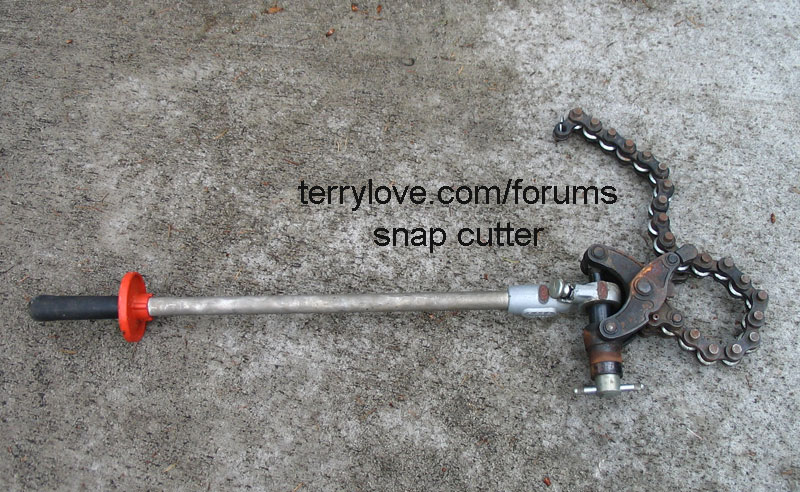
Most plumbers use a rachet snap cutter, to cut in tees or wyes as needed.
For venting, you connect to the other vents, or run a seperate vent, or in some cases use an AAV.
![]()
Last edited by Terry; 01-14-2009 at 09:55 AM.
I believe the stack is vented on the roof. Would i have to cut it? i would really rather not. If things went wrong or the freestanding trap/standpipe broke i could always make one to replace the one thats there, i know how to cut and glue abs but i wouldnt want to deal with the main stack if i did somethign wrong, plus the pipe looks like its pretty heavy.
Get a real plumber. You're right about the cast iron being heavy, it's not what you should be considering as a DIY job.
What i want to know is if i can cut the short abs extend it to a sink and to a standpipe for the washer. If i had to cut the cast iron pipe for venting reason i wouldnt do the job. If i couldnt hook both the washer and the sink to the same connection i suppose its possible to hook the utility sink up where teh standpie is now and then drain the washer into the sink isnt it?, I would really not want to do that though.
We might be better informed with a picture so we could see if what you have now is even installed properly. I am getting the impression that it is not, and that the washer is connected to a cleanout fitting. As for Terry's picture, in this area the second vent would not be required.
hj, that used to be the case years ago in the Seattle area too, but then things changed here, and the second vent has to be there now. I had plumbed with the single vent for about 20 years before the change. Terry
Last edited by Terry; 01-15-2008 at 08:49 AM.
Ill get you guys a picture.
/rant
It might be up to code i might not be, i think the people who lived here before did it, though it could be the maintenance guys. They are really bad, they do most of the work themselves but can hire bad plumbers too. They had one come through and replace the hot and cold water shutoffs in each apartment with big modern ball valves. It needed to be done too, our cold or maybe hot water one dripped for a little while after using it. He got solder slag all over my washing machine and also charred the ceiling above the valves blackish. Its unfinished sheetrock so what really bothered me was the cable wire running across above the valve, he didn't pull the cable tack/clamp out with his fingers or anything and move it out of the way or even cover it, he just melted the wire completely.
The maintenance guys "fixed" my shower. It was leaking so the threw a cheap enclosure up over the old tile. They didnt smooth and glue things correcty and a year later it cracked in several places so they put a better one up. Eventually the shower/tub leaked again so they tried to fix it, then it leaked a while later again thought we waited a while to call them. The floor and bathroom ceiling below rotted and part fell so they had to replace that also. You do not want to see their sheetrock work ugh. I noticed a little water coming out the downstairs ceiling fan a few days ago. My mom was taking a bath. The overflow plate was very loose, i looked behind it, the gasket is very old and spidercrackingey, tightening it seemed to stop the problem at least temporarily for now. While i was there i properly adjusted the height of the drain plunger, the tub drain gets 45% more flow now!, (5 gallon bucket/kitchen timer stopwatch test). It used to only drain slight faster than the shower head could supply.
When they did the shower they put houmongous beads of white caulk around the outside edge of the the hot cold and diverter shower handle plates. They also put huge beads of white caulk on the vinyl bathroom side of the door threshold and on the hallway hardwood floor side. Yea i removed the fugly stuff from the hardwood side. It was the second threshold too. the floor the replaced wasn't lined up or something and the plastic marblelooking threshold cracked within two days so they replaced it with more a stronger wood one. Lastly why is the bathroom sink supply hose braid 98% rust? I thought those are supposed to be stainless.
/rant
Last edited by mikept; 01-15-2008 at 08:34 AM.
I'll have the pic of the standpipe tonight. I have to buy another cardreader.
Do you have any advice on which type of faucet to get or brands? Im a Painting contractor and so is my father. I would like one that could fill up a 5 gallon bucket in 2/3 of a min if possible but also have good control on the low end for washing my hands or laundry stuff. I ask because my kitchen sink without the aerator is an all or nothing affair as far as flow is concerned. It also needs to be threaded so i can attach my 9" and 18" roller washer tubes. I suppose that i would attach a garden hose to it in an emergency, last year i used the washer hookup when the great sidewalk spill took place. I also want to have a sink sprayer, not the wimpy kind that you find in some peoples kitchens, the kind that washes suds three at a time or cant race that coffee pot percolator, no i need one more like a hand shower head or garden nozzle, capable of working with 18" roller pans coverd with thick paint. Lastly i think im going to put a shower rod between the sink and adjacent laundry. With paint you can never ever ever be too careful
My father uses the kitchen sink and the tub to wash stuff but theres to much cleaning and inconviences involved with that for me, plus we keep our paint stuff in the basement.
Sorry for the mess, im moving things around.
It looks like they did indeed stuff a stand pipe into a cleanout. Its not vented properly and you no longer have a way to clean out that sewer line!
Bookmarks