After I replaced my old toilet with a new Drake toilet there is a bang in the pipes when the tank fills and the water shuts off. Is there a way to stop it? It's very annoying.
|
|
|
After I replaced my old toilet with a new Drake toilet there is a bang in the pipes when the tank fills and the water shuts off. Is there a way to stop it? It's very annoying.
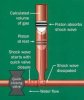
The pipes aren't well anchored in the wall. When the valve shuts off, the inertia from the moving water quickly being stopped by the fill valve moves the pipe and it hits something. This is called water hammer. You can install a waterhammer arrestor. They come in various types, and from various manufacturers.
Jim DeBruycker
Important note - I'm not a pro
Retired Defense Industry Engineer; Schluter 2.5-day Workshop Completed 2013
If the pipes bang, it's like JD says, it's a piping problem.
A water hammer arrestor may be in order.
I would also fully open the shutoff to the toilet.
Sometimes those are bad and the rubber washer can flutter causing hammer.
I would guess that your old toilet never really shut off before.
You should start seeing some water savings now.
where would I install the arrestor?
As close to the fixture as possible. Normally it's installed during the plumbing rough-in, and concealed in the wall. You might be able to mount it on the stubout somehow, with a tee. They're normally mounted vertically, but there's probably not enough room behind the toilet. However, I don't see why the captive-air type (pictured above) couldn't be mounted horizontally off the tee, with the stop valve repositioned after the tee.
If it's the way I read it, I would just put a small expansion tank on the cold water line probably near the water heater. The way I see it, the hammer affects the whole water system and not just the toilet.
For quick acting valves, to absorb the inertia, it is better to have the arrestor near the valve. An expansion tank could act as one if the water pipes coming in were banging, but wouldn't help the water column still moving after it nearly as effectively as one at the end of the run near the valve. NOw, if there was a PRV in the system, that little extra water to push the arrestor would store a very small amount of water under pressure, but it would be release as soon as another valve was opened in the house.
Jim DeBruycker
Important note - I'm not a pro
Retired Defense Industry Engineer; Schluter 2.5-day Workshop Completed 2013
Bookmarks