Trying to rig a variac switch to slowing raise the voltage on an old tube amp

CanOfWorms

Member
Messages
193
Reaction score
0
Points
16
Location
New Jersey
One person told me to put a 100w bulb in the series:
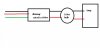
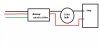
Is this the correct layout?

Does anyone know if I can just use a three pole dimmer switch.

rigged variac.jpg
 
One person told me to put a 100w bulb in the series:
Is this the correct layout?

Does anyone know if I can just use a three pole dimmer switch.

View attachment 20098
What you got here is not a Variac, and 100 watt light bulb will limit the final power to 100 watts.the output of a light dimmer switch is not intended to feed an electronic device, especially if it has a transformer in it.

A real Variac can do what you want, but putting too low a voltage into the amplifier may damage (fry) it. Depends, and not the wearable type.;)
 
Well the pupose of this is to gradually start up an old tube amp that may have not been run in years.
The idea and (what a few tube repair guys have told me) is that by gradually increasing the voltage the electrolytic capacitors will "reform" instead of blowing.
The procedure using a variac is to run it for a minute at low voltage gradually increasing to full voltage over 5 minutes.

There are a few types of dimmers. The one I think I need is the variable voltage one that you might use on a ceiling fan.
Thank you for explaining what the light bulb would do.
 
Well the pupose of this is to gradually start up an old tube amp that may have not been run in years.
The idea and (what a few tube repair guys have told me) is that by gradually increasing the voltage the electrolytic capacitors will "reform" instead of blowing.
The procedure using a variac is to run it for a minute at low voltage gradually increasing to full voltage over 5 minutes.

There are a few types of dimmers. The one I think I need is the variable voltage one that you might use on a ceiling fan.
Thank you for explaining what the light bulb would do.
I can certainly understand that you want to baby those electrolytics.:)
 
Putting a string of light bulbs (or any other resistance load) in series will reduce the voltage at the end...

black: ---o---o---o---< put your multimeter leads
white: ---------------< here to see what you get

...and changing bulbs with different wattages will affect the voltage at the end. So, set up three 100-watt bulbs is series and see what voltage you get at the end of the line, then experiment just a bit with more, fewer and/or different bulbs until you can get the voltages you want at the end...then put your old amp in place of the multimeter.
 
Last edited:
Putting a string of light bulbs (or any other resistance load) in series will reduce the voltage at the end...

black: ---o---o---o---< put your multimeter leads
white: ---------------< here to see what you get
.... until you can get the voltages you want at the end...then put your old amp in place of the multimeter.

Thanks. I posted my question a few places and you gave the best and most understandable answer.

Unfortunately and fortunately I did it the way I pictures(without the dimmer) and it worked fine. Since I did it in series I gather the lightbulb did nothing.
I just need to clean up some frayed old wires and figure out how to properly hook up the speakers.
 
Thanks. I posted my question a few places and you gave the best and most understandable answer.

Unfortunately and fortunately I did it the way I pictures(without the dimmer) and it worked fine. Since I did it in series I gather the lightbulb did nothing.
I just need to clean up some frayed old wires and figure out how to properly hook up the speakers.
In any case, I am glad you got your amp powered up. The bulb in series DID do something, it did limit the current to the amp and created a voltage drop across the bulb, which would lower the voltage to the amp by an amount dependant on the resistance of the bulb and of the amp. The resistance of a bulb changes tremendously from being cold to warming up to being hot. You would have had to measure it to see where it wound up, but you don't need to anymore. A 100 Watt light bulb would by itself, limit the max current (when fully heated up and bright) to less than 1 amp (approx 870 ma). Did the bulb light up at all when you tried it out?

Just curious, as I don't fool around like that anymore, but it still does interest me.
 
Well, the 40 watt and the 60 watt bulb both lit up what seemed fully. I'm not certain, but it did seem that the tubes glowed a little less with the 40 watt bulb than the 60 watt.
The bulb lit up right away. I started it with the tubes in.
 
Well, the 40 watt and the 60 watt bulb both lit up what seemed fully. I'm not certain, but it did seem that the tubes glowed a little less with the 40 watt bulb than the 60 watt.
The bulb lit up right away. I started it with the tubes in.
Cool; thanks.
 
Well, the 40 watt and the 60 watt bulb both lit up what seemed fully. I'm not certain, but it did seem that the tubes glowed a little less with the 40 watt bulb than the 60 watt.
The bulb lit up right away. I started it with the tubes in.


You need more than a 100 watt lamp to get much voltage out of the secondary of the transformer.

A 200 Watt or two 100s in parallel would even be very low voltage.

I would not run a transformer on a dimmer, it will most likely let some smoke out.


Have Fun.
 
Last edited:
You need more than a 100 watt lamp to get much voltage out of the secondary of the transformer.

A 200 Watt or two 100s in parallel would even be very low voltage.

I would not run a transformer on a dimmer, it will most likely let some smoke out.


Have Fun.
yup, kind of what I said in post #2.
 
Well, the 40 watt and the 60 watt bulb both lit up what seemed fully. I'm not certain, but it did seem that the tubes glowed a little less with the 40 watt bulb than the 60 watt.
The bulb lit up right away. I started it with the tubes in.
Your graphic in your first post shows the bulb and amp wired in parallel, not in series. So, the bulb and the amp each got full voltage...and that is why "the 40 watt and the 60 watt bulb both lit up what seemed fully." Glad you got your amp running, but you had not done anything that would have warmed it up any more slowly than usual unless the wiring you used was too small to carry the combined load and worked as a resistance "load" that put some of the energy off as heat.
 
Last edited:
Your graphic in your first post shows the bulb and amp wired in parallel, not in series. So, the bulb and the amp each got full voltage...and that is why "the 40 watt and the 60 watt bulb both lit up what seemed fully." Glad you got your amp running, but you had not done anything that would have warmed it up any more slowly than usual unless the wiring you used was too small to carry the combined load and worked as a resistance "load" that put some of the energy off as heat.
Actually Lee, they are electrically in series: The power hot goes into (through) the dimmer, then through the bulb, then through the amp, and returns to the Neutral to simplify it. (ignoring the wire colors the OP drew and being 115 volt crcuit). The bulb and the amp are definitely in series. If that were a true Variac (brand name) variable transformer, it would be reducing the original voltage and supplying another voltage to the real load (the bulb and the amp in series, as drawn).
 
Last edited:
They did look in parallel from the drawing.

If someone is dumb enough to hook them in parallel then they should not be playing with electricity.

To "reform" a cap is when you take a NOS and go to use it.

If it is dried out and has been in use for many years, then it needs to be replaced.


The only way to get her going again without a quick pop, is to add some KY and bring her up slow.
 
They did look in parallel from the drawing.

If someone is dumb enough to hook them in parallel then they should not be playing with electricity.

To "reform" a cap is when you take a NOS and go to use it.

If it is dried out and has been in use for many years, then it needs to be replaced.


The only way to get her going again without a quick pop, is to add some KY and bring her up slow.
So this time the Jelly is the electrolyte? S'funny mon!
 
[[/ATTACH]
They did look in parallel from the drawing.

If someone is dumb enough to hook them in parallel then they should not be playing with electricity.

To "reform" a cap is when you take a NOS and go to use it.

If it is dried out and has been in use for many years, then it needs to be replaced.


The only way to get her going again without a quick pop, is to add some KY and bring her up slow.
If it were in parallel, I would expect it to have looked like this:
 

Attachments

  • circuit.jpg
    circuit.jpg
    11.4 KB · Views: 923
Last edited:
They did look in parallel from the drawing.

If someone is dumb enough to hook them in parallel then they should not be playing with electricity.
The drawing definitely shows parallel, else it would have looked something like this:

rigged variac.jpg

...and there is nothing wrong with parallel. Unless dedicated circuits are used, house lights and receptacles are wired in parallel:

black: ---gold screw---gold screw---gold screw
white: ---whit screw---whit screw---whit screw

As drawn and as later described with the bulbs being fully-lit, the OP had the bulb/s and the amp in parallel...and either would have still worked even if the other had been removed from the circuit. With things in series (such as decorative lighting 50+ years ago), all fixtures must be connected and working properly for any to work at all. I remember watching a guy with a used car lot in the '50s taking a step ladder out and checking bulbs one-by-one until he had found the culprit in the string so he could get them all working again.

 
Last edited:
The drawing definitely shows parallel, else it would have looked something like this:

View attachment 20148

...and there is nothing wrong with parallel. Unless dedicated circuits are used, house lights and receptacles are wired in parallel:

black: ---gold screw---gold screw---gold screw
white: ---whit screw---whit screw---whit screw

As drawn and as later described with the bulbs being fully-lit, the OP had the bulb/s and the amp in parallel...and either would have still worked even if the other had been removed from the circuit. With things in series (such as decorative lighting 50+ years ago), all fixtures must be connected and working properly for any to work at all. I remember watching a guy with a used car lot in the '50s taking a step ladder out and checking bulbs one-by-one until he had found the culprit in the string so he could get them all working again.
In that great original sketch, I cannot see the screws on the bulb socket. If I were trying something like that, I would be using a bulb pigtail socket, and it would be in series. I guess I cannot read into other people's thoughts too well and I assume too much, but he said he WANTED it to be in series. You are right, just because he WANTED it to be in series does not mean he made it that way. Funny thread we got going on this. what a bout the red by the way, lol?
 
It looks like the red is Hot, the dimmer output.

The bulb should be on the Hot , not the neutral (for safety) that appears to be Black in the drawing.

You can just use a old lamp for the socket.

I would almost bet the dimmer will not work for a 60hz transformer without something getting Hot.

And it wont be just the Lightbulb that is getting hot. But the lightbulb will provide some protection.

Without the lightbulb in series then expect colored smoke and that nice smell that colored smoke has.
 
Back
Top