Tankless electric water heater shows big benefits.
Unless you're opting for tankless primarily to gain back a few square feet of floor area moving to an underpowered electric tankless is usually a bad idea.
.
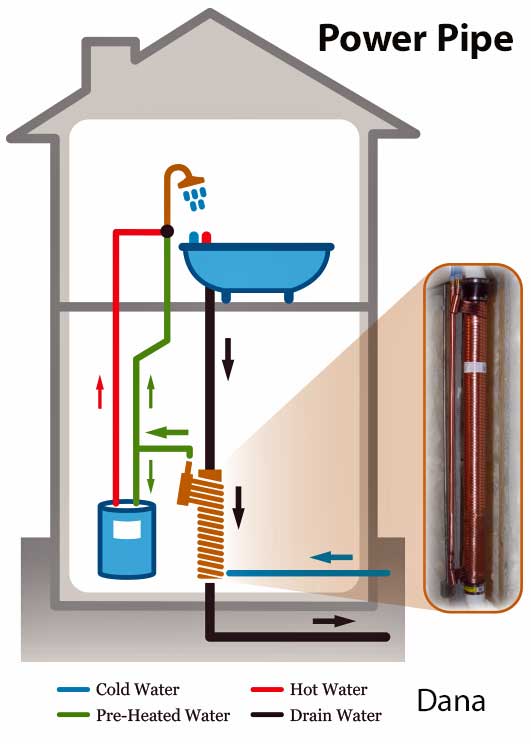
There are other good reasons. For example, I just converted a ski cabin (previously with a 50 gallon electric tank) to a 28kW electric on-demand. Because the old tank was under the stairs it consumed access to the entire area. It also took hot water over a minute and a half at full flow to reach the kitchen sink. I wasted a lot of electricity (and water) waiting for it to get hot. The new on-demand heater is directly under the kitchen sink and the hot water arrives much sooner with less piping heat loss too. No matter how much insulation you put on the pipes it just isn't that effective. At the same time I installed a drainpipe heat recovery system on the shower using a 6 foot Power Pipe. My electric bills have dropped dramatically. I attribute most of the savings to the relocation of the water heater and the wastewater heat recovery drainpipe. A smaller share of the savings is attributed to the fact that the water heater has zero standby losses while the cabin is unoccupied.
For the money you can buy more efficiency using other methods, and at very low money the standby loss of the tank while your away can be brought to zero by either turning off the breaker (or installing a switch to throw) when you leave. (Turning off both power and the water inputs to any hot water heater is a good idea for any place that sees only intermittent use.)
While I've turned off water heaters for extended periods of absence, this is not very effective at saving electricity because the hot water still gradually cools and must be brought up to temperature when returning. The heat loss is not stopped, merely slowed down by the gradual reduction in tank temperature. For this to really work one would need to turn off the heater before the last shower and use all that hot water up before it loses it's heat to the environment. And who wants to design their lifestyle around that?
A larger problem with turning off a water heater with a tank is that bacterial blooms can occur as the water drops below 120 degrees F. Often times the residual chlorine is too low to prevent such blooms from occurring.
If you have to upgrade the electrical panel or run a dedicated 75A/240F line to serve the 18kw water heater (which is likely) the payback on reduced energy use would be measured in centuries, and that's assuming you DIDN'T have the option of turning off power to the tank heater when you leave.
We've already covered why turning off a tank heater is not a safe or effective solution. My ski cabin was built in 1991 and had a 200 amp breaker panel with plenty of room for the 28kW breakers for the on-demand water heater. Cost was minimal because the panel was only 8 feet from the heater location. Because the tank heater was already 20 years old, it needed replacement anyway. I think in my situation payback is in about 5 years. And that's at current energy prices.
My incoming water is only 42-46 degrees F and the 28kW on demand heater has plenty of power for two simultaneous hot showers. If someone else turns on a hot water faucet while two people are showering simultaneously, the flow to the showers is slightly reduced but the temperature stays almost the same and it is a non issue. I recommend getting the type of heater that reduces output volume to maintain a constant output temperature. As an added bonus, the on-demand water heater allows me to change the water in my 380 gallon spa in one go at 4 gallons a minute. Rather than waiting all day for the hot tub to heat up to 104 degrees, I can be using the tub the same evening I changed the water.
People love to talk down the benefits of on-demand water heaters but my situation was tailor made for this conversion and the benefits/savings are obviously substantial. I could not have located a 50 gallon tank under the kitchen sink which is used intermittently all day long while the cabin is occupied. Water also reaches the laundry room, the downstairs shower and the main hand washing sink much more quickly than with the previous tank location. And there are no standby losses on the days the cabin is unoccupied.
Finally, the entire area under the stairs is now accessible and will be converted to a boot drying area and ski storage. Priceless.