How can I fix this Galvanized steel Pipe Thread in my shower?

Wombat

New Member
Messages
26
Reaction score
1
Points
3
Location
New Jersey
I just took off the shower arm from a shower stall.
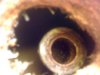
Instead the head of the pipe is a metal sleeve with the threads from what I can see. I can twist this sleeve in the pipe.I must have damaged this sleeve when I took it out.
Now the original thread and new thread of a new arm won't fit in at all in to the pipe.
These are galvanised steel pipes about 40 years old. God they look disgusting on the inside!
Two things you don't want to know: How sausage is made and the inside of galvanised steel pipes!

PipeThread2.jpg
 

Attachments

  • pipeThread1.jpg
    pipeThread1.jpg
    26 KB · Views: 1,434
you can get the piece out using a very sharp and very small cold chisel and a very light touch. come in from the end and try to peel and split it in half then you can use needle nose pliers to roll it inward and pull it out. Be careful and go slow. You may slightly damage the female threads so when you replace the shower arm, be sure to use a metal one, not plastic and use plenty of teflon tape in the threads.
 
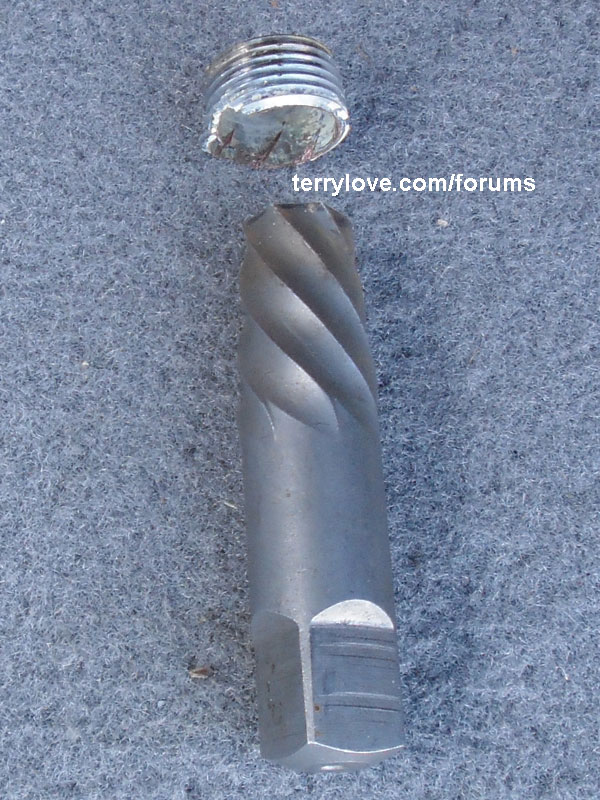
I have internal wrenches that I use to remove the vestige. Any other method can damage the thread and require changing the elbow in the wall. I don't know what you mean when you say you can "twist the sleeve in the pipe", because that piece of the shower arm is NOT going to "twist" without a lot of force.

easy-out-1.jpg
 
Last edited by a moderator:
Oh my God. I'm so clueless. I thought that sleeve was the threads. I may have already damaged them by trying to make it bigger with a needle nose plier.
What is it doing in there anyway? The original shower arm was a normal arm with male threads on both arms.
 
You seem to be into something that is beyond your expertise. I would suggest you seriously consider calling a plumber to evaluate the situation and point out what can be done. Most of us are familiar with galvanized pipe. It hasn't been used for waterlines for years just because of the problem you are discovering. It is safe to assume that the rest of the plumbing in the house is not much better than what you have found here. Of course, the best solution is to re pipe the entire house, but that can be quite expensive. A plumber would be the best possibility of repairing what you have with minimum demolitions and damage to the the surrounding area.
 
Oh my God. I'm so clueless. I thought that sleeve was the threads. I may have already damaged them by trying to make it bigger with a needle nose plier.
What is it doing in there anyway? The original shower arm was a normal arm with male threads on both arms.

It appears to me that you ARE looking at a short piece of threaded nipple that broke off from the old shower arm. A inside pipe wrench or the chisel method will work if you are lucky. If you are not, well I think you get the idea.
 
See if your camera has a macro mode (often, it's a symbol of a flower or something similar) and take another picture. It's really hard trying to see what's what when they're out of focus.

A picture of what you took out may help.

A typical shower arm threads into an elbow in the wall, then the shower head threads to the other end. A typical shower arm is all metal, but I suppose they may make them with a plastic sleeve, but the ends still must be threaded.

Ideally, the fitting in the wall would be brass, wouldn't corrode, and it would be easy to replace the arm. If that fitting is galvanized steel, the threads could be toast, and you'll never get a new arm to screw in there and seal. If that's the case, you'd need to tear that out and replace it. If you don't have access from behind that wall, that would mean tearing up the shower wall. It can get quite expensive.

If the arm you had broke off and the rest of the threads are locked in that old fitting in the wall, people have already told you a couple of methods on how to try to remove it - an inside pipe wrench, or try to basically pry the old stuff out. If it works, the least destructive is the inside pipe wrench. That doesn't take a lot of skill. Cutting and prying it out takes a lot more skill and time. Neither may work, and you'll have to replace that fitting (and probably should replace some of the piping if it is also galvanize while the wall is opened.
 
Make you a caping chisel by grinding a 45 on the end of a long punch. Then if the shower arm is very secure,you can drive the caping chisel between the threads and the threads that broke off you rold shower arm. The brass threads will split and rise as the chisel is driven in. reach in with neddle nose pliers and peel it out.

After that use a steel nipple or a 1/2" pipe thread tap to chase the threads of the 90. Install the new shower arm with tef tape.
 
His pictures are good enough to show his problem. Shower arms do come in brass or plastic, but BOTH can snap off at the threads. THere is no problem with the galvanized threads, so far, but that could change depending on how they try to remove the broken stub. If the wall has to be "opened" the only thing which would have to be changed is the elbow.
 
Thank you for everybody's advice. You helped me focus in on the problem. It turns out that so there must have been crud for the interior of the pipes that got into the threads. I used the tool with the steel wool on the and and rheeemed it out 15 times and low and behold I could fit the shower arm in.
 
low and behold I could fit the shower arm in.
"Fitting the shower arm in" is one thing. Getting a good, pressure-containing, mechanical pipe connection that is leak free is quite another. Since the joint is inside the wall, you may not realize it's leaking until considerable damage is done.
 
My guess is he used a wire brush designed for cleaning the sockets on 1/2" copper pipe fittings

If so that would not have "filed" the shower arm stub out of the elbow, unless it was a plastic arm.
 
If so that would not have "filed" the shower arm stub out of the elbow, unless it was a plastic arm.
I agree with you. I wasn't condoning his choice of tools, not his methods. I was merely decyphering his description of the tool.

From the photo, it certainly does not look like the remains of a plastic shower arm stub. In fact, it looks like chrome-plated brass to me. Who knows... maybe the wire brush bristles had enough friction inside the remaining stub to allow him to twist it out. But even if he was able to do so, considering his level of experience and understanding of plumbing, I am not at all confident that he was able to get a leak free connection with the new shower arm.
 
Back
Top