Push-fit Connectors

Drewski123

New Member
Messages
47
Reaction score
0
Points
0
Location
Seattle
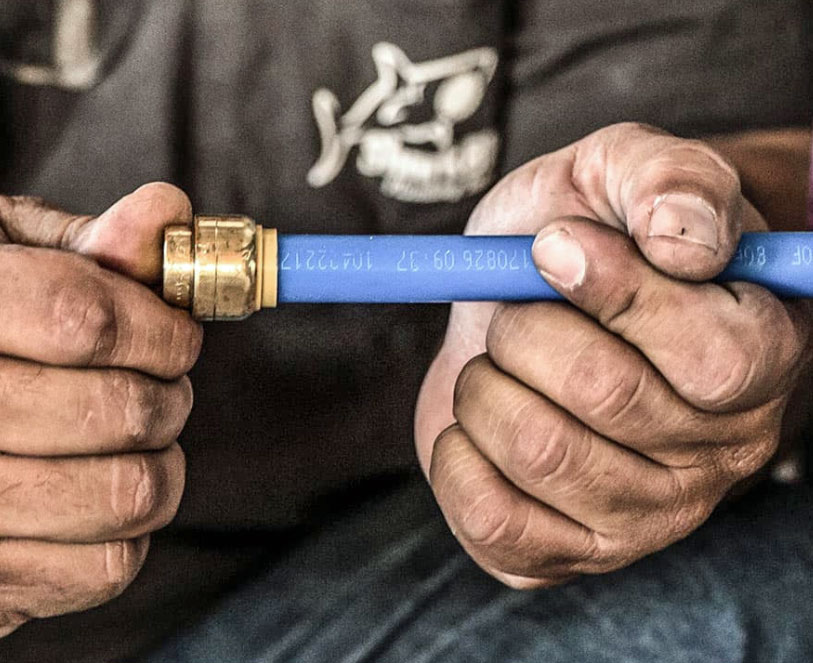
Has anyone used copper to copper SharkBite connectors? I am thinking of using them instead of soldering. What do codes say about them? Unfortunately, I can not get answear from Seattle's inspectors unless I will personally stop by. No one has returned my calls yet, so I am hoping that you guys could help me out.

I appreciate any help on this,
 
Generally, they are accepted by code officials in all residential applications. Since they cost 10 to 20 times the price of copper fittings, most folks only use them for an occasional, limited scope project.
 
They work okay, but I don't really like them. When I had to replace my water heater (old one ruptured), I picked up some stuff from HD. The guy gave me SharkBites. I was expecting to solder, but I didn't have a torch at the time, so I figured I would try them out.

Your cuts need to be clean and deburred (they should be anyway) and you need to make sure the connector is fully engaged (pipe inserts by about 1").

The main thing that I don't like about them is they don't do anything to support the pipe or keep it aligned. The connector allows the pipe to swivel and flop around. They are also much more expensive than regular copper connectors.

Also, since they seal with just an o-ring, I'm not sure that I would trust them in a wall. They might be okay if exposed and you can keep an eye on them, but personally, I would like something more solid in a wall.

I have since pulled those SharkBites off and soldered the connections. Although there was nothing really wrong with them, I just didn't care for them.

Soldering if pretty easy. Just get both sides of the joint clean, flux, heat, then add solder. It's even easier when dealing with new pipe that doesn't have traces of water in it. The fitting are pretty cheap, so get a few extras and practice soldering on a couple of them (if you haven't done this before).

If you solder, they also have these heat blankets (run about $15) that are very helpful for protecting wiring, framing, etc. from the torch flame when working in tight places.

 
They work, they have their place, and you can read the certifications on their website, so they should be acceptable. Nukeman covered the main talking points. They sell a special, custom deburring tool, and I highly recommend you get that. It not only removes any burrs, it puts a microbevel on the end of the pipe. The only real gotcha on any of this type is the state of the o-ring - damage it on the way in with a sharp edge, and it may never seal. The microbevel helps to ensure it doesn't damage the o-ring. Because it doesn't lock the pipe in place (moving it takes some pressure as the SS teeth do grab the pipe some), they're best where the run won't be stressed. The o-ring will likely seal, but you may put some scratches on the pipe that might be a problem if you ever need to remove and rearrange things.

The end caps are a handy thing to use during construction, as they are easily removed, and reusable. For an area with lousy access, they make some sense, but for general use, solder is better.
 
They are a thing of beauty :rolleyes:

sharkbite-cap.jpg
 
Back
Top