

Drick
In the Trades
- Messages
- 461
- Reaction score
- 20
- Points
- 18
You don't need 3 or 4 way timers for what you want to do. All you do is install a standard single pole timer at each location.
In a 3 and 4 way switch setup - which is what you seem to have - any switch can be used to turn the lights on and any switch can be used to turn the lights off. This is not what you want but what you have.
You want 7 timers all controlling a single set of lights so when all the timers reach 0 the lights will go out. This will work and be wired differently than the 3 and 4 way switch setup. As an example of how it works you set timer #1 to 15 minutes and the lights go on. You go to another location that has timer #2 and you want to turn off the lights before the 15 minutes expire. Well now there is no way to do that anymore! You have to wait for the first timer to count down the 15 minutes. What you can do at timer #2 is set the timer to 30 minutes. Now when timer #1 expires the lights will stay on until timer #2 finishes counting down to zero.
If you have no problem with the fact all the timers will have to expire for the lights to go out all you need is 7 single pole timers wired in parallel to control your lights. You have enough wires to do this already. Think of this just as your basic single pole switch and light setup - just with a lot more switches.
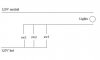
-rick
In a 3 and 4 way switch setup - which is what you seem to have - any switch can be used to turn the lights on and any switch can be used to turn the lights off. This is not what you want but what you have.
You want 7 timers all controlling a single set of lights so when all the timers reach 0 the lights will go out. This will work and be wired differently than the 3 and 4 way switch setup. As an example of how it works you set timer #1 to 15 minutes and the lights go on. You go to another location that has timer #2 and you want to turn off the lights before the 15 minutes expire. Well now there is no way to do that anymore! You have to wait for the first timer to count down the 15 minutes. What you can do at timer #2 is set the timer to 30 minutes. Now when timer #1 expires the lights will stay on until timer #2 finishes counting down to zero.
If you have no problem with the fact all the timers will have to expire for the lights to go out all you need is 7 single pole timers wired in parallel to control your lights. You have enough wires to do this already. Think of this just as your basic single pole switch and light setup - just with a lot more switches.
-rick
Last edited:


