Submersible pump motor keeps failing

Blown

Engineer
Messages
77
Reaction score
0
Points
0
Location
Wichita KS
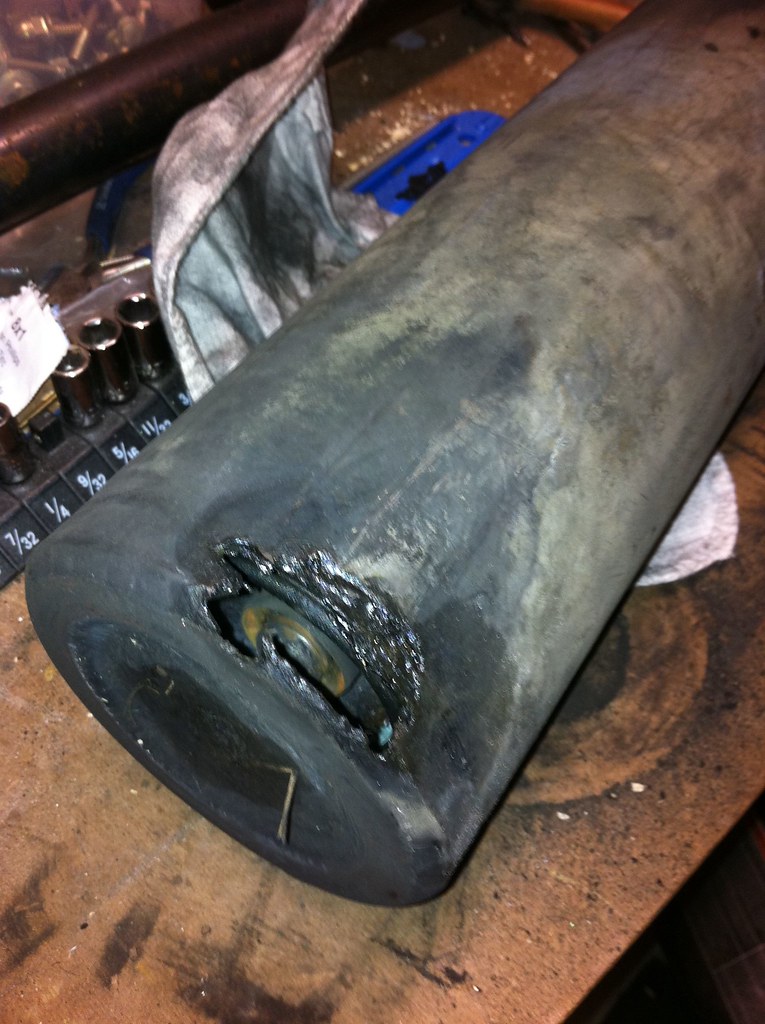
I have a 1hp 2-wire 240V submersible 4" pump installed in a PVC-cased 6" well. It was installed 6yrs ago. The original pump/motor was a red jacket grizzly with Franklin motor. After 3yrs it failed (locked rotor) and when I pulled it out the case was visibly corroded with holes in it. The pump itself looked fine

3 year old well pump motor case corroded so badly it seized up?

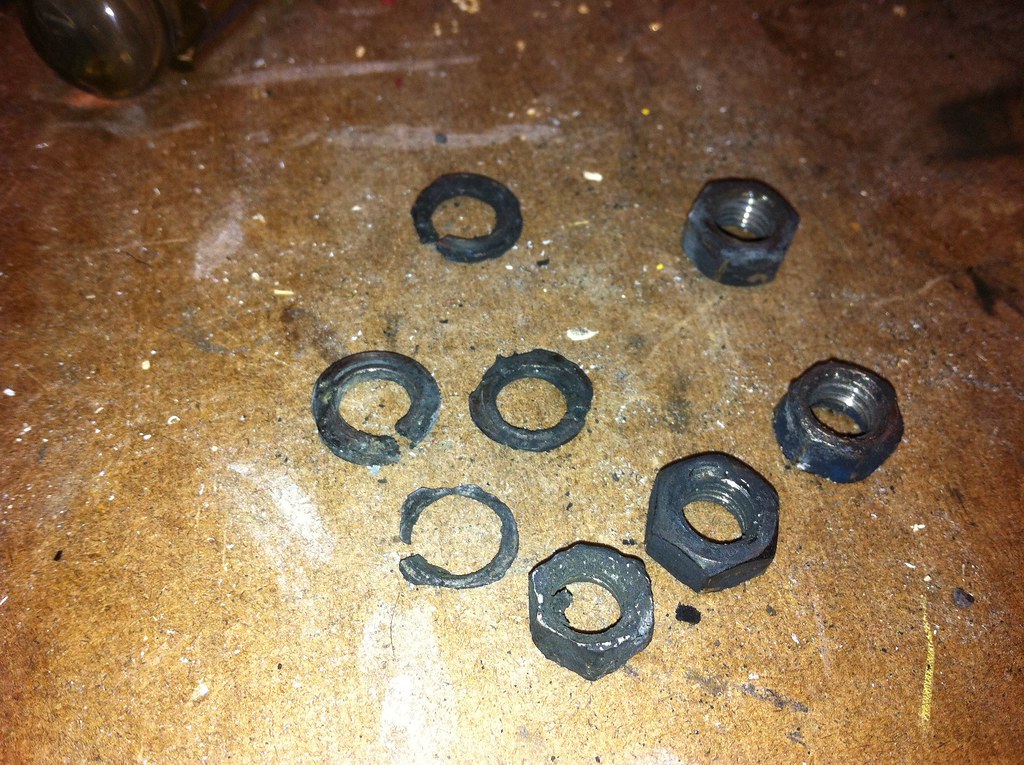
I replaced the Franklin with a same-sized Grundfos which operated fine until I turned it on last weekend for the first time since winter. No water. I pulled it out and it also had a locked rotor and the same case corrosion.

3yr old SS pump motor corroded AGAIN

The well is connected to a lawn irrigation system and has plenty of sulfur that you can smell and see the residue. I measured the pH at the top of the water table and it was 7.3.

After seeing pics of the corrosion the pump guys thought this should be posted in an Electrical forum as well.

I really really really need to keep this from happening again.

Pics of the 3-yr-old failed Grundfos:
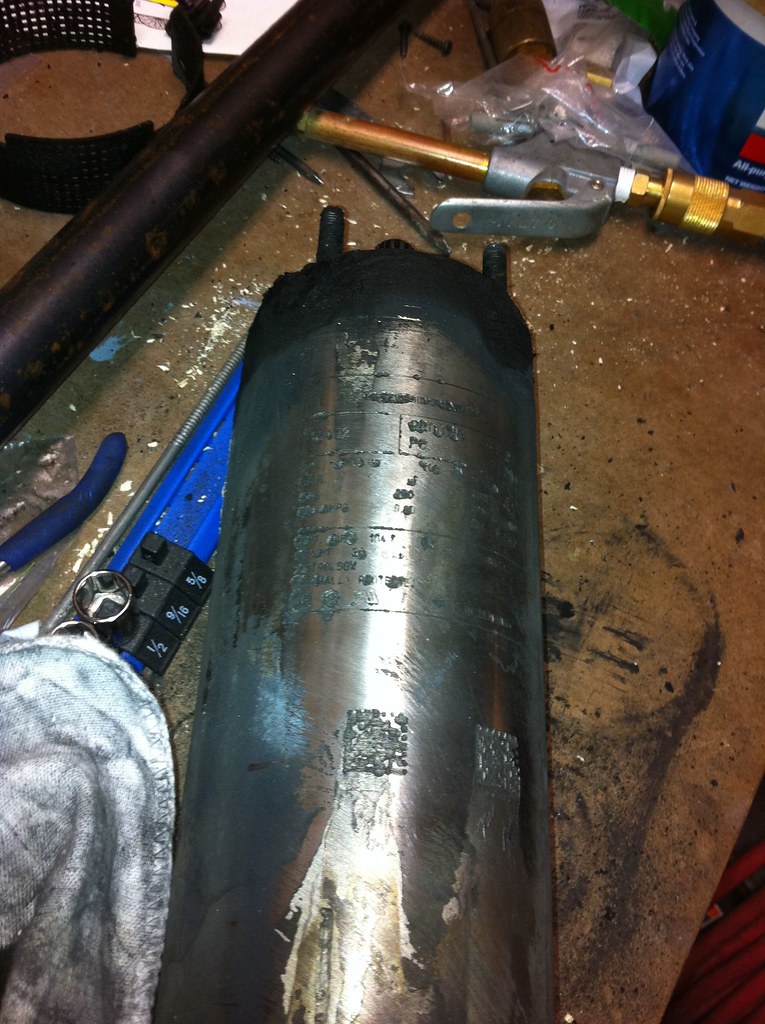
5611957852_72085e63d2_b.jpg


5611958642_a3279acf9b_b.jpg


5612015494_a2f8b2f1eb_b.jpg
 
Maybe some of the guys who are familiar with boats and sacrificial anodes can explain what's happening... I'm still trying to figure out why fire ants are attracted to electricity.. .they keep congregating in my plugs and switches in my storage trailer.
 
Something is causing a high current draw on the motor.
It could be that the conductors supplying the motor are too small, sediment on the impeller or any number of other things
 
I've seen this type of thing happen to motors that their electrical supply such as too small of extension cords caused them to heat up... also the same problem with corroded or loose connections in the switch box. So, maybe check your wiring to the well pump.... it's the only guess I've got. If it happened only one time then I'd suspect the motor. Since it is repeating itself with new pumps I'd look for something else causing the problem. Something is making the pump work harder than it should... if it ain't mud or sand then it has got to be in the electrical supply. I had a friend who's well pump kept burning up relays and having problems. We found a wire with broken insulation and someone had been putting on the wrong kind of relay. Taped up the skinned spot on the wire and put in the right kind of relay and no problems since.
 
Last edited:
I don't think it's mud/sand. The water from the sprinklers is good and I don't get clogs very often. No signs of mud/sand when I pulled out the pump.

The wire from the the panel to the pump is all 12AWG. There is a switch box on the side of the house, and the wire goes underground in conduit between the switch box and well head.

I will inspect everything I can get to for loose connections and damage. For what it's worth, I haven't had any relay problems that I'm aware of and no problems tripping breakers.
 
If you determine that all the wiring is fine then I think you have to decide whether or not it's a water chemistry problem. Not sure what you have there but here we can take a water sample to the health department for analysis.
 
Actually I sent the guy over here because he mentioned some large pad mounted transformers 100' from his well. I thought this might take us back to current leaks.

I see a lightening strike in that pump hole, but now he has mentioned that the water is only for irrigation and stinks highly of sulphur.


Also he has no pressure switch or tank on the rig, so it might be running dry. Add a low pressure cut-out switch and small pressure tank. And a buried ground mat at the well top might be advised. The new so called 'three wire pumps' pumps have 4 wires, one for starting, 2 for running, and a dedicated ground wire.

As to small wiring, Franklin motors thrive on wires far undersized by an electricians gauge chart. Franklins own charts advises these wire runs because it provides a 'soft start' and the motor is wound for this very type of service. These are not motors like on your table saw!

Any doubts, search for 'franklin AIM manual'

OK on edit: I see the 'new pics' of the pump head that looks fresh and clean.

So now I say forget the sulphur and focus on the stray current issue.
Unless Franklin uses junk SS, which has not been the case. This seems a grounding issue.

I say get out your equipotential bonding grid thinking caps again.

Undersize wires DO NOT burn holes in franklin motors.
 
Last edited:
I agree with what looks like lightning damage but I also think there may be stray currents flowing down through the ground wire. It would have been interesting to have put an ammeter on the ground wire before the pump was pulled.

I would inspect the service for a poor neutral and/or poor ground.
 
I do not think he has showed us a picture of the used pump HEAD. Is it like the motor? Those appear to be from a old thread.

The new motor will have a ground wire and he should be very serious about using it correctly.
 
How many amps does the motor draw, and how long is the cable feeding it? If there are any junctions/connections in the wiring, have you verified that all of them are tight with no signs of arcing?
 
hmmm... let me see here... no pressure switch, no kind of relay, no pressure tank, continuous duty and 3 years old... smells like it got too much work from pumping too hard for too long... Maybe, maybe not.???
 
I cross-posted this to another electrical forum here: http://www.************.com/forum/electrical-c-d-c/447687-submersible-pump-motor-keeps-failing.html

Per the advice from one of those guys I'm going to out the pump back into the water and take measurements at the ground.

The shiny pics of the pump head are from 3yrs ago but it still loons the same. No evidence of corrosion.

The wires to the pump are 12AWG.

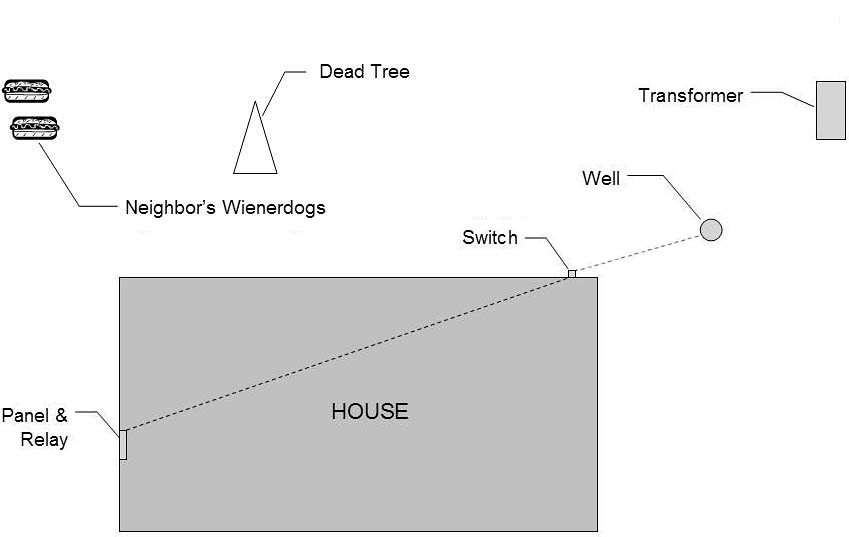
The electrical box is more like 25-30ft from the well. I have a rough sketch in the ************ thread.

FWIW the pump is about 85ft deep and when they drilled they said they hit water at less than 40 feet and with the test pump had tons of flow. That was 6yrs ago.

My well gets much less use that many of my neighbors who sprinkle 3-4x per day every day (mine is more like once every 2 to 5 depending on weather).

Will report back.

Edit: I guess that website name is blocked here so I'll just have to "do it myself":

5615310964_a923deea8a_b.jpg
 
Last edited:
OK, I lied about the distance. The well is more like 15-20ft from the transformer box.

I checked resistance from the ground wire to the motor case (from the end of the motor pigtail) and there was only about 2ohms. Which makes sense because the ground is actually screwed to the case. (Somebody asked this question in one of the threads I think).

The pump/motor is back in the well and I will check the ground ASAP.
 
hmmm... maybe I'm not following you correctly but if you've got the ground screwed to the motor case then checking resistance from ground to motor case I would think you should get near zero resistance. I'd be more concerned about voltage from the case to ground without the ground wire connected to the case.
 
Well, it's screwed in but that area is pretty eaten up so I'm not sure if it's making the best connection. 2ohms seems pretty low to me but I'm not a sparky.
 
I'm no sparky either, just a trouble shooter. I'll tinker with things until I figure them out and lose lots of sleep until I do... I think one of the best things you could do is call the manufacturer to see if they have a help line or tech support. They might be able to tell you exactly what the problem is without even looking in a book.
 
Hello Group,

Most meters that you buy at RS do not even have the resolution to measure down to 2 ohms.
If You have a Zero adj, that helps, or use a extended range meter.

Is that motor made to run at 60 HZ, stupid question but I have seen import stuff made to run at 50 HZ, Burns them up on 60 in the US.
Or maybe the power coming of the service is not 60 Hz, or has Harmonics on it.

Just my two cents worth.

You all have a great day. Keep up the good work.

DonL.
 
I would talk to the utility about your pump and ask them to check the transformers.
What exactly do I need to tell them when I call them? What should I ask them to check?

Hello Group,

Most meters that you buy at RS do not even have the resolution to measure down to 2 ohms.
If You have a Zero adj, that helps, or use a extended range meter.

Is that motor made to run at 60 HZ, stupid question but I have seen import stuff made to run at 50 HZ, Burns them up on 60 in the US.
Or maybe the power coming of the service is not 60 Hz, or has Harmonics on it.

Just my two cents worth.

You all have a great day. Keep up the good work.

DonL.
I'm going to try and get a nice Fluke meter from work if I can get a technician to let me borrow one.

I believe the motor says 60Hz on the case. It's a Grundfos and I bought it from a reputable place.

I would assume that if the power at my panel was not 60Hz that I would have lots of other electrical problems besides the well pump?
 
Back
Top