
You are using an out of date browser. It may not display this or other websites correctly.
You should upgrade or use an alternative browser.
You should upgrade or use an alternative browser.
Proximity of washer & dryer outlets to washer valves & tub?
- Thread starter Plumbob
- Start date


Jim Port
Electrical Contractor
There are no code imposed limits on the promity of the receptacles to the valves.
If the washer receptacle is within 6' of the laundry tub it requires GFI protection.
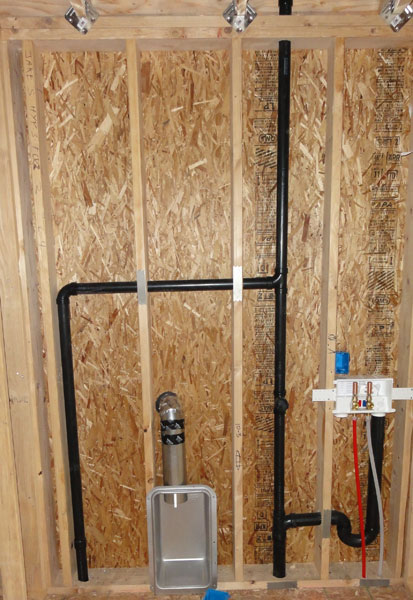
If the washer receptacle is within 6' of the laundry tub it requires GFI protection.
Last edited by a moderator:

Sponsor
Paid Advertisement

JWelectric
Electrical Contractor/Instructor
There are no code imposed limits on the promity of the receptacles to the valves.
If the washer receptacle is within 6' of the laundry tub it requires GFI protection.
I agree with this post but let me add that they can be no more than 6 feet from the appliance they intend to serve.
210.50(C) Appliance Receptacle Outlets. Appliance receptacle outlets installed in a dwelling unit for specific appliances, such as laundry equipment, shall be installed within 1.8 m (6 ft) of the intended location of the appliance.

hj
Master Plumber
- Messages
- 33,613
- Reaction score
- 1,057
- Points
- 113
- Location
- Cave Creek, Arizona
- Website
- www.terrylove.com
outlets
I believe, since this is the way they are usually installed, that as long as the receptacles for a washer and dryer are "filled" it does not have to be a GFCI. This means if you have a washer and electric dryer, the outlet has to be a single device one so there is no "open" receptacle where you could plug an extension cord or device into.
I believe, since this is the way they are usually installed, that as long as the receptacles for a washer and dryer are "filled" it does not have to be a GFCI. This means if you have a washer and electric dryer, the outlet has to be a single device one so there is no "open" receptacle where you could plug an extension cord or device into.
JWelectric
Electrical Contractor/Instructor
I believe, since this is the way they are usually installed, that as long as the receptacles for a washer and dryer are "filled" it does not have to be a GFCI. This means if you have a washer and electric dryer, the outlet has to be a single device one so there is no "open" receptacle where you could plug an extension cord or device into.
Even a single device yoke within 6 feet of a utility tub would require GFCI protection
hj
Master Plumber
- Messages
- 33,613
- Reaction score
- 1,057
- Points
- 113
- Location
- Cave Creek, Arizona
- Website
- www.terrylove.com
Gfci
They did not put one there for my installation, I just looked to make sure I was not mistaken. The same applied for my water softener outlet in the garage. ALL the wall outlets in the garage are GFCI, but the softener is a single device receptacle and NOT GFCI protected.
They did not put one there for my installation, I just looked to make sure I was not mistaken. The same applied for my water softener outlet in the garage. ALL the wall outlets in the garage are GFCI, but the softener is a single device receptacle and NOT GFCI protected.

Scuba_Dave
Extreme DIY Homeowner
They used to have exemptions for dedicated point of use
NEC 2008 did away with them
Within 6' of a sink should have been GFCI before
I have GFCI protection on every outlet in the laundry area
NEC 2008 did away with them
Within 6' of a sink should have been GFCI before
I have GFCI protection on every outlet in the laundry area

Speedy Petey
Licensed Electrical Contractor
They did not put one there for my installation, I just looked to make sure I was not mistaken. The same applied for my water softener outlet in the garage. ALL the wall outlets in the garage are GFCI, but the softener is a single device receptacle and NOT GFCI protected.
Also, a "filled" receptacle is certainly NOT an excuse or exception to requiring GFI protection or not.
The old exception was if a receptacle was behind a "large" appliance not easily moved. As was stated, this exception was removed from the code.
Your softener is not and never was legal if the receptacle was installed within the last 20-25 years or so. I will admit, this is something often overlooked by inspectors, not that that makes it right.
hj
Master Plumber
- Messages
- 33,613
- Reaction score
- 1,057
- Points
- 113
- Location
- Cave Creek, Arizona
- Website
- www.terrylove.com
receptacle
NOT having a dedicated receptacle be GFCI eliminates the possibility of a "false trip", especially if it is for something "critical" such as a freezer which might go for days without discovery, or at least until the odor become overpowering. And I have know many people it happened to, including my daughter. And a customer who had it happen and did not know the GFCI was UNDER a bench in their bathroom, so they just assumed it was a bad outlet and ran an extension cord to the freezer, until MONTHS later when I told them it was probably a tripped GFCI and hunted it down. If the device is plugged into a single device outlet, it is unlikely it would be unplugged to use for an extension cord connection point.
NOT having a dedicated receptacle be GFCI eliminates the possibility of a "false trip", especially if it is for something "critical" such as a freezer which might go for days without discovery, or at least until the odor become overpowering. And I have know many people it happened to, including my daughter. And a customer who had it happen and did not know the GFCI was UNDER a bench in their bathroom, so they just assumed it was a bad outlet and ran an extension cord to the freezer, until MONTHS later when I told them it was probably a tripped GFCI and hunted it down. If the device is plugged into a single device outlet, it is unlikely it would be unplugged to use for an extension cord connection point.
Last edited:
Speedy Petey
Licensed Electrical Contractor
OK, but do you have a code citation to support this opinion?NOT having a dedicated receptacle be GFCI eliminates the possibility of a "false trip", especially if it is for something "critical" such as a freezer which might go for days without discovery, or at least until the odor become overpowering. And I have know many people it happened to, including my daughter. If the device is plugged into a single device outlet, it is unlikely it would be unplugged to use for an extension cord connection point.
See my point?
The code making panels obviously disagree with this opinion since they removed most all exceptions for GFI's in unfinished areas.
Besides, nuisance tripping GFI's really are becoming a thing of the past.

Jar546
In the Trades
If you are under the 2008 NEC then GFCI protection is mandatory, PERIOD.
About 10-12 years ago the appliance manufacturers were mandated to provided equipment that had leakage current of less than 2mA. This is not even close to what it would take to trip a GFCI. The new generation of appliances and GFCI protection is not a problem.
A smart person will put a light/LED in series with the GFCI receptacle that will let you know the condition of the GFCI OR they can use a GFCI that is visible and illuminates a small LED when the power is off at the receptacle from a trip.
About 10-12 years ago the appliance manufacturers were mandated to provided equipment that had leakage current of less than 2mA. This is not even close to what it would take to trip a GFCI. The new generation of appliances and GFCI protection is not a problem.
A smart person will put a light/LED in series with the GFCI receptacle that will let you know the condition of the GFCI OR they can use a GFCI that is visible and illuminates a small LED when the power is off at the receptacle from a trip.
Scuba_Dave
Extreme DIY Homeowner
I actually do have an outlet behind the freezer in the basement that might not be GFCI
I can't really get to it at all unless I unload & move the freezer
But since the outlet was there prior to 2008 code I guess it's OK
I haven't looked at that outlet since we moved in 6 years ago
I can't really get to it at all unless I unload & move the freezer
But since the outlet was there prior to 2008 code I guess it's OK
I haven't looked at that outlet since we moved in 6 years ago

NOT having a dedicated receptacle be GFCI eliminates the possibility of a "false trip", especially if it is for something "critical" such as a freezer which might go for days without discovery, or at least until the odor become overpowering. And I have know many people it happened to, including my daughter. And a customer who had it happen and did not know the GFCI was UNDER a bench in their bathroom, so they just assumed it was a bad outlet and ran an extension cord to the freezer, until MONTHS later when I told them it was probably a tripped GFCI and hunted it down. If the device is plugged into a single device outlet, it is unlikely it would be unplugged to use for an extension cord connection point.
We have all heard a story about the food in a freezer in a basement, good argument but it wont cut the mustard with the code or inspectors any more. All recepts in unfinished basement or within 6 ft of a sink must be GFCI. Even the washer and garage door opener in the ceiling.
Last edited:
Similar threads
- Replies
- 11
- Views
- 19K


- Replies
- 15
- Views
- 1K

- Replies
- 2
- Views
- 511
- Replies
- 0
- Views
- 400
