More DIY

The funny thing is most of the DIY crowd cant see anything wrong with their installations.

This DIY has been fighting with the inspection department for more than two months.

Wonder which one really cares the inspection department or the homeowner?

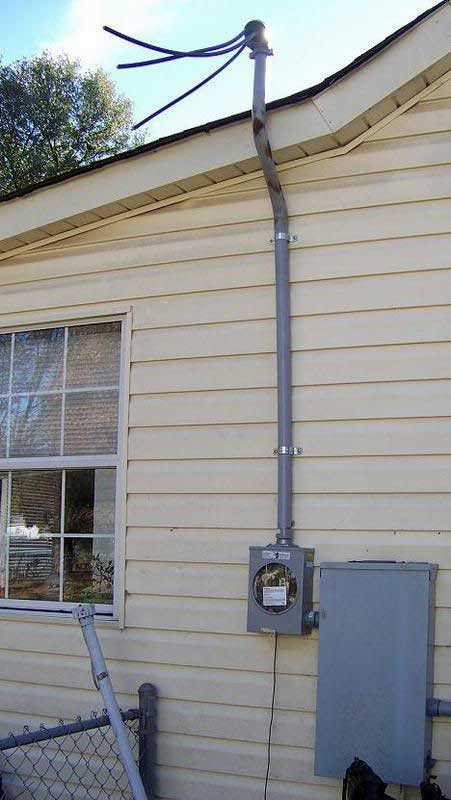
PVCriser.jpg


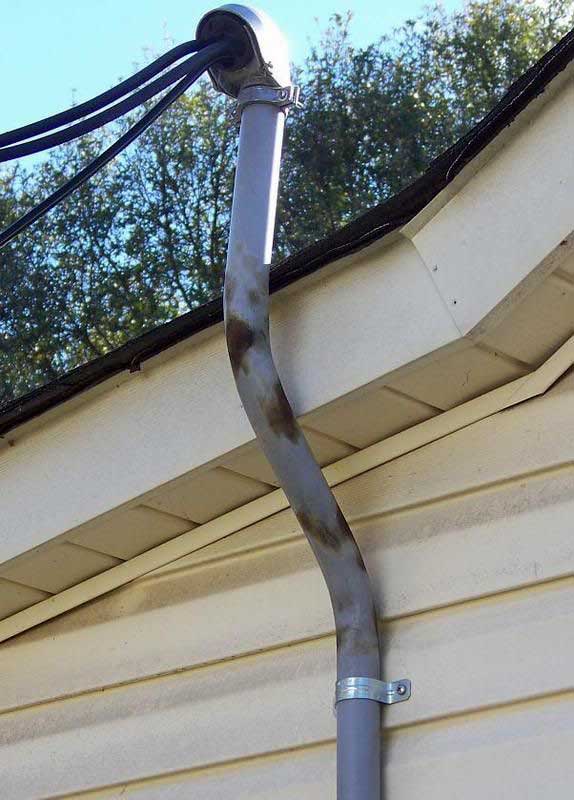
PVCriser2.jpg


Just what will happen should the utility company connect to this riser?
How long will it last durning a high wind storm or ice storm?

Can't see any thing wrong here can you?
 
Last edited by a moderator:
On that one I would be leaving and telling them to call me when they are ready to be inspected and what the reinspection fee is. No Cut In Card to the POCO
 
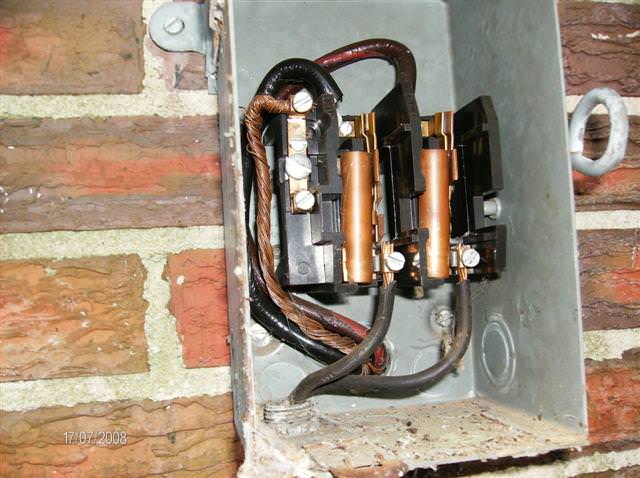
Tell me that's not copper tubing.
Well it appears the homeowners went to the store to buy fuses, but their eyesight was not too good and wound up in the plumbing department instead! :confused:
 
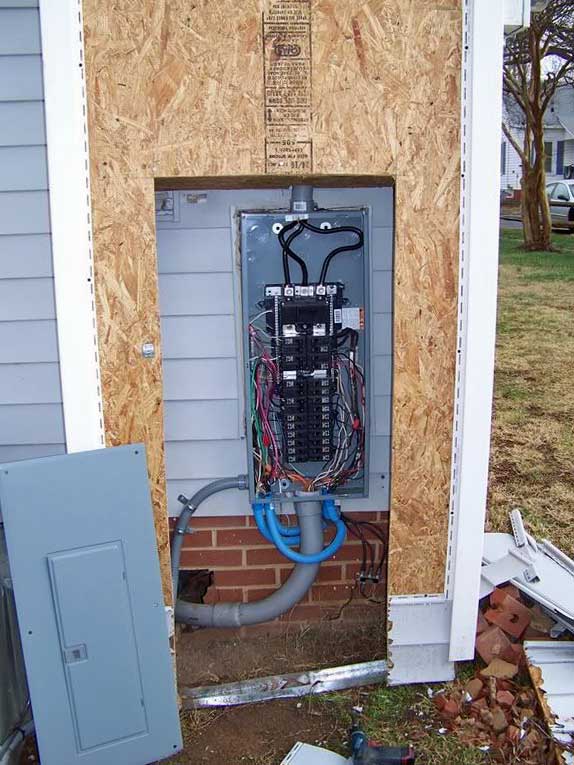
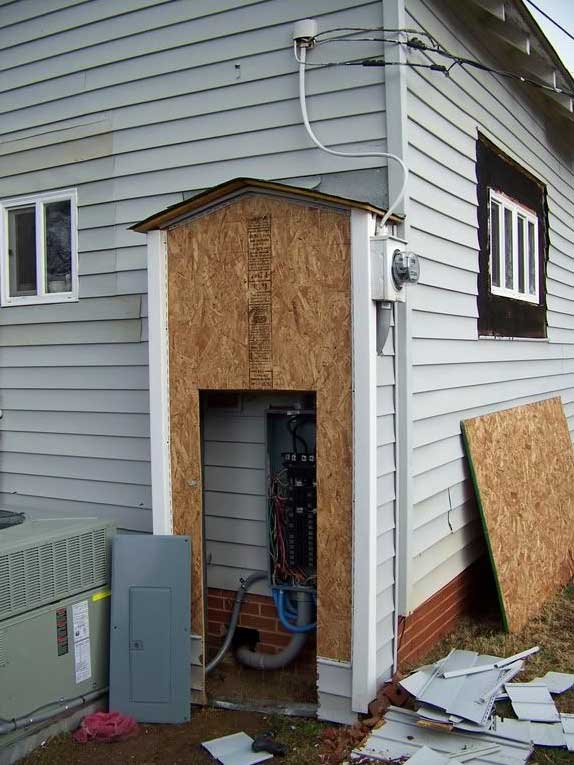
The inspector said that an panel designed for being installed could not be installed outside so what did I do?

jw-outside-panel-1.jpg


jw-outside-panel-2.jpg


Tell me it ain't so!!!!!

Yes one of the famous DIY jobs that he couldn't understand what he had done wrong.
After having everything fixed by a qualified electrician he had spent almost three times the money he would have to have had it contracted in the first place.

I don't care how much advice one receives when they already know more than the one they ask then there is no need for the advice in the first place.

Thank you Mel for the great pictures
 
Last edited by a moderator:
It not only electrical that the DIY messes up real bad all the time.

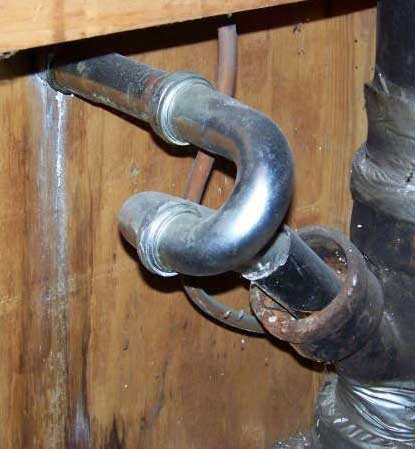
From time to time the DIY can get the trap for a sink installed in an inverted manner

jw-trapdrain.jpg


Thank you Mel for the great pictures
 
Last edited by a moderator:
You might want to move that last picture to Mark's Slop Award, :)


That picture is from an inspector that was a student a couple of years ago. He found this while he was doing a remodel inspection that the homeowner undertook himself.
It was later established that the homeowner had help form the local remodel contractor but the homeowner had bought the permit.

Neither the homeowner nor the remodel contractor could see anything wrong with the installation as it was simply a drain pipe and would have any pressure on it. After all the water did drain.
 
connection

I hope there are no areas that allow a PVC service riser, even if it is schedule 80. Especially without a strap at the eave, the weight of the power line will have it horizontal after a few hot summer days.
 
230.28 Service Masts as Supports.
Where a service mast is used for the support of service-drop conductors, it shall be of adequate strength or be supported by braces or guys to withstand safely the strain imposed by the service drop. Where raceway-type service masts are used, all raceway fittings shall be identified for use with service masts. Only power service-drop conductors shall be permitted to be attached to a service mast.
 
mast

And by that are you saying that the PVC mast would be adequate and meet the definition of being properly supported and of sufficient strength to support the drop?
 
And by that are you saying that the PVC mast would be adequate and meet the definition of being properly supported and of sufficient strength to support the drop?

I don't think he is and PVC is not allowed in this application. All overhead masts that extend beyond the roof line and support the service wires need to be RMC.
 
230.28 Service Masts as Supports.
Where a service mast is used for the support of service-drop conductors, it shall be of adequate strength or be supported by braces or guys to withstand safely the strain imposed by the service drop. Where raceway-type service masts are used, all raceway fittings shall be identified for use with service masts. Only power service-drop conductors shall be permitted to be attached to a service mast.
And by that are you saying that the PVC mast would be adequate and meet the definition of being properly supported and of sufficient strength to support the drop?

Not hardly. I think what I was saying is what the NEC says.
The riser mast MUST be capable of carrying the load imposed on it.
 
Back
Top