Washing Machine in Basement?

Erniek

New Member
Messages
6
Reaction score
0
Points
0
Location
Greeneville TN
Gentlemen, I just purchased a house with an 11 ft deep basement. Discharge to the septic is at the 10 ft mark, no other plumbing in the basement. I would like to put the washing machine in the basement. Can I use a small lift station set up or should I cut a sump pit in the floor? A pit would work but I hesitate cutting through the pour.

Couldn't find this in the search....
 
Gentlemen, I just purchased a house with an 11 ft deep basement. Discharge to the septic is at the 10 ft mark, no other plumbing in the basement. I would like to put the washing machine in the basement. Can I use a small lift station set up or should I cut a sump pit in the floor? A pit would work but I hesitate cutting through the pour.

Couldn't find this in the search....

Check the washing machine, maybe it will make the lift?
 
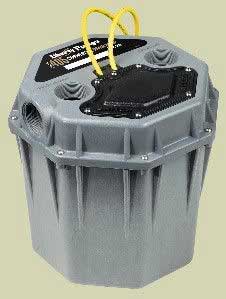
A Liberty Model 405 would do very nicely in this application.

93_405_new_tan.jpg
 
Last edited by a moderator:
There are a couple of ways to interpret this, is the sewer outlet from the house one foot above the basement floor, or one foot from the ceiling?

If it is one foot above the floor, most washing machines can pump high enough to get the required standpipe height and a trap. Now, installing the required vent could be a problem getting it from the basement to some point where you can tie into the rest - it might have to go up all the way to the roof.
 
The sewer discharge is 10 foot AFF...1 foot below floor joists. I think a pump is the only way...but I would like to install a utility sink also. Although there are no water problems now, I am wondering if a sump pit would be better in the long run. Thanks for the help
 
A Liberty Model 405 would do very nicely in this application.

93_405_new_tan.jpg

Thanks for the advice...You know I used to work with some plumbers out of Springfield Mass. years ago. The McCormicks I believe....mechanical contractor outfit. Boy those were some cold days!
 
Last edited by a moderator:
There are a couple of ways to interpret this, is the sewer outlet from the house one foot above the basement floor, or one foot from the ceiling?

If it is one foot above the floor, most washing machines can pump high enough to get the required standpipe height and a trap. Now, installing the required vent could be a problem getting it from the basement to some point where you can tie into the rest - it might have to go up all the way to the roof.

Why wouldn't you just install a mechanical vent?
 
The pump system requires a through the roof vent. A mechanical vent offers one way ventilation, the pump system requires 2 way.
 
Couple points here. One is that if the sewer exits that close to the floor joists there isn't enough room to get a proper length stand pipe on. Second is the use of an AAV on a pump system. It won't work because the pump produces bocu pressure and aavs don't relieve pressure. In fact, if you install a pump without a proper vent the drain won't work because the incoming water pressurizes the tank. Most nasty when dealing with a washing machine.
 
My bad on the sink suggestion....I thought the sewer was exiting 1' above the floor, and apparently it is 1' below the ceiling! Looks like pump and vent time!
 
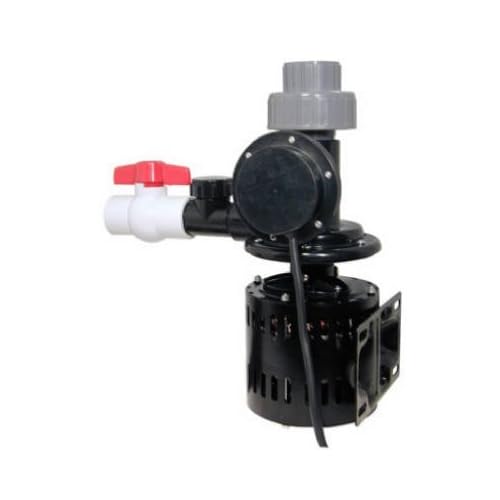
I used one of these:

http://www.amazon.com/Bur-Pumps-300514W-Laundry-Pump/dp/B000GA3PFG

The burcam pump is similar in design to one made by Hartell called the LTA-1 but is about half the price. The Hartell pump is a little more powerful so you might want to consider that if your drain is 10 ft of the ground.

Both pumps say that they do not need a vent. They come with a check valve to stop water flowing back into the pump. Mine is installed directly on a laundry tub and discharges into a 1 1/2 inch line that ties into the main drain line on the other side of my basement. Works fine so far. Just make sure you put some sort of lint filter in the laundry tub drain to stop the lint gunking up the pump.

hope this helps
 
I used one of these:

http://www.amazon.com/Bur-Pumps-300514W-Laundry-Pump/dp/B000GA3PFG

The burcam pump is similar in design to one made by Hartell called the LTA-1 but is about half the price. The Hartell pump is a little more powerful so you might want to consider that if your drain is 10 ft of the ground.

Both pumps say that they do not need a vent. They come with a check valve to stop water flowing back into the pump. Mine is installed directly on a laundry tub and discharges into a 1 1/2 inch line that ties into the main drain line on the other side of my basement. Works fine so far. Just make sure you put some sort of lint filter in the laundry tub drain to stop the lint gunking up the pump.

hope this helps

Phew...
Not something I would consider...

31BlcPXN6EL._SS500_.jpg
 
Phew...
Not something I would consider...

Is there a reason why you would not consider one of these pumps?

Not sure if it was the best solution but it was the most economical in my situation. When I bought my house, the previous owners had the washing machine discharging into the laundry tub which drained into the sump well. The sump pumped the water into the septic tank. This is against code where I live. Also, it made the sump well smell which was made worse every time I did a load of wash and churned up the contents of the sump.

I looked into the "box and pump" solutions but those required a vent, something that I did not have in the basement. Then I heard about these pumps by searching the web and figured it was exactly what I needed. Installed it 4 months ago and has been working well ever since. No smells either despite the lack of a trap.

Flotec also has a similar pump available at Home Depot (search for sink pump).

I would recommend that you also pick up a flood alarm that will let you know if the pump stops working and the laundry tub overflows.
 
Last edited:
drain

one thing you do not want is an open standpipe in the basement, if the sewer exits through the wall. If you have one and the sewer backs up ALL the water used in the house will overflow the standpipe.
 
one thing you do not want is an open standpipe in the basement, if the sewer exits through the wall. If you have one and the sewer backs up ALL the water used in the house will overflow the standpipe.

What about using a flapper check downstream from the standpipe and p-trap? This is what I do for water conditioning. I agree that you don't want a backup filling your basement:eek:
 
Back
Top