Muddy well water after heavy rain

WV Hillbilly

New Member
Messages
177
Reaction score
2
Points
0
Location
WV
I have owned this property a little over 2 years . I bought it from my father-in-law & he had a new well drilled 5-7 years ago . If he remembers correctly the well is 68 feet deep . It has a submersible pump . After heavy rains the water looks somewhat muddy . It seems as though the situation is slowly improving as time goes by . I thought maybe surface water was entering the well around the casing because the ground right around the casing was caving in somewhat . I dug about a 3 foot diameter x 3 foot deep hole around the casing . This put me below the pitless adapter by several inches . I then tamped the bottom of the hole & poured about 4 inches of cement . After the cement set I backfilled the hole & tamped as I backfilled .
Didn't solve the problem . The water clears right up within a couple days
after it rains . By the way my father-in law didn't live on this property , he just had a hunting camp on it & didn't use hardly any water from the well after he had it drilled . Any ideas on what might be causing this problem or
suggestions on filtering , ect , appreciated .
 
Most likely the casing seal has failed and surface water is entering your well. How deep does the casing go? 68 feet is not a very deep well.
 
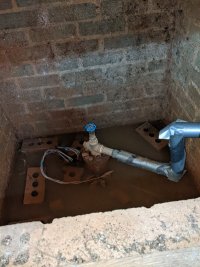
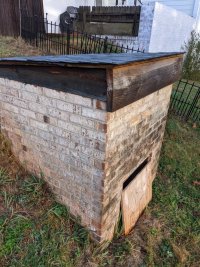
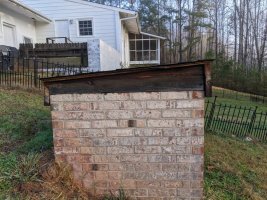
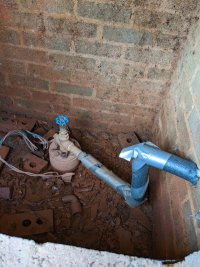
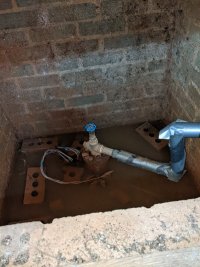
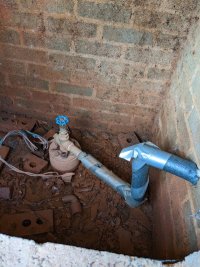
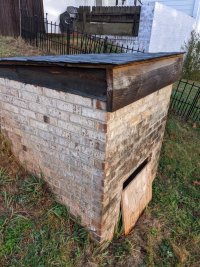
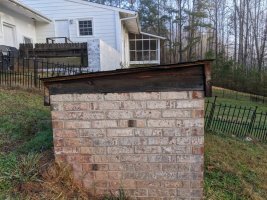
All, I'm having same well issue after heavy rains. My well is in a well house, in a pit. the well house is about 3ft x 3ft brick on the side of a hill. I have a 6 inch well casing, submersible pump.

I had issues about muddy water after rains before, and had to re-do the roof, it stopped the problem of muddy water after heavy rains for about a year.

NOW im having more water getting into well pit somehow, might be roof failing again?

Water is standing in well pit after heavy rains, sometimes covering well head, so seems like it is then getting into the well.

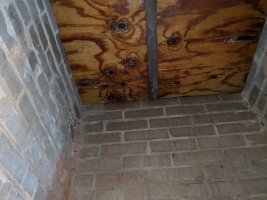
I wanted to get advice on if the roof is a bad design as it does not slope much, dumps the water on top side of hill, maybe reverse it? any way to make well-house roofs more waterproof?

PXL_20221216_003811970.jpgPXL_20221216_132332356.jpgPXL_20221216_132338893.jpgPXL_20221216_132126590.jpg
 
All,


Im having the same issue, muddy water after a heavy rain. 6” well casing, submersible pump.

I have a well house on side of hill, with a well pit, water getting into the pit, and I then think into the well from well cap / vent.

We had to redo the roof previously having same problem, redid the roof about 1.5 years ago and its been fine since then, but now its back to letting rain water into the well house / pit.

Attached are photos, is the roof just a poor design, not pitched enough? Somehow letting water in, is there a way people have been able to make these more waterproof?

PXL_20221216_003811970.jpgPXL_20221216_132126590.jpgPXL_20221216_132202467.jpgPXL_20221216_132332356.jpgPXL_20221216_132338893.jpg
 
Dig around and waterproof the walls on the back and sides and install Bib O drainpipe below the floor level that extends down the slope bedded in good draining gravel.
 
Further to LL's comment, water is not likely entering the pit from the roof.

A pit is a hole in the ground which will act similar to a ditch in its ability to collect water.

Water within saturated soil will be under considerable pressure and so will naturally flow toward an area with lower pressure which the pit will provide. The water is likely entering through the walls, up through the pit floor, or possibly both.

Because of the potential for well contamination, pits are now rarely utilized. Well casings are now extended above grade level, and the water will be pumped out from the top of the casing (your current situation) though a well seal in areas not subject to freezing conditions, or through a pitless adaptor located below the predicted frost line.

Edit to add: The slope of the roof is making the water situation worse since it is dumping the roof water into the higher soil behind the well house, instead of directing the water downhill, away from the enclosure.
 
Last edited:
To work around the pit flooding problem, get a utility pump controlled by a sensor, such as a float switch, that can work with shallow-enough water.

The proper fix is to have the pit demolished, the casing extended sufficiently above ground, and a pitless adapter installed. Maybe you would not even have to have the pit demolished, but local rules require it in some places.

If you doubt the pit floods, put an uncoated aspirin tablet, or two, on one of the bricks. Water will make the tablet disintegrate.
 
Because of the problem you are having, well pits are illegal in most states. A licensed pump installer would not be allowed to leave a pit in use and would install a pitless adapter and seal the pit and casing.
 
  • Like
Reactions: AVR
Thanks for all the responses so far, very helpful. Yeah this is unfortunate, its a 1970s home. I have flipped the roof to drain other way and put a tarp.

Had some light to moderate rain on Saturday, went and checked it, and saw some water in bottom of pit, didn't see much evidence that the water got in from roof.

So, I will have to look at options, well companies have said raising the casing above grade. $1,200 ballpark cost.

Is that the best solution?
 
Thanks for all the responses so far, very helpful. Yeah this is unfortunate, its a 1970s home. I have flipped the roof to drain other way and put a tarp.

Had some light to moderate rain on Saturday, went and checked it, and saw some water in bottom of pit, didn't see much evidence that the water got in from roof.

So, I will have to look at options, well companies have said raising the casing above grade. $1,200 ballpark cost.

Is that the best solution?
Yes.
 
  • Like
Reactions: AVR
So, I will have to look at options, well companies have said raising the casing above grade. $1,200 ballpark cost.

Is that the best solution?
If that gets you a pitless adapter in the process, yes. That is a very good price IMO. Even if they don't plan to install a pitless, it is probably a good price. If they just raise the casing, but don't protect against the water pipes freezing, it might still be ok if freezing is not going to be a problem.

Regarding the $1200, that will not include replacing the pump. I can almost guarantee that they will suggest replacing the pump while the pump is pulled. When I got my well demolished, casing extended, and pitless installed (in 2014), I had them put the old (originally installed 2002) pump back. Still working. But yes, getting the casing extended is the right move.

If the pump is in a 4 inch steel casing, then you might want them to go back down with a 3 inch SQ pump (with flow inducer). Maybe I should have opted for that. I suggest you think about that in advance.
 
  • Like
Reactions: AVR
Back
Top