2" of XPS (blue/pink board) is good for R10, which would be fine if it's over conditioned space, but you say this is a garage. If the garage is normally heated to 60F+, it's enough, but if it normally drops below 50 on cold days, more insulation is usually cost-effective. If it ever freezes in the garage you need at least R20.
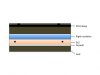
If this is suspended tube ("clipped to the subfloor" sounds like it is) use foil-faced iso, which gives you a radiant-barrier effect. The emissivity of the wood subfloor is high, and it'll be re-radiating a significant amount of heat downward, as will the PEX, when running at the higher water temperatures required for un-plated staple ups.
If it's plated tubing (heavy extrusions or sheet metal), don't leave any air gap- snug it right up there. In fact, if it's plated you might consider using OSB instead of gypsum, and dense-packing 5.5-6" of cellulose in there. With plates the heat transfer from the tubing to the floor is 95% conducted, 5% convected, sub-1% radiated. Aluminum has extremely low emissivity, and the radiated heat flux downward is quite small in plated systems (don't waste time/money on radiant barriers in plated radiant applications.)
If you're leaving an air gap between the insulation & the tubing (or if you use batt fiber insulation), spray-foam seal the ends of the joist bays to prevent thermal bypass currents from flowing in the gap whenever there's a pressure differential between one side of the garage and the other. A slight breeze will find every infiltration point, and it's leaking air into the gap the insulation cant' do it's job. (A well insulated wind tunnel is impossible to heat, eh?)