JeffV
New Member
- Messages
- 26
- Reaction score
- 0
- Points
- 0
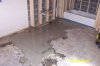
Moving right along on my basement bath project, the last thing I thought I'd screw up was the concrete patch. - I'm not real sure what to do at this point, but I poured 14 bags of 80lb quickrete and one week later, the finished floor surface is rough and gritty. Anytime I walk on it I kick tiny particles of sand. If I sweep it w/ a push broom, cement dust kicks up into the air. I'm thinking I used too much water and/or finish-troughed it too much.
My intent is to tile the bathroom and I don’t want to have bonding issues w/ the mortar down the road. Does anyone know of any products I might be able to put on it to fix the issue? Is the only fix for this to jackhammer it back out and re-pour?
Any thoughts, comments, opinions appreciated…
Thanks - Jeff
My intent is to tile the bathroom and I don’t want to have bonding issues w/ the mortar down the road. Does anyone know of any products I might be able to put on it to fix the issue? Is the only fix for this to jackhammer it back out and re-pour?
Any thoughts, comments, opinions appreciated…
Thanks - Jeff