
Where to tee in for water heater

Amopower

Member
Messages
63
Reaction score
0
Points
6
Location
Virginia Beach
Where would you guys tee into, the CPVC or the shorter copper run, coming from the water heater? I have heard several times about using repair couplings (slip couplers) which don't have the ridge on the inside, so that you can slip them down one pipe and then back up whenever there is no play in the pipes. I have yet to find a source for those, so I'm giving up on that option.
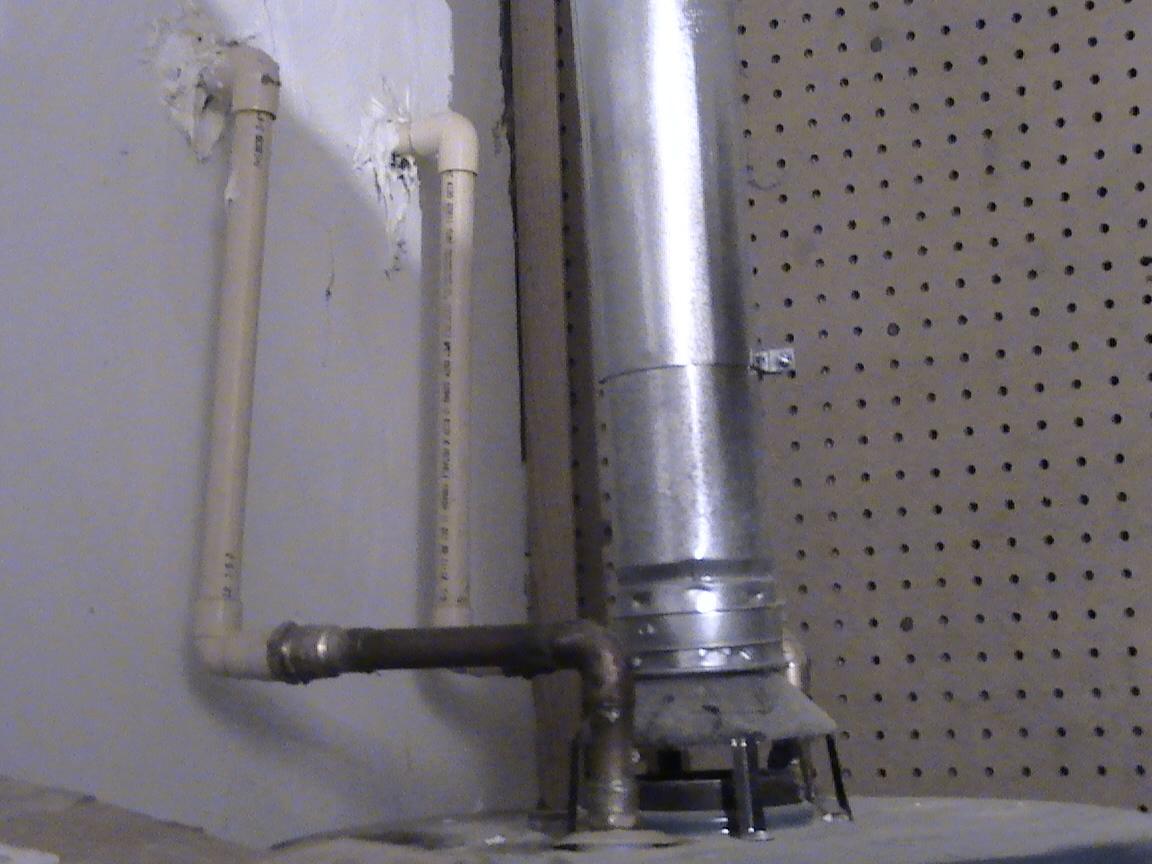
DSC00201.JPG
 
Last edited by a moderator:
Just cut it off, install what you want, then reattach is what I'd do.
 
tee

If you sweat into the copper be sure to wrap a well soaked wet rag around the connection to the CPVC. Otherwise the heat will travel back to it and soften the connection, and then you will have a leak.
 
Maybe i should just open up the plaster about an inch or so above the CPVC elbow that goes into the wall to give it some leeway, and tee on the CPVC line instead of the copper one. I'm afraid the copper length is too close to that transition fitting and may melt it.
 
What's the best way to drain enough water from the pipes to make this repair? Open all faucets, then start draining the water tank? It's too bad theres no way to tell when the water level has finally dropped below the pipes. I was hoping to just drain the tank a little bit then turn it on vacation mode while i do the repair.
 
I doubt you'll find a pvc/cpvc repair coupling for small pipe. Those are available for 3" and 4" DWV pvc for sure. Reason is ... the big pipe doesn't give much and frequently are in a ditch/under ground which makes it difficult for repair. A no-hub coupling is frequently used (rubber sleeve with hose clamps on each end). In your situation, copper repair couplings (I call them "sleeves") are not hard to find. For the PVC, it is fairly easy to manipulate and a coupling should not be necessary although it can be cumbersome and a little tough. One problem that can occur is that if you pull too much you can loosen a joint or crack the pvc creating a leak. Just be careful and it should not be a problem. Take your time and do a neat job. Pretty much ... you can cut and put in a tee about anywhere on the pipe(s) in the picture.
 
Am I not understanding something? :lol:
Why do you want to install a tee? I assume there isn't a leak, cuz if there was, then why would you be asking where to install it? I also do not see a shutoff valve anywhere, unless it's behind that stack.
Do get the water out of your pipes, just shutoff the main and open the faucets. Once the lowest fauvet in the house stops running, you should be good to go. And if you do have a hot water valve, shut it off, too.
Again, what exactly are you doing?
 
What I am doing is installing a hot/cold water faucet in the garage, so I'll be teeing into that area, which is pretty much the only decent piping in the garage that I can get to.
 
It might cost a few dollars...but one of the best things I've begun to do lately is use flexible copper supply lines on water heaters. If this projects gets a little funky I'd cut the PVC, install a tee the follow it with a male adapter and new fancy flexible supply lines which can be removed and reattached without having to cut the plumbing. The one's I've been using are flexible copper much like you see in gas lines attached to gas appliances. They really make HW heater swap outs a cinch.
 
I wouldn't call the flex lines "fancy", I'd call them the proper way to connect a water heater. You should install a ball valve on the supply line while you are at the project. Finally, are you certain that pipe is CPVC? In the photo it looks more like PVC.
 
My bad dude... after going in behind so many so called plumbers and replacing junk... them thangs is fancy! AND..they're very nice to work with!
 
Back
Top