lettucedance
New Member
- Messages
- 1
- Reaction score
- 0
- Points
- 0
I have very limited knowledge of what are acceptable drain / trap / vent configurations so please forgive me if this sounds rather simple.
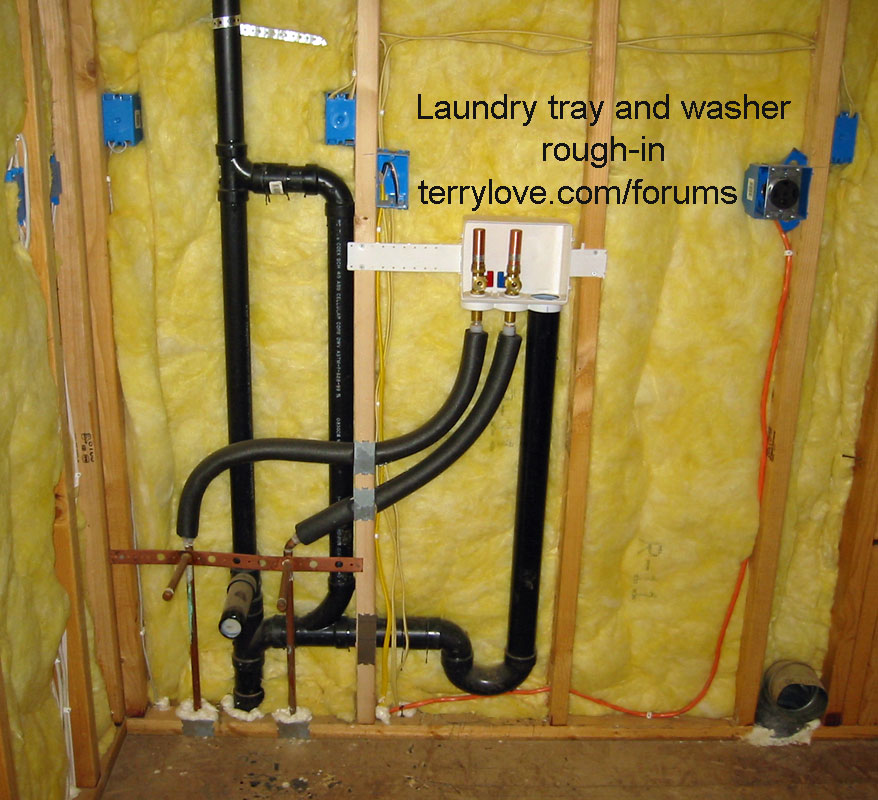
My existing laundry has a 2†drain pipe cast I think coming straight up out of the floor. A 1½ galvanized nipple then 2 galvanized T fittings stacked on top of each other. Bottom T goes left to a trap and laundry sink. The top T goes right to a trap and washer stand pipe. The pile continues straight up into the vent.
I’m going to be ripping the whole works apart and I’m wondering if this configuration is ok to keep. Should I be adding a vent for each fixture instead of the T’s going left and right and sharing the pipe as a vent.
Does that make sense? I wish I could post a picture of it.
I’m just not sure if the inspector is going to kick my butt around.
My existing laundry has a 2†drain pipe cast I think coming straight up out of the floor. A 1½ galvanized nipple then 2 galvanized T fittings stacked on top of each other. Bottom T goes left to a trap and laundry sink. The top T goes right to a trap and washer stand pipe. The pile continues straight up into the vent.
I’m going to be ripping the whole works apart and I’m wondering if this configuration is ok to keep. Should I be adding a vent for each fixture instead of the T’s going left and right and sharing the pipe as a vent.
Does that make sense? I wish I could post a picture of it.
I’m just not sure if the inspector is going to kick my butt around.