

Hello All,
I'm hoping for some insight into what looks easy, but has been impossible to find information on.
On one wall of my home, at opposite ends of the wall, I have two (dry) vents coming up to (near) ceiling height. On the opposite wall, in the middle of the building is the 3" vent stack they need to get to.
Pictured here (rough sketch just to show layout and relationship of the vents)
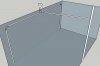
Original thought: Run the two vents along the wall to a T in the middle, which would then go across to the roof vent. But, no.. what sort of T? Santees and Wyes don't really make sense.
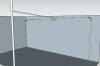
Do i have to do something odd with joining one of the vents into the bottom of the other then back and around?
Along these lines:
Other suggestions?
Thanks,
g.wagner
I'm hoping for some insight into what looks easy, but has been impossible to find information on.
On one wall of my home, at opposite ends of the wall, I have two (dry) vents coming up to (near) ceiling height. On the opposite wall, in the middle of the building is the 3" vent stack they need to get to.
Pictured here (rough sketch just to show layout and relationship of the vents)
Original thought: Run the two vents along the wall to a T in the middle, which would then go across to the roof vent. But, no.. what sort of T? Santees and Wyes don't really make sense.
Do i have to do something odd with joining one of the vents into the bottom of the other then back and around?
Along these lines:
Other suggestions?
Thanks,
g.wagner


