Basement bathroom - venting question

Mikeygstl

New Member
Messages
10
Reaction score
0
Points
1
Location
Saint Louis, MO
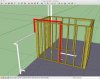
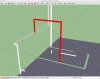
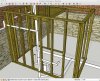
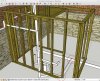
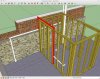
hard to describe, so I scetched it up. Basically, I want to know if this vent routing highlighted in red is okay. I am tying into an existing 2" horizontal vent, which currently vents a laundry sink. This vent currently comes out of the slab, ties into a 1.5" line for the laundry, then continues up and onto a ledge where brick meets stone foundation, along ledge for 11' or so, then turns vertical to tie into a 4" stack above a half bath on the first floor.

The ground rough for the full bath in the basement already exists, and is shown in sketch.

From what I am reading in the IRC, there is nothing I can find that specifically disallows a vent going up, then making a u-turn and coming back down, as long as it can drainon both sides, which this can.

Can anyone verify this layout is O.K.?
plumbingwithall.jpg

plumbingwithinterior.jpg

plumbing.jpg
 
No, a vent line cannot go back down like shown...It needs to rise vertically at least above the code minimum before it can run horizontally, but it can never go back down again. Any horizontal sections still need slope in them so that any moisture that might get there (rain, condensation, etc.) can still drain without blocking the line.
 
not too sure with your code, but ours would allow this... not good plumbing practice.... but it can serve its purpose so long as it doesn't have any low spots where water could collect and block air flow.
 
I agree with mikeplummer.

Not gonna say code-wise either way, but I think the intent of the codes are that you cannot create any potential traps in a vent that can fill with water.

Regardless of what the code may say, I bet many inspectors would not like it...
 
You are in the gray area between what "works" and "what is approved". Usually, (but there are specific exceptions which yours is not), An approved vent must maintain an upward slope to its termination. Yours, since it is an inverted "U" cannot "trap" water so it will "work", but would not be approved by most inspectors. Isee no reason why you cannot drill through the studs and install it conventionally.
 
Can you do it following one of the blue paths? Then you wouldn't have to dip down. I think that is what HJ is saying too.
 

Attachments

  • plumbingwithall.jpg
    plumbingwithall.jpg
    91.8 KB · Views: 1,156
As a rule, the vent goes up or sideways.
Not down.
So plumbers are always reaching for the sky, and drilling with that in mind. Conversations with inspectors aren't that fun. There's no need to rethink the last 100 years of plumbing. Waste goes down, and vents go up. Keep it simple.
 
Thanks for the input. I'll have the carpenter increase the wall to a 2x6 instead of 2x4 and then run a 2" vent through it.
 
why not run the vent 11/2, thats all a sink requires. One reason why venting is either flat or sloped up is because sewer gas is lighter that air and the vents serve the secondary purpose of venting the main.
 
With 1 1/2", you can run it through a 2 x4 wall if it isn't load bearing. You may need a few protection plates though.
 
Two entire bathroom groups can be vented off a single 1-1/2" line if you are under the IPC
 
So, the 2" coming out from the floor serves as a wet vent for the shower. dropping from that 2" to 1 1/2" through the 2x4 wall, then bumping back to 2" where it ties into the existing vent wouldn't be a problem?
 
basementbath.jpg

So, as shown, the 2" wet vent for the lav vents to a 1.5" through the wall, which ties into the existing 2" along the foundation wall.
 
basementbath.jpg

I realize these are just stick drawings that take a while to create and may not represent what you actually have but just for clarity, you can't use tees and 90s on the horizontal. You have to use 45s and wyes.

No need to redo the drawing if that's the case. Just want to make sure you know.
 
Back
Top