water main line

wescoaster

New Member
Messages
2
Reaction score
0
Points
0
Location
Vancouver, BC
Hi,

My main waterline broke a few feet on my side of the city valve. My house is slab on grade and I assume that the waterline is at least 18" deep however the shutoff was at least three feet down so it could be more. I know the main comes into the house under the slab to the middle of the house where the utility room is.

The plumber who attended to shut off the water is suggesting that I go into the exterior wall and up in to the floor joist cavity of the second floor rather than breaking up the concrete in the house. While this is doable from the access stand point, I am a little confused (after the fact) on how he would get out of the ground and into the side of the house if he does not come through the footing. I can't see that he would come up BESIDE the house and then enter the structure as, I assume, this would create a potential freeze issue.

It's definitely an easier route, as opposed to breaking 20 some feet of concrete floor but....


Any thoughts on the matter would be appreciated, thanks!
 
You would need to break concrete to get it into an interior wall to be sure to prevent freezing. You need to research the frost depths for proper burial depth, as it may need to be 3' deep all the way into the house.
 
Running a main water line up the outside of a home is not an option.

You could enter the home near the outside wall, by breaking concrete inside, and then once inside follow the floor joist toward then interior where the previous connection was made.

I know it's Vancouver, but it still gets pretty cold there.
In Seattle, we need at least 24" of cover and we're South of you.
 
What kind of pipe is it, and why can't it be repaired, unless it is a rusted galvanized line, which would be unusual to go that far under the house before it came out of the floor.
 
I see the advantage of Caifornia,
We run the water main up near the house, 12 inches of cover for the water main. Once near the house we bump out through the ground put in a water main valve a hose bib and pop into the wall. Generally all exposed copper or schedule 80 plastic, no insulation nor protection....
Michael
Sacramento, CA
 
I see the advantage of Caifornia,
We run the water main up near the house, 12 inches of cover for the water main. Once near the house we bump out through the ground put in a water main valve a hose bib and pop into the wall. Generally all exposed copper or schedule 80 plastic, no insulation nor protection....
Michael
Sacramento, CA

You would have fun working in northern WI for a few weeks. Our water line came up in the middle of the basement. The shut off at the street was about 10 feet below grade.
 
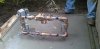
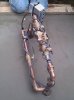
Here is an instance in the Seattle area where we needed a back flow device above ground and a way to keep it from freezing.

ballmer_backflow_1.jpg

We had to dig a ditch 80 feet for the electrical. The other plumbing contractor was going to lay an extension cord on the ground. This is right near the kids play things, so we didn't think that would be a good idea. You don't want someone tripping over a cord and unplugging it.

ballmer_backflow_b1.jpg

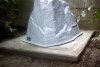
A nice fake rock to cover and protect the back flow.

ballmer_backflow_35.jpg
 
Last edited:
The existing line is poly butylene (I think) about 22 yrs old and grey in colour but appears to be a pex compression type crimp at the adapter into the shut off valve. the break is closer to the street valve, in the middle of the driveway. If I ha ve to dig to get to the break, I will be replacing the whole line instead of gambling on the material not failing again. Why so far into the house? No idea, I didn't build it! :)
 
IF we were allowed to install a bypass around an RPPBFP valve, it would have to have a locking valve, and the city might want the key to it, so the user could not just isolate the valve and then open the bypass when the valve started dumping water.
 
IF we were allowed to install a bypass around an RPPBFP valve, it would have to have a locking valve, and the city might want the key to it, so the user could not just isolate the valve and then open the bypass when the valve started dumping water.

I was thinking the same thing. It kind of defeats the purpose of the RPZ. If the occasion occurs when a bypass its needed we have to install a second RPZ on the bypass.

John
 
Last edited:
Back
Top