Hello all,
I have been trying to install a water softener and have come up with several items of concern. To explain the previous setup:
To lead off: I live in Indiana, UPC '97, well/septic.
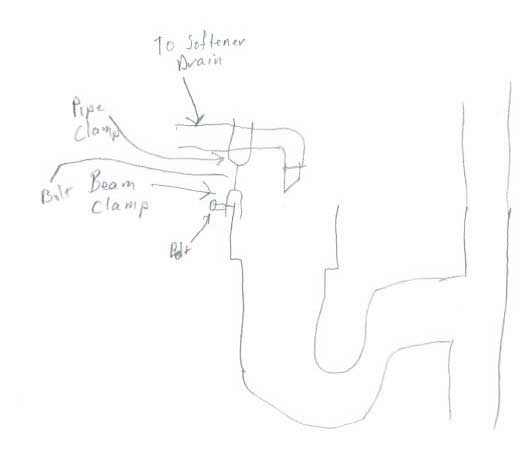
My main drain to the septic system is on the north side (centralized) of the house, the bathrooms in the middle and south side of the house centralized in relation to East/west. My water enters on the north west side of the house (I live in a rectangle =-) ) The softener is by that water entrance, basically a utility room in that area with the geothermal hvac, electric panel, and pressure tank for the well. They extended what (*at a glance*) looks to be 2" PVC from where the plumbing from the bathrooms meet up to where the softener is installed. The previous owners had a p trap and a short vent (8", no auto air vent) on that trap installed where the water softener enters. Since all this takes place a couple of inches below the joists there isn't much room there. To connect the softener and another line from a mini-sump from the geothermal unit condenser they put a horizontal line from the P trap with an end cap and both drain lines stuck in there. I would take pictures, but its hard to see (they roughed out some walls in the basement too...).
My question: I am tempted to replace the softener exactly as it was, but I know there are things fundamentally unsafe. I would like to put a air gap in, but the only one I THINK may work is the gap-a-flo, and I would have to be creative (can handle being at most 45deg. angle). I would have to put in one of those automatic air vents in what looks like is essentially an open vent (the plumbing is on the other side of the house, no vents nearby (20' or so). I could draw a picture if my description is lacking. There is no way to put in a standpipe, no clearance with the floor above. The only airgap I can see working is the one I listed, unless there are other ideas.
2 things about the situation... I doubt I am ever going to have a neg. pressure and a sewage backup at the same time. If my pump is out, I'm not running anything into the sewer. My houses plumbing is all essentially above grade by about 1.5 ft, so very doubtful any storm water related septic backup would happen (We're also high, the basement walks out to the south and is at grade and higher than a good part of the land back there.)
This seemed to work for the previous 12 years, seeing as the water softener I am replacing is that old and placed when the house was built.
Any solutions or suggestions would be appreciated.
I have been trying to install a water softener and have come up with several items of concern. To explain the previous setup:
To lead off: I live in Indiana, UPC '97, well/septic.
My main drain to the septic system is on the north side (centralized) of the house, the bathrooms in the middle and south side of the house centralized in relation to East/west. My water enters on the north west side of the house (I live in a rectangle =-) ) The softener is by that water entrance, basically a utility room in that area with the geothermal hvac, electric panel, and pressure tank for the well. They extended what (*at a glance*) looks to be 2" PVC from where the plumbing from the bathrooms meet up to where the softener is installed. The previous owners had a p trap and a short vent (8", no auto air vent) on that trap installed where the water softener enters. Since all this takes place a couple of inches below the joists there isn't much room there. To connect the softener and another line from a mini-sump from the geothermal unit condenser they put a horizontal line from the P trap with an end cap and both drain lines stuck in there. I would take pictures, but its hard to see (they roughed out some walls in the basement too...).
My question: I am tempted to replace the softener exactly as it was, but I know there are things fundamentally unsafe. I would like to put a air gap in, but the only one I THINK may work is the gap-a-flo, and I would have to be creative (can handle being at most 45deg. angle). I would have to put in one of those automatic air vents in what looks like is essentially an open vent (the plumbing is on the other side of the house, no vents nearby (20' or so). I could draw a picture if my description is lacking. There is no way to put in a standpipe, no clearance with the floor above. The only airgap I can see working is the one I listed, unless there are other ideas.
2 things about the situation... I doubt I am ever going to have a neg. pressure and a sewage backup at the same time. If my pump is out, I'm not running anything into the sewer. My houses plumbing is all essentially above grade by about 1.5 ft, so very doubtful any storm water related septic backup would happen (We're also high, the basement walks out to the south and is at grade and higher than a good part of the land back there.)
This seemed to work for the previous 12 years, seeing as the water softener I am replacing is that old and placed when the house was built.
Any solutions or suggestions would be appreciated.