Dielectric Union Leakage

Vince B

Member
Messages
36
Reaction score
1
Points
8
Location
Pennsylvania
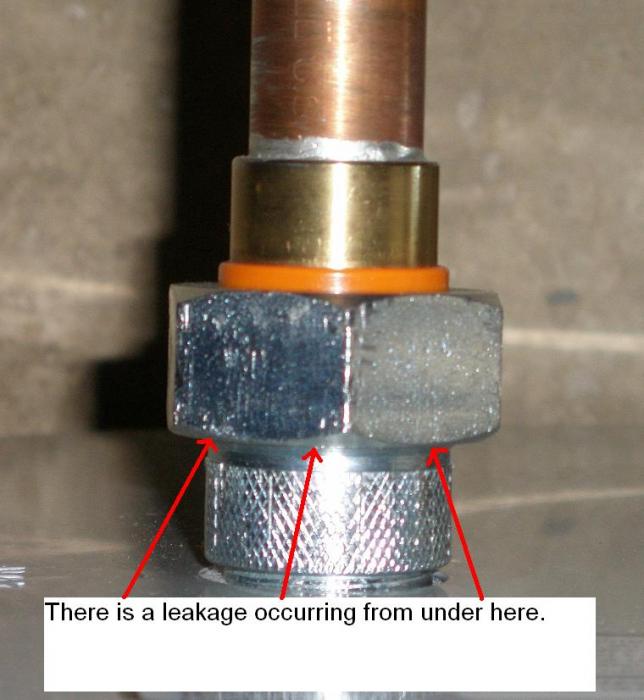
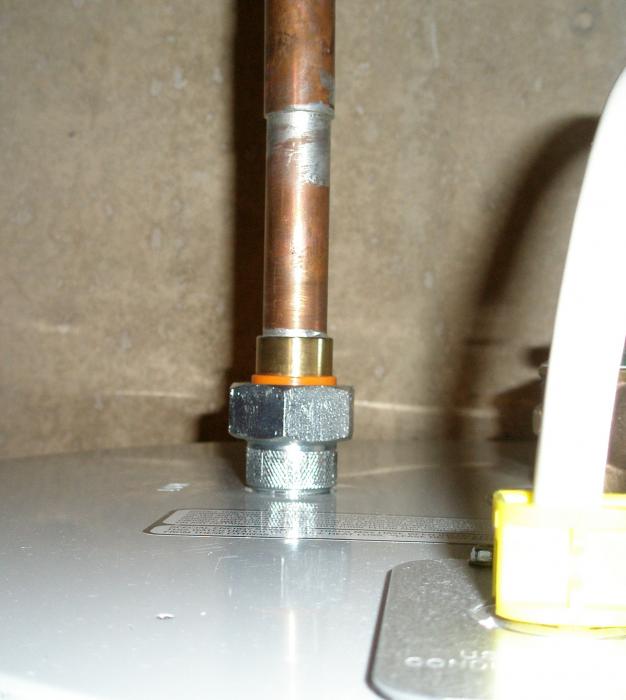
I had a water heater replaced about 6 months ago and now one of the unions is leaking. I know there are two pieces (threaded pipe adapter / union nut) that can be tightened. The question is which one or both and what direction(s)... Is this something I can try to resolve or should I call the plumber back to resolve. Why would it be leak free for months now all of a sudden start leaking? Any help would be greatly appreciated.

Water Heater 001.jpg
Water Heater 002.jpg
 
Dielectric unions are garbage, there's a little plastic sleeve inside and that's what always leaks. You can try to tighten it like you would anything else (the outside flange portion) but it would only be a matter of time, I would just replace it with brass.
 
Thanks for the advice! Just so I understand, tighten the top nut not the bottom threaded pipe adaptor correct?
 
Hi Vince,
Have you considered calling back the installer to repair the leak.
This should be part of the installation guarantee.
 
Dielectric unions are garbage, there's a little plastic sleeve inside and that's what always leaks. You can try to tighten it like you would anything else (the outside flange portion) but it would only be a matter of time, I would just replace it with brass.


I agree to an extent, but that plastic sleeve you're speaking of is only to keep dissimilar metals from coming in contact, nothing else.


The leak point of that connection is the rubber washer where that brass sweat fitting comes in contact with the rubber and the top of that dielectric union.


I use these connections exclusively even though galvanized clogs up over time. I go an extra step and cut small sections of dip tubes, flange side up and insert through the opening of the female dielectric that brings one solid plastic port from dielectric nipple to top of union.

That distance is 3/8" where those galvanized threads are exposed. Sometimes less if you can hard crank those dielectrics down.

I'd love to have the capital to deal with china, build dielectrics that are brass with teflon washers that provide a better longevity. Good brass never goes bad over time.

Realistic point of view would be the plastic inserts I've been installing for years inside that union to keep the galvanized from closing up the connection.

Too often I've seen 3/4" FIP's to dielectric nipples leak, contributory to the galvanic corrosion that starts from the go when those two metals come together. There is a slight area (first row of threads) that are in contact with water and copper and that's all that is needed to make that situation start destroying the galvanized.

Code in my area requires an interruption of continuity through that tank. I don't care if water works as the "connection"...I'm talking about copper to steel or galvanized.

Removing those factory installed nipples voids the warranty on most tanks, some you cannot even get to them to remove them, some have heat traps.

Something goes wrong with that heater and a factory rep comes out to cover the warranty on a problem, you've just given them good reason to pick and nitpick and not cover the problem.


A brass 3/4" by 3/4" DUF (Dielectric Union Female cc sweat by ips) would be a nice addition to the plumbing profession.

A product you can reuse from water heater to water heater, short of new gaskets.


That is the reason why you don't see them; can't make money if it is a lifetime connection.

 
these are sweet

Dunbar,,, I know you are a guy that likes straight lines
right angles on everything ect... so this might chapp your butt.


we got away from our dialectric union and female adaptor problems
always clogging up by going to these braided brass craft connectors
they are dialectric, and are great ....


they really work well and have saved me a ton of labor time .
saves lots of fittings, soldering, and NO future call backs for leaks...


I have also had fits with the Bradfords recently leaking at the nipples at
the unions or copper female adaptors, then having to tear the whole job out--re-tape
and re-pipe dope the whole mess. all due to a micro leak....
..


dilectric_union_2.jpg
 
Last edited by a moderator:
Mark, I have been using those same flex connectors for some time now for the same reasons as you. They're great! I can't justify using galvanized fittings in a potable system, especially since I make sure the water heaters I use have brass nipples in them.
 
Last edited:
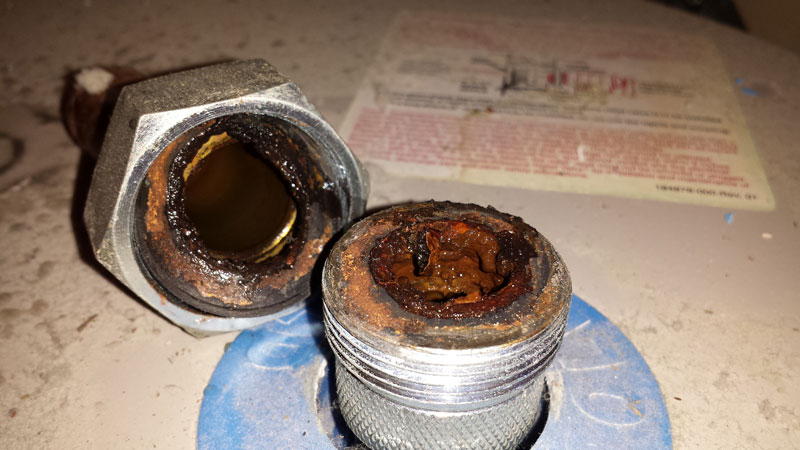
I see everyone's response and you have a few choices to consider, but, what I do is to loosen the nut and open the union, clean any sediment and crud that has grown on them, then wrap teflon tape around the plastic washer, insert it, and tighten it down.

It has worked so far, about 5 years now.
 
I wouldn't wrap Teflon Tape around anything except tapered pipe threads.

If you can wrap tape around a flat sealing surface, and it didn't leak, you were just plain lucky.

Most of the time, introducing tape threads around a sealing surface, with create a gap for the water to stream through.

Most of my job as a plumber, is to go to peoples homes and remove Teflon Tape.

A union has a built in seal, it doesn't need a peanut butter cookie mushed in there.

A connector like the braided supply, will have rubber seals on the end.
You don't need banana peels in there.

dilectric_union_2.jpg


I would never bother to install a dilectric union on a water heater.
 
Last edited:
Back
Top