Chienlaid
New Member
Hi everyone, I'm new to the forum and I decided to come here and ask the experts.
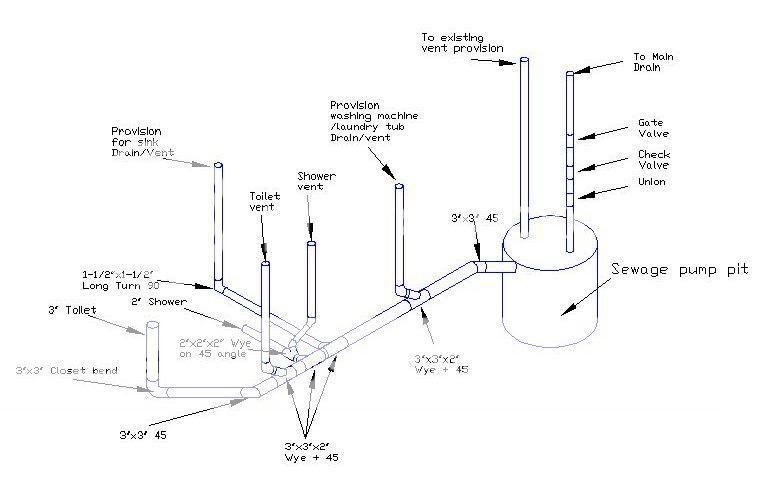
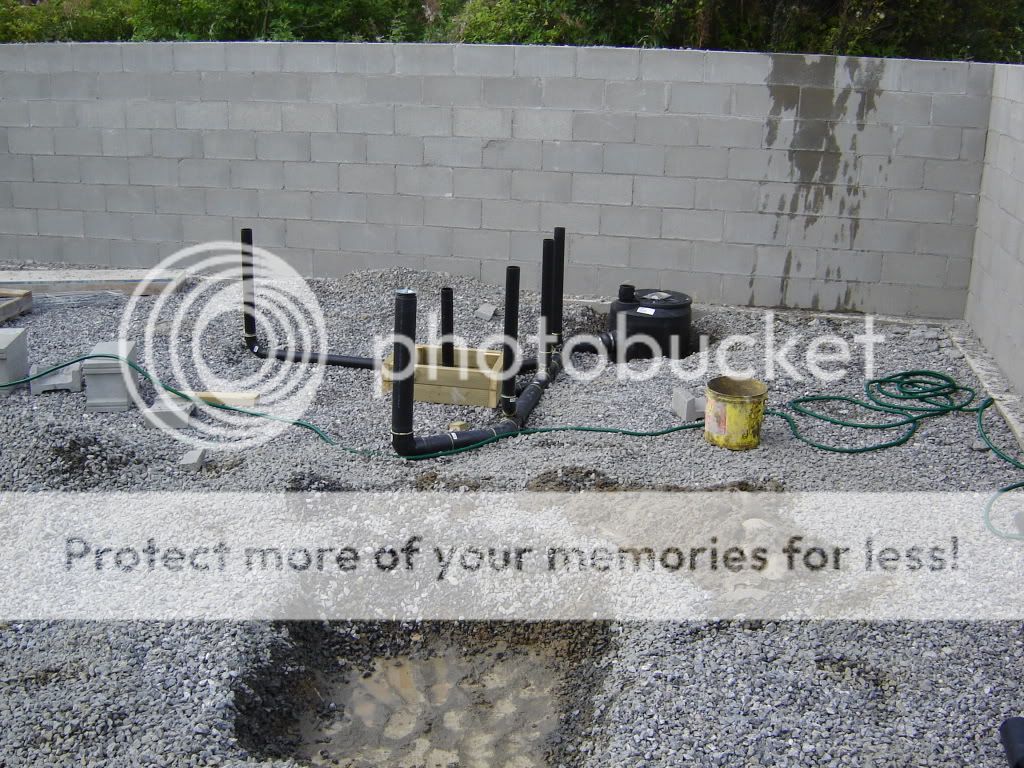
We're building a new house and the foundation is almost complete and I need to do a rough in for a future bathroom and laundry room in the basement. Here is a sketch of the rough in. I want to know if this is how it's done and what needs to be revised or changed before I go ahead and do this.
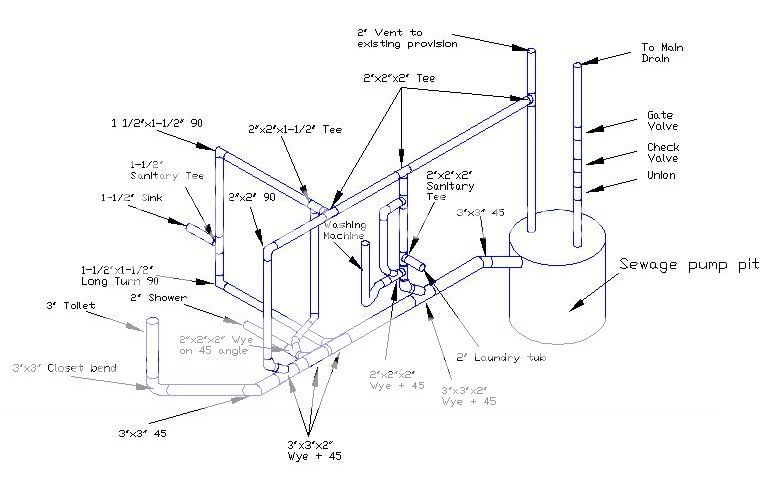
The Second picture is what it's going to look like once I tie everything together. I didn't put a P-trap on the shower or sink but they will be installed when I finish the bathroom.
The other question I have is a 3" pipe big enough or should I go to 4" for the main drain to the sewage pump basin?
Oh and one more question. Should I be adding clean-outs anywhere?
Thanks guys
We're building a new house and the foundation is almost complete and I need to do a rough in for a future bathroom and laundry room in the basement. Here is a sketch of the rough in. I want to know if this is how it's done and what needs to be revised or changed before I go ahead and do this.
The Second picture is what it's going to look like once I tie everything together. I didn't put a P-trap on the shower or sink but they will be installed when I finish the bathroom.
The other question I have is a 3" pipe big enough or should I go to 4" for the main drain to the sewage pump basin?
Oh and one more question. Should I be adding clean-outs anywhere?
Thanks guys
Last edited by a moderator: