
Proper Testing of T&P Relief Valve

Molo

Member
Messages
922
Reaction score
2
Points
18
Location
Cold New York
I would like to know the best way to test these and how often it should be done.

Thanks for any replies.
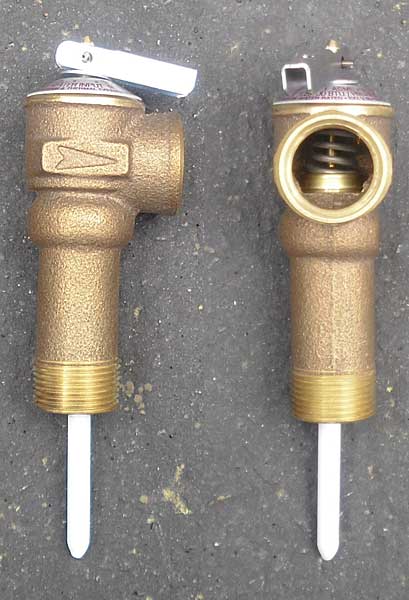
tp_2.jpg

T&P Valve looking at two sides.
 
Last edited by a moderator:
Like to see if the kill switch engages¿
I would think that to recreate a scenario in which there would be too much pressure or temperature limit would not be advisable. Manually tripping (opening) the t&p would seem appropriate. You want to see water exiting out the relief line. Can either have someone at the other end at a safe distance but you will hear it discharge as well.
 
Water heater manufacturers recommend montly testing by lifting the tab, then allowing it to reset. There is no procedure outside a laboratory to accurately or safely do any other tests.

I suspect that the design is inherently long lasting. We see plenty of gas explosions involving water heaters, but I don't remember seeing anything about one blowing up due to a failed TP/
 
T&p

I have seen many T&P valves, especially the ones that have the discharge routed upward causing corrosion in them, which DO NOT, and CANNOT function, so they are the same as if they were capped off. THAT is the major reason why water heaters explode. If the T&P can operate, the heater will seldom reach critcal mass. Flip the handle periodically. If the valve will not open, or will not seal shut, it was time to change it anyway.
 
Having just tested mine (only 12 months old) and having seen it fail to shut off fully after the first attempt I would advise the following:

- open fully to test but also to flush out any sediment.

I only opened mine slightly and some sediment (I assume) caused it to not seat properly upon the return and leak slightly when I shut it back off. I then opened it fully and shut again without any leaks this time.
 
Back
Top