Copper + compression fitting question

JohnDavid

New Member
Messages
9
Reaction score
0
Points
0
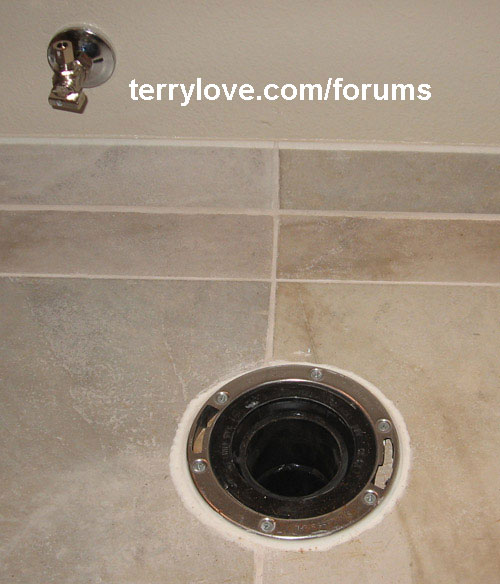
I have put in copper in my bathroom renovation--1st time sweating joints. I have a stub-out coming out of the floor near the base of the toilet (Soiree), since the wall behind the toilet is where a pocket door goes.

Is it normal to just cut this off and attach the valve with a compression fitting? The reason I'm asking is that the Black and Decker plumbing book I have says you don't use compression fittings with type L copper. It says that compression fittings are only good for type M or flexible copper. Is this your experience? What would you do?

Thanks,
John
 
The biggest hassle with compression fittings is tightening them too much. My opinion, it should work. To make it smoother when tightening, you can put a drop of oil on the threads. Hassle on a floor, though, is that it could get kicked or knocked when you wash the floor.
 
What makes you think that the company which makes cheap electric drills would know about plumbing!

Just kidding. They own price pfister as well. Ooops!

Anyway, they are just wrong about the use of compression fittings.
 
Forget about compresion fittings stick with sweating them on.
 

Attachments

  • SwtAngle stop.jpg
    SwtAngle stop.jpg
    5 KB · Views: 750
Wait I forgot about these style angle stops. Just have to buy the the chrome pipe risers... if you can still find them.
 

Attachments

  • Kohler Angle Stop.jpg
    Kohler Angle Stop.jpg
    11.7 KB · Views: 712
flange_02.jpg

I use compression all the time.
But ask a plumber where their local code insists on sweating, and that is all they will know.
I've never sweated on a shutoff before.
Not in 35 years.
Yet we buy compression shutoffs by the box, 100 in a box, and we burn right through them.
 
shutoffs

In the old days, we used threaded stops, but since then I have always used compression stops. Actually they work BETTER on type "L" copper because there is less chance of damaging the tubing because of overtightening. Sometimes I think the people who write the books, do it because they don't actually know how to install plumbing. They have just read other books and changed the wording.
 
HJ, I still run into homes with the old threaded risers. Luckily I never had to have to change them old piped risers, I did find a place that carries them but at a cost.

Plumbing back then had to be so precise, make sure the angle stops lined right up with the fixture it was hooking up to and the right distance from the fixture.
 
A method of connecting two pipes is by using compression fittings. These strong and reliable fittings can be put on using just a pair of wrenches. Because these fittings don't require heating, they work well in situations where you're working with wet pipe.

1. Before attaching a compression fitting, remove any burrs or debris from the inside and outside of the pipe ends.
2. Slide the compression nut onto the end of the pipe (it should fit snugly), followed by the ferrule and the compression body.
3. Slide the nut and ferrule onto the fitting threads, and hand-tighten.
4. Firm the joint by using two wrenches to tighten the nut and fitting body securely
 
compression

Do you acutally take the valve apart and do steps #1, 2, and 3? I cut the tubing, slide the valve onto the stub and then tighten the nut. And have done so for over 50 years.
 
Back
Top