air gap

johncm

New Member
Messages
10
Reaction score
0
Points
0
I'm replacing an old dishwasher that had the drain hose connected to a 1/2" copper tube that runs through the kitchen floor to the basement. This is connected to a p-trap which runs into a 2" vertical drain pipe (total length of drain hose/tube about 4'). Do I need to install an air gap in the counter top and drain into the disposer or can I continue to use the existing setup?
Thanks
 
airgap

If the drain plugged up under the floor, where it usually will, the water will back up into the sink, but before it gets that high it will backup into the dishwasher, and overflow it. Connect it to the disposer even if you do not use the air gap.
 
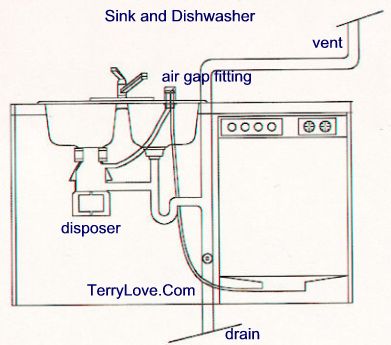
Install air gap on the deck of the sink to make the connection worthy, otherwise don't even bother doing anything because nothing you will do will provide protection. High looping never gets the piping above the flood level rim. Take for example how you drain a swimming pool where the hose is dragged over the top of the pool onto the ground. Once that continuation of water starts, which in a kitchen sink is a clog with the water rising in the sink, that sewage is automatically going to the dishwasher. Simple as that. Air gaps are required in any restaurant in any state on dishtanks to prevent backflow of wastewater, nothing is an exception from the reality that it can and will backflow without a air gap, period. I see and hear shortcuts in plumbing all the time, it's predictable with some plumbers and majority of DIY'rs.
RUGGED
sink_dw.jpg

Plumbers are required to protect the health of the nation.
The rest can fake it.
In third world countries, they don't have plumbers.
Comment by Terry Love
 
Last edited by a moderator:
air gap thanks

Thanks for the advice. Makes sense! Will correct on the new dishwasher installation.
 
The need to use an air gap seems to be a matter of individual opinion among plumbers. Some say use one, but many other say forget it unless required by local code. As a DIYer, I have never used one and have never seen a need to. If you do not use one, you make make certain the drain hose is looped and secured to the underside of the countertop in such a way that the hose can not kink. Since the loop in the hose is higher than the water level in both the dishwasher and sink. This prevents the water from syphoning out of the dishwaser and if the sink clogs, the water will not back up into the washer. As advised, run the hose into the sink drain, through the disposer if you have one, or if not, use an adapter tee under the sink.
 
If the drain, or even just if the garbage disposal is full of junk reducing flow, and the dishwasher drain pump doesn't pump out all the water AND fill line with air far enough to break the siphon, its all going back to the dishwasher after spending a little time in the garbage disposal.

Now I don't have a clue how well a dishwasher drain pump works on air, maybe they work great and pump enough air through the drain line to get enough water out so it doesn't siphon back.

What concerns me is how well can I be certain of detecting when garbage disposal water has siphoned back into the dishwasher. Sure 2" of slimey water in the dishwasher or water pouring out of the dishwasher when the door is opened is a pretty good clue, but suppose the drain is just a bit slow, so only a few cups of water drain back each time, or that the clog clears with the final dose of hot water down the drain.
 
Back
Top