To replace or not to replace...

Livin'TheDream

Kitchen & Bath Designer, Remodeler
Messages
8
Reaction score
0
Points
0
Location
Portland, Oregon
Website
www.maughandesign.com
Hi, everyone. First time poster here. Thanks in advance for any advice.

I am in the middle of a kitchen remodel project that includes new hardwood flooring installation in adjacent rooms, including a powder bath. The homeowner did her own project demolition, and removing the powder bath sink was part of that. Prior to the hardwoods going in, I noticed a small puddle of water under one of the valves. Homeowner was out of town, so I tightened it by hand, put a bucket under it, and watched it for a couple of days. It did continue to seep a little water; it averaged a drip a day. So I talked to my plumber about it, and he wasn't very concerned, saying that kind of leak is very common. Yet, because of the hardwood going in and my responsibility for it, I posted my concern on the JLC forum and got several good responses with opinions ranging from "no problem" to "replace it immediately before it floods... happened to me!". I also was advised by a number of posters to replace the compression valves with 1/4 turn ballcock valves.

All great advice so far... so I recommended this to my client, who agreed to whatever course of action we feel is best. Only trouble is... my plumber is still of the opinion that it isn't really necessary. He went to a lot of helpful effort to explain his position, and he feels that once a new faucet is attached, the valve will go back to being open all the time, and therefore will not leak. Instead, the faucet will take the pressure point. This also made sense to me.

So now, I am at a cross road. I do not want to recommend replacement (expensive with the new copper work and sheetrock patching required) if it is truly not necessary. And I don't want to recommend that she leave things as they are if it is really not a good idea. I would appreciate anyone weighing in on this to help us decide on the best course of action.

Kathie
 
Depending on how the old valve is attached, it might be a 5-minute affair to replace it. Under normal circumstances, you've got a better than 50-50 chance of replacing it without doing wallboard work.

How IS the old valve attached: compression, threaded, soldered?

I'd replace it with a new one...no time like the present. The things do wear out, and if tightening the packing nut doesn't work or if it isn't a 1/4-turn ball valve, replace it.
 
I would replace the valves just to be on the safe side,But I have done
many bath remodels where the angle stops would seep when no faucet was
connected and reconnected with no problem.However new stops
would make it easier to turn water off to faucet in the future should
it need repair.
 
Depending on how the old valve is attached, it might be a 5-minute affair to replace it. Under normal circumstances, you've got a better than 50-50 chance of replacing it without doing wallboard work.

How IS the old valve attached: compression, threaded, soldered?

I'd replace it with a new one...no time like the present. The things do wear out, and if tightening the packing nut doesn't work or if it isn't a 1/4-turn ball valve, replace it.

The old one is a compression valve. It's probably 15 years old - the house was built in late 80's or early nineties.

My plumber says the repairs would require cutting sheetrock, as re-tightening new parts onto the old copper won't ever seat properly and WILL leak in the future. So he will only do the repairs if he can replace the stubb outs, too. I think if he is the one standing behind the work, then I can't ask him to do something he feels is not safe or correct.

It's a bummer because we JUST repaired the sheetrock above from tile tear out! :-(

Kathie
 
So this is like a second opinion¿ Can you post a pic. Drywall repairs are an annoyance but easily took care of. Sounds like the plumber wants to be able to couple a new piece of copper behind the wall and have some new pipe to connect to¿
 
So this is like a second opinion¿ Can you post a pic. Drywall repairs are an annoyance but easily took care of. Sounds like the plumber wants to be able to couple a new piece of copper behind the wall and have some new pipe to connect to¿

Yes - exactly that... a second opinion. Not about the necessity of the work behind the wall, but about whether the valves should be replaced or not. If we end up replacing them, we'll do it the way the plumber prefers. He's the one standing behind his work. But I am ultimately responsible if the whole thing leaks on her new floors - so I am asking if you agree with his basic assessment that this is common and the valves don't need to be replaced.

Can't post a pic, unfortunately. He capped them off today.

Kathie
 
So if we say different the plumber loses this job and you get a different plumber¿ I don't get it.

Of course not :-)

If the consensus is that the valves ought to be replaced, then I write the change order for the client, and this same plumber changes the valves. Even if he thinks it's overkill, he's happy to do the work.

If the consensus is that the valves are likely okay, then I present the option to the homeowner. If she decides to leave things as is, then this same plumber just finishes the rest of the job.

And if we do replace the valves, the sheetrock repair is part of the deal.

Kathie
 
Last edited:
Often, you can reuse the existing nut and ferrule. Taking the old one off, especially if it was overtightened, might leave the pipe stubout deformed, and then, it might leak unless you can cut off that section back to 'pristine' pipe.
 
We replace compression shutoffs all the time.
It's not rocket science.

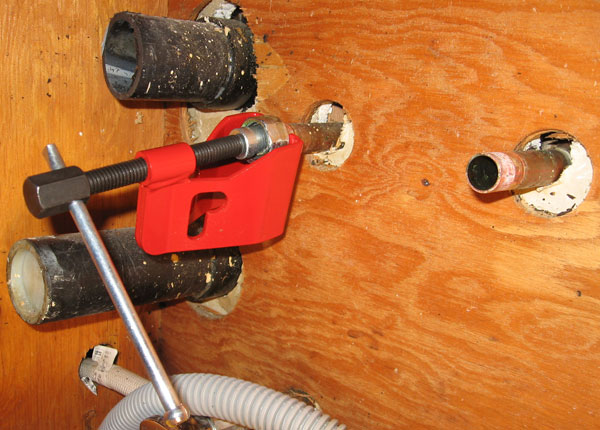
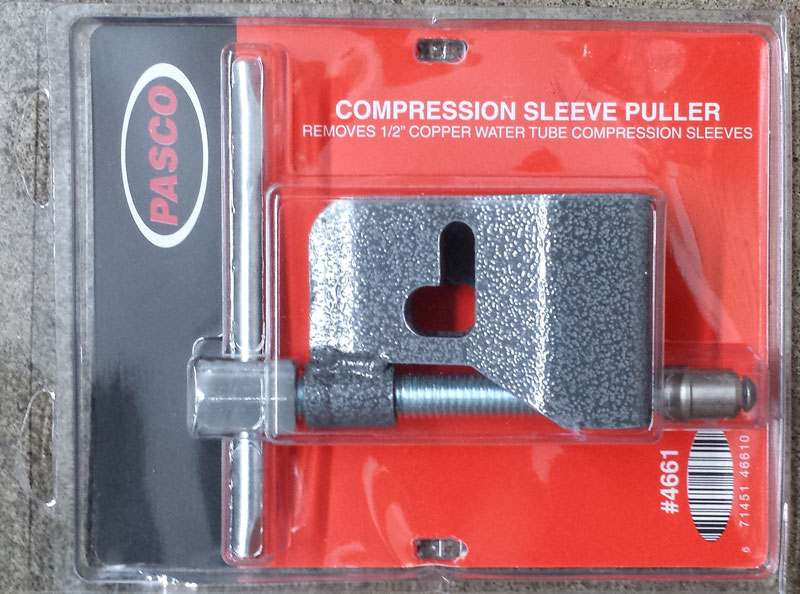
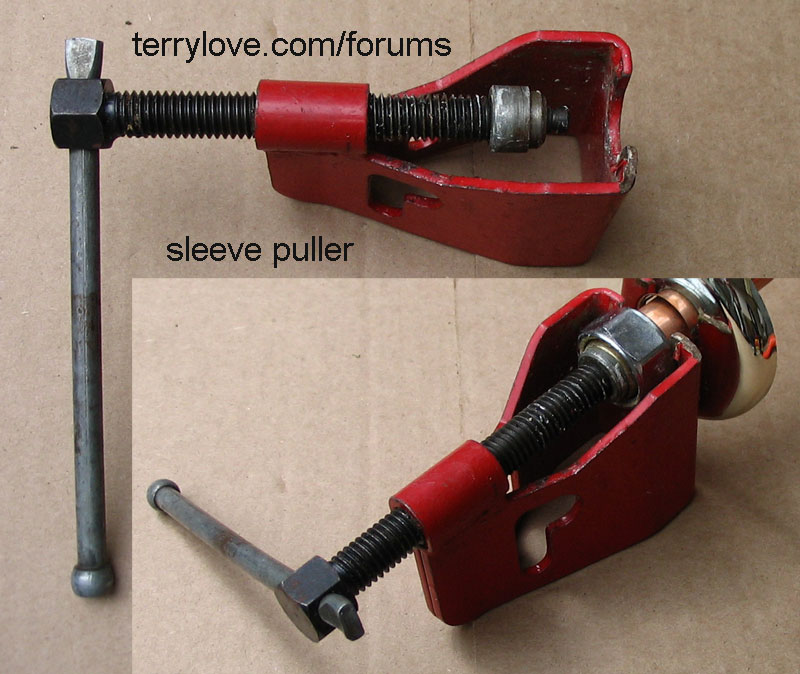
If your plumbers is not used to this type of work, tell him to buy the sleeve puller that is hanging on the wall at the parts counter where he buys his materials.
Yes, they sell them at plumbing supply stores, for plumbers that know how to use them.
We wear ours out pretty quickly because of all the stops we are replacing.

To say that you can't do this type of plumbing work is just, well how do I say this kindly?
It's kind of amateurish.

gorry_04.jpg

The copper pipe on the right has already had the sleeve and nut pulled off.
Looks pretty good to me.

sleeve_puller_3.jpg
 
Last edited:
Wow....Never seen a compression sleeve puller before...and I work at one of those wholesale stores....pretty cool. But, what's the point of it? Isn't the copper ruined after the compression ring is seated into it?
 
Wow....Never seen a compression sleeve puller before...and I work at one of those wholesale stores....pretty cool. But, what's the point of it? Isn't the copper ruined after the compression ring is seated into it?

Did you read the part that we do this every day?

The pipe is not ruined.
If you want to shine it up a bit, you can use some emory cloth on it.
In a rare occasion, the sleeve may have dented the pipe, if so, just cut behind it
With the nut and sleeve off, you have many more options.
We buy the shutoffs by the case. 100 in a case.
When we do it, they never leak.

Is it really that hard for you guys?

sleeve_puller_1.jpg
 
Last edited:
I used them for years and never had a problem I also used compression
stop and waste valves when get that little trickle of water that makes
soldering a pain.Good for emergencies too.
 
plumber

What kind of plumber refuses to replace the valve when it is obviously necessary? Get a different one. One who does not consider a pan under a leaking valve the proper repair for a leaking valve, ESPECIALLY where there is a wood floor.
 
But, what's the point of it? Isn't the copper ruined after the compression ring is seated into it?

This is the belief my plumber expressed.

Terry: I am going to talk with him about the sleeve puller and see if we can't avoid going into the wall. Thanks also for sharing how often you've done this successfully. I appreciate the bigger picture context that gives us.


Kathie
 
Unless the ferrule and nut that MIGHT be stuck on the pipe when the valve is removed are damaged, other than looks, you can leave them there and use them to anchor and seal a new valve on.

If the current one was overtightened, the pipe may be compressed, and then without cutting some off and installing new, it is likely to leak...that's where the problem lies...if the pipe is damaged and would be too short to install a new valve closer to the wall.
 
There are many situations where we "won't" do the work without replacing the shutoffs.

How can a plumber warranty their work if they leave all the leaking plumbing parts in the house?
 
Back
Top