View Full Version : How durable are flexible supply lines?
SteveW
04-12-2005, 05:17 PM
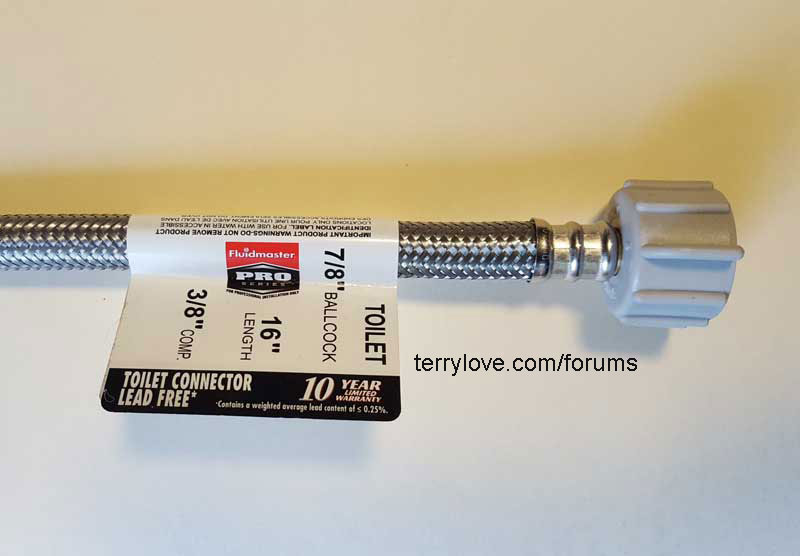
I just overhauled a toilet tank with new innards, and am now replacing the supply line since I've got a leak where the supply line connects with the bottom of the fill valve. I bought a stainless steel-braided flexible supply line from Fluidmaster. I have to say that these things sure make life simpler for the DIY'er since every time I've bent a solid supply line, I've either kinked it or had trouble getting the bends just right so everything lines up hunky-dory.
On the other hand, the flexible lines don't look quite as nice as a chrome rigid line.
How well do these flexible lines hold up? Is there a replacement interval? Is there any difference between the stainless-steel-braided ones and the plain white plastic, or the thin gray, ones?
Thanks for your opinions and experience in advance.
Steve
Use the thin gray ones if you feel lucky and don't care if you wake up to a flooded floor someday. The white plastic ones are better, but they will also snap at the end connections occassionally. Use the metal braided ones even though they are not the nicest looking in an exposed situation.
SteveW
04-13-2005, 04:54 AM
Thanks, hj -- that's what I figured.
By the way, are these flexible lines strictly a DIY option or do the pros use them too?
macska
04-13-2005, 07:00 AM
What's the best (easiest) way to bend the rigid chrome supply lines?
Steve. Definitely. The only other things I use are corrugated one piece valves and supply tubes on "contract" jobs where price was a factor. The stainless steel ones are used on all service replacements.
Macska. unless it is a gentle bend where using your hands will suffice, you need a lever type tubing bender. Do not even think of using "bending springs". They are more bother than they are worth.
Terry
04-13-2005, 09:14 AM
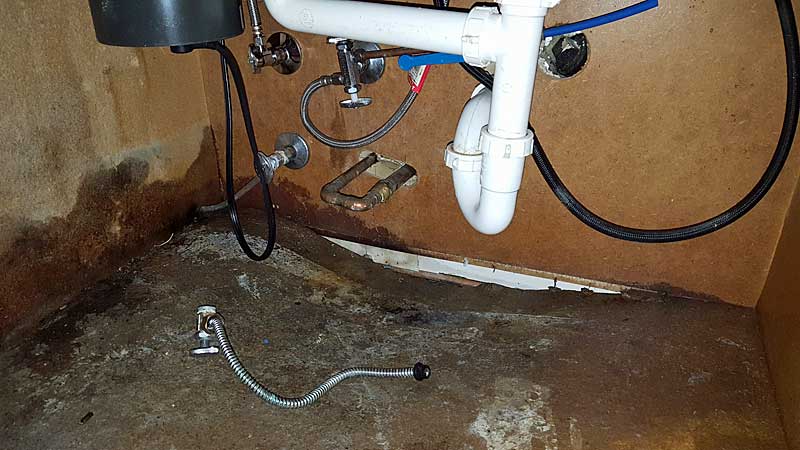
Whenever I see a "one_piece" stop with corragated supply I replace them.
One bend too many and they will crack. You don't notice this much on new construction, you are the one doing the first bend.
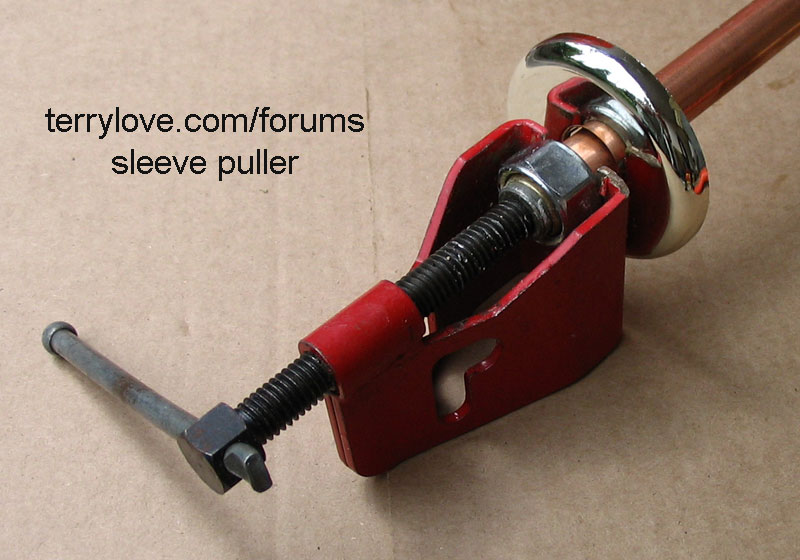
http://www.terrylove.com/images/sleeve_puller_2.jpg
On replacements, I won't reuse them.
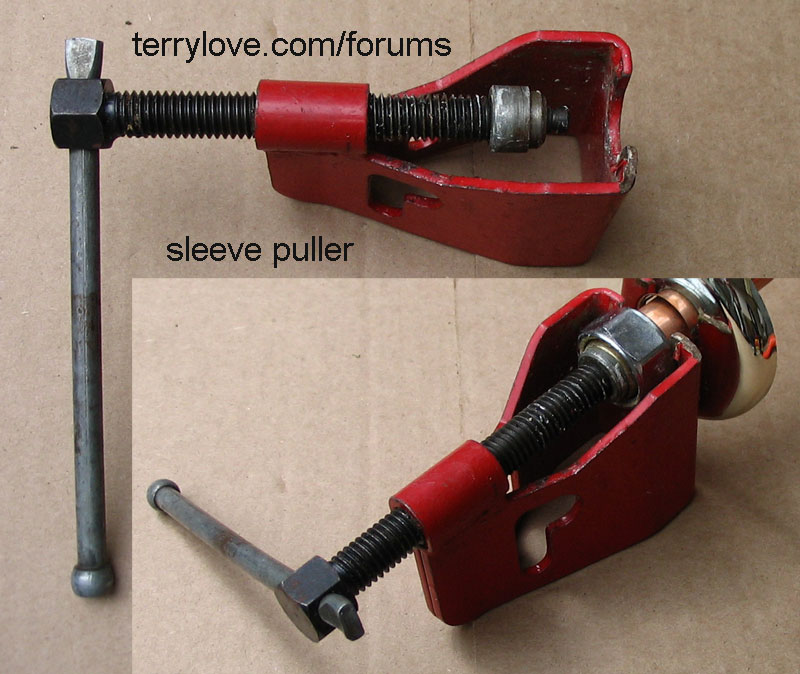
Using a "sleeve puller", I remove the old stop and wall plate.
A new wall plate goes on and a new stop, with new stainless braided supply tube.
SteveW
04-13-2005, 04:30 PM
Very helpful info, hj and Terry.
hj: You confirmed my limited experience with bending springs -- didn't keep me from kinking those solid supply lines! Good to know that a real tubing bender works much better.
Terry: How are the one-piece stops you mention attached to the water line? Sounds like some sort of friction fit if you can pull them off with a sleeve puller?
http://www.terrylove.com/images/sleeve_puller_1.jpg
macska
04-15-2005, 03:24 PM
thanks :)
SteveW
04-15-2005, 05:14 PM
So, hj or Terry,
I'm still curious about the one-piece stops you describe. When you say one-piece, I take it this is an angle stop with an integrated corrugated supply line, right? And I take it, its main virtue is quick installation.
How are they attached to the stubbed-out water line? Compression fitting?
Thanks,
Steve
Terry
04-15-2005, 06:21 PM
They like most stops are compression.
If you read the instructions for them, it says you can use light oil on the threads.
You don't want to use Teflon Tape or pipe sealant on these, something like WD40 works fine.
don't over tighten either. You don't want to dent the pipe.
If you have 1-piece angle stops with the corragated copper tube, don't reuse them.
They should be replaced if you do any work with them.
SteveW
04-16-2005, 06:28 AM
Thanks, Terry.
I learn something every time I visit this site!