Expansion Tank Installation

BigSkeet

New Member
Messages
10
Reaction score
0
Points
0
Location
Chapel Hill, NC
I was able to find this previous post here: https://terrylove.com/forums/showthread.php?t=3476...still have a couple of novice questions.

1. Is it necessary to drain the water heater when installing an expansion tank? 80 gallons is a lot to discharge, and we're under severe drought restrictions right now.
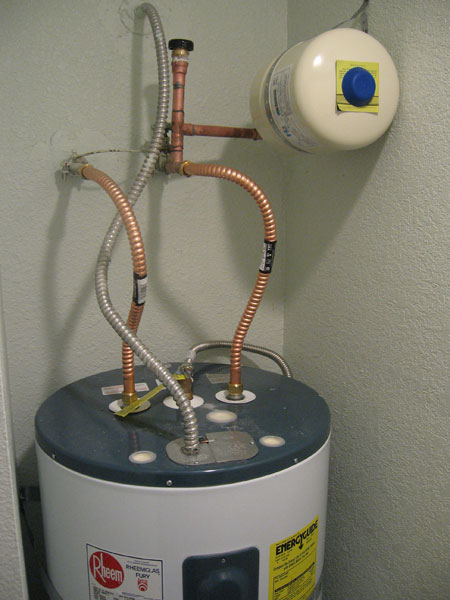
2. Can the expansion tank be located anywhere on the cold water line, or is there a preferred location? My only available location to stick this puppy is a crawl space just after the pressure reducing valve.

If anyone has any additional guidance, do's or don'ts, please share!

Thanks,
BigSkeet
attachment.php
 
Last edited by a moderator:
It's not necessary to drain the heater.

The best location is probably right above the heater. These tanks do fail and it's a good idea to keep them accessible for replacement. Remember to support the tank if it's horizontally-mounted.
 
No need to drain the water heater. The tank has to be installed between the PRV and the tank, so it sounds like you are good to go. Be sure the tank is well supported, it will weigh a fair amount when it has water in it. If you are using a Watts brand, there are good examples of how you can properly install and support the tank.
 
Does orientation matter?

All of Watts' illustrations show their tanks hanging down from a horizontal pipe. Due to space limitations, I'd like to install mine upside down -- i.e., above the pipe. Since it's a bladder system, I don't see why it would matter.
 
if you install it upside down, then air goes up into the tank, and cann't get out -reducing the functionality of the tank. vertical, opening up is best.
 
All of Watts' illustrations show their tanks hanging down from a horizontal pipe. Due to space limitations, I'd like to install mine upside down -- i.e., above the pipe. Since it's a bladder system, I don't see why it would matter.


That's how I did mine - I agree, can't see why, with a bladder, why the orientation should matter.

Also, if you are short on space between the PRV and the WH, you should actually be able to install the expansion tank virtually anywhere on the cold water side as long as it is after the PRV. When you have thermal expansion, the pressure anywhere in the system after the PRV, be it on the hot OR cold side, should be the same.
 
Orientation of a bladder tank isn't that critical during normal operation. The problem comes when it fails, which it will eventually. If it is hanging, when you take it off, you won't dump 2-3 gallons on yourself while unscrewing it like you might if it was horizontal or vertical.
 
if you install it upside down, then air goes up into the tank, and cann't get out -reducing the functionality of the tank. vertical, opening up is best.
I would think the more air in the tank, the better it would work...
 
Orientation of a bladder tank isn't that critical during normal operation. The problem comes when it fails, which it will eventually. If it is hanging, when you take it off, you won't dump 2-3 gallons on yourself while unscrewing it like you might if it was horizontal or vertical.
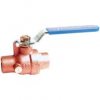
I'm doing the ball-valve-and-gauge thing recommended in the other thread, and the ball valve I'm using has a drain on it for these occasions. I'm using the DET-12 tank, which as I remember is a 4.5 gallon (~27 lbs of water) unit.

I'll bet that I have the only water heater on wheels in the country. Details on request.
 
A ball valve is useful to keep the water draining out of the pipes, but it won't do anything about the water draining out of the tank if it is upside down...or, for that matter, on its side. Just unscrew it quick, and it probably won't all leak out, but consider, you may not have enough room to turn it upright if it is in a tight place, and it could be draining all the while. It doesn't flow uphill, though, so hanging has its advantages;)
 
Ah, but this is a special valve. It's got a small drain port on it to allow draining of one side of the valve when it's closed. I've got this on the side toward the tank, so if I close the valve and open the drain port, theoretically the water will drain out of the tank and line and into whatever I've got under the valve.

Valve.jpg

It's a T200SW by American Valve, and is made in you-know-where.
 
The expansion tank should cut into the water system between the cold valve for the water heater and the inlet of the water heater so that protection is maintained even if the valve is shut off. The expansion tank however could be piped to any location you desire.
 
That will work only if you drill a hole in the tank, otherwise, it's like putting a finger over the end of a straw...
 
Good point. However, about the only reason I can think of to want to remove the tank is that it's gone bad -- i.e., the bladder has failed (much like mine :(). In that case, I'd just remove the Schrader valve and let the tank vent through it.
 
Back
Top