
djincnj
New Member
- Messages
- 1
- Reaction score
- 0
- Points
- 0
Hello All
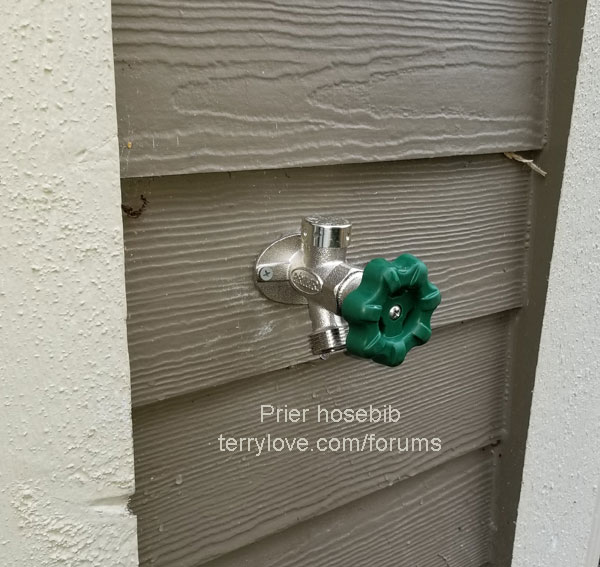
I'm redoing some plumbing so I thought I run the new pipes for the outdoor faucets with 3/4" copper. Took awhile to find outdoor fauctes with a 3/4" connection but when I look closer it appears that the stem of the faucet is only 1/2" anyway. I'm looking at a Prier C-144 F inlet. http://www.prier.com/PDFFiles/c-144FreezelessHydrant.pdf
So the questions are:
1) Is there a true 3/4" Outside Faucet, Hydrant, Sillcock, Hose Bib or whatever you call it out there? Connection, stem, valve, ect... all 3/4"
2) Does it even make sense for me to run 3/4" to the faucet if its just gonna get reduced to 1/2" anyway?
Thanx for any insight
D
I'm redoing some plumbing so I thought I run the new pipes for the outdoor faucets with 3/4" copper. Took awhile to find outdoor fauctes with a 3/4" connection but when I look closer it appears that the stem of the faucet is only 1/2" anyway. I'm looking at a Prier C-144 F inlet. http://www.prier.com/PDFFiles/c-144FreezelessHydrant.pdf
So the questions are:
1) Is there a true 3/4" Outside Faucet, Hydrant, Sillcock, Hose Bib or whatever you call it out there? Connection, stem, valve, ect... all 3/4"
2) Does it even make sense for me to run 3/4" to the faucet if its just gonna get reduced to 1/2" anyway?
Thanx for any insight
D