CPVC Question

Cass

Plumber
Messages
5,947
Reaction score
9
Points
0
Location
Ohio
I have never piped a home with CPVC. I don't like it and have only ever done repairs on it.

Yesterday while picking up a few fittings I noticed that all the boxes holding the male adapters said "cold water only" can any one tell me why.
 
Last edited:
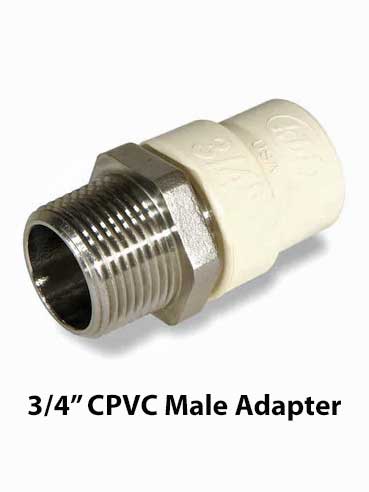
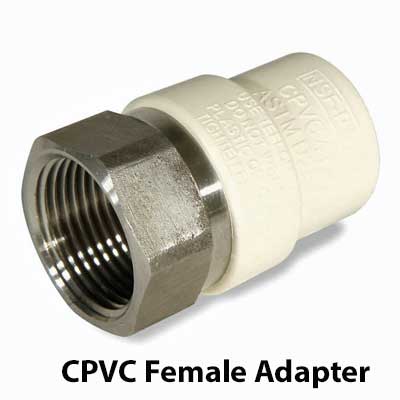
Because of the difference in expansion between the plastic and metal materials the fittings will leak when hot water goes through them. Use a transition adapter that has a brass threaded adaptation point bonded into it. Like this one pictured below.

cpvc-male-adapter-terrylove.jpg
cpvc-female-2.jpg


How many joints have you got to go back and redo?:eek:
 
Last edited by a moderator:
I have always used them with no problems doing repairs.

I just never noticed the cold water only.
 
Last edited:
Because of the difference in expansion between the plastic and metal materials the fittings will leak when hot water goes through them. Use a transition adapter that has a brass threaded adaptation point bonded into it.

How many joints have you got to go back and redo?:eek:


He said he doesn't use the junk, just was wondering. Me too. So you are saying that is just when you thread it into a metal fitting?
 
CPVC has almost 4x the expansion rate of copper. I suspect that the CPVC male adapter would try to expand, but the copper female connector wouldn't grow to accomodate it. When the joint cooled, the CPVC would contract, and the joint would no longer be tight -- sort of like the aluminum/copper wiring problems of the 70s.
 
Do the cpvc fittings with the brass threads say the same? I've always used the adapters that look like garden hose unions.
 
I keep wanting to run one of those up against the bandsaw to see how they're constructed. I'm led to believe they do take differential expansion into account, and in fact don't leak. I've got several of them in my home and in the winter the hot water goes from 38 to 128 routinely, and I've seen no leaks yet. I'm hearing enough CPVC badmouthing that I'm thinking about finishing the whole-house replumb job with PEX, though.
 
CPVC has almost 4x the expansion rate of copper. I suspect that the CPVC male adapter would try to expand, but the copper female connector wouldn't grow to accomodate it. When the joint cooled, the CPVC would contract, and the joint would no longer be tight -- sort of like the aluminum/copper wiring problems of the 70s.

No the leaking is actually worse while the CPVC is 4X bigger in expansion or, hot. But the leaking will continue.
 
I sometimes use sch 80 FPT unions in conjunction with male brass threads on Pressure Vacuum Breakers, and no leaks (lots of teflon tape, though)
 
CPVC has long and successful history in industrial plumbing where chemical resistance is required and CPVC meets the requirements. It works fine if properly installed.

The nature of PEX with the manifold fittings used to minimize the cost of connections and tees has led to the kind of thing you see here (picture originally posted by Mark).

If that piping in that picture were properly done in 3/4" CPVC there would be tees at locations more appropriate to the branch routing and the stops would be cemented ball valves. The tees would be distributed along the wall and oriented in the most convenient direction for the routing. It would look a lot more like a copper installation with different color pipe. The CPVC would be less expensive and the larger pipe would result in lower pressure drop. The low-flow branches, such as to lavatories and toilets would be 1/2" CPVC.
 
Last edited by a moderator:
The main manifolds are already in place -- 3/4" CPVC the length of the house. All the branch plumbing is done except for one bathroom which is still plumbed under the slab using the old copper pipe. Stubs with ball valves are in place on the manifolds for that bath's fixtures. That bathroom, unfortunately, is toward the eave of the house, and the prospect of running a single length of PEX from the manifold to the shower valve and drop-ear ells for the other fixtures is appealing. And, best of all, it gives me an excuse to buy a new tool! Hmmm. Let's see -- $40 worth of CPVC and fittings vs $300 or so.... back when I was gainfully employed there would be no question, but it may be the CPVC after all now.
 
The picture Bob NH posted is not plumbing, I don't know what it is, but it is not plumbing.

I've seen a lot of people try different ways to bash PEX, but come on, using a picture like that and saying it is a typical install is... You enter your own word or words, I don't want to O-fend anyone.
 
The picture Bob NH posted is not plumbing, I don't know what it is, but it is not plumbing.

I've seen a lot of people try different ways to bash PEX, but come on, using a picture like that and saying it is a typical install is... You enter your own word or words, I don't want to O-fend anyone.

I'm not trying to bash PEX, but there are some on this forum who bash CPVC without citing any published data.

With respect to the picuture:
1. I didn't say it is a typical installation.
2. It is a link to a picture that was posted on this forum by Master Plumber Mark in the Pig Slop Award thread https://terrylove.com/forums/showthread.php?t=17722 that he originated. I never suggested that it was either typical or good plumbing.
3. I wasn't trying to bash PEX. I was simply pointing out that the use of manifolds of that type, which seems common in PEX installations, results in a lot of PEX tubes that go off in one direction from the manifolds that have to be turned in various directions from the manifold to get where they are going.

That is in contrast with the usual practice in copper and CPVC where a larger pipe is installed as a "main" with branches off at appropriate points wherever is most convenient for routing.

There are a couple of reasons that PEX is installed off manifolds.
1. There are fewer PEX fitting connections and therefore lower cost of fittings and stops if one uses the manifold system.
2. The smaller inside diameter of PEX compared to the same size of copper or CPVC limits the flow that can be used with 1/2" PEX, leading to more "home runs".
 
I haven't done the math but. using pex in a conventional manner would be cheaper than using a manifold system. even though you save on fittings and stops, you use many times the tubing, that would more than make up the cost of fittings.
 
You also have to take into consideration that the manifolds are much more expensive than PEX fittings, especially if they're a separately valved system. Manablocks run quite a bit.

The piping cost is offset slightly by the use of 3/8" or 1/2" pipe instead of 3/4" - but that doesn't mean much when you've got three pipes where there would have been one. (One each - toilet, basin, tub.)
 
Back
Top