PDA

View Full Version : Hack Plumber? ... Oops -NO a licensed plumber!


coyotehills
11-30-2007, 05:12 PM
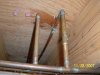
I found this installation the hard way while installing Hardie Board on the 1st floor matser bath. This is a cantilever section below double vanity from the master bath with all four supply lines attached directly to the underside of the subfloor. I got lucky and missed the pipe twice but hit it the third time. BTW 3 years ago I had to replumb the valve and supply line for ice maker from hot to cold in the house across the street.
3322

construct30
11-30-2007, 05:19 PM
Might be licensed, but not professional. Not very pretty. Unfortunately a license does not always mean a guy knows how to do something right. In Pa we do not have a license, yet, but next door they do and I've seem a lot of no code compliant crap done by licensed individuals that also passed inspection, in the plumbing and electrical fields. Was that work inspected too?

tinner666
11-30-2007, 05:21 PM
The things that turn up!:D

Dunbar Plumbing
11-30-2007, 05:41 PM
That you're using oversized screws to anchor flooring.


Explain the how so to this; that copper piping was operating error-free until you decided NOT to measure your screws before working.

Plumbers will install piping in that fashion when the joist space is busy ie heat run, around romex runs or gas lines, beam.

Learn how to use properly sized screws next time and you won't have a reason to join a forum and complain about your stupid mistake.

Those pipes didn't leak until you screwed a screw in them, just for the record.3323

construct30
11-30-2007, 05:50 PM
Rugged, I'm sorry, you might think I'm a hack, but any inspector I've ever dealt with would fail that plumbing. If you run a pipe too close to the edge of a framing member then a metal pipe protector is in order. Strapping a pipe to the under side of the plywood is a terrible idea. If a joist space is that busy, then you better find a different place to run. Besides look at the terrible globs of solder, ugly. The guy has a legitimate complaint. I usually respect the heck out of your comments Rugged, but this time you're off base.

Terry
11-30-2007, 05:56 PM
It's not against plumbing code to have the pipes that high.
Most of the time, they are not that high, but sometimes to miss other objects, they might be.
I like to keep them a ways from the bottom of the floor for two reasons.
Easier to solder and cut pipe.
Less chance of getting nailed.

coyotehills
11-30-2007, 06:00 PM
I guess I should have used shorter screws at let the floor fail! BTW I don't see any romex, hvac or anything else in that cavity. Also I didn't think 2 wrongs made it right!

construct30
11-30-2007, 06:01 PM
Terry in Pa, we use the 2006 International Plumbing Code, if you have one read 305.8 protection against physical damage section.

Dunbar Plumbing
11-30-2007, 06:03 PM
Rugged, I'm sorry, you might think I'm a hack, but any inspector I've ever dealt with would fail that plumbing. If you run a pipe too close to the edge of a framing member then a metal pipe protector is in order. Strapping a pipe to the under side of the plywood is a terrible idea. If a joist space is that busy, then you better find a different place to run. Besides look at the terrible globs of solder, ugly. The guy has a legitimate complaint. I usually respect the heck out of your comments Rugged, but this time you're off base.


cantilever section below double vanity


Do you know what that means?

That means the plumber needs to allow for the most possible/largest R-factor of insulation available in this area since it is exposed to the elements when the plumbing is installed in an area where living space is non-existent.

That job (new construction) was spec'd on a 2X8 joist space with R-30 16" o.c. Kraft-Faced insulation.

See the little dabs of insulation hanging to the wood near the floor? That's why.

Plumber has to protect thier piping from bursting in an area where room temperature is not possible to protect from freezing....a liability back on the plumber,

a extreme difficulty for the insulator to properly insulate that joist space with the correct insulation to control thermal loss.

I'm right on target like I was when I typed my first response. I don't feel sorry for the event that unfolded as that plumbing was working just fine before LONG screws were shot into the floor. Don't worry about freezing, worry about long screws plumbah!

construct30
11-30-2007, 06:12 PM
Section 305.8 protection from physical damage! I used to be an insulation contractor, now I'm a plumber, I have to worry about my pipes first now. I used to have to use foam board or furring to get the R value I needed below pipe in such cases. The plumber should have allowed for the 1 5/8 screws usually used on durarock and such underlayments and protected his hidden pipes.

Dunbar Plumbing
11-30-2007, 06:23 PM
If those pipes are so close to the floor,


where are the burn marks on the wood.


Certainly that plumber didn't take the time to protect that fine wood when he didn't bother wiping the excess flux and solder off the piping.


Explain the lack of wood burning with those pipes being so close as you feel they are. It's impossible NOT to burn wood when they are that close, so what gives?

The strength of a nail or screw is diminished greatly when it fully penetrates through the structure it's holding.

2/3rds with no break through is the carpenters golden rule.

hj
11-30-2007, 06:28 PM
Once a screw penetrates the wood, any extra length does nothing to increase its holding power. If you wanted to use extra long screws you should have screwed it to the joists, not the subfloor.

construct30
11-30-2007, 06:42 PM
Those appear to be two hole straps not standoff straps, which means they are screwed tight to the plywood subfloor. The 2003 Residential Code for one and two family dwellings: P2603.2.1 Protection against physical damage. 2006 International Plumbing Code: 305.8 Protection against physical damage. The UPC: 313.9 They are a little more forgiving and give you one inch instead of one and a half. As plumbers we should protect our pipes if they are in the ground or above ground. For ceramic you are supposed to glue and screw with 1 5/8" durarock screws. 1/2" durarock, 3/4" subfloor, My math says that adds up to 1 1/4" , a pipe strapped under a bathroom floor, directly to the floor plywood, is going to get some holes in it.

As for the no burn marks, he soldered the pipes then put them up as shown by the coupling, he made a mistake in his measurments or alignment and had to make the cut.

I want to stick up for a professional as much as the next guy, protect the brotherhood, but when a mistake is made, I have made more than my share, I will admit it.

construct30
11-30-2007, 06:45 PM
Once a screw penetrates the wood, any extra length does nothing to increase its holding power. If you wanted to use extra long screws you should have screwed it to the joists, not the subfloor.

They require too many screws in underlayment, to just hit the joist. Ceremic tile will break or the grout will crack if not screwed properly. Did you ever see the little x's on underlayment, we were taught to hit every other one of those with a screw or staple.

smellslike$tome
11-30-2007, 07:27 PM
You're both right and you are both wrong. It makes no common sense to strap pipes to the bottom of a floor, code or no code. No one can account for what someone else might do in the future, common sense and professionalism demand that the good of the HO be of greater concern than expediency. The insulation is an important issue. The answer is that the pipes should have been located a minimum of 1.5 inches below the floor and strapped to the floor joist. This of course makes for a slightly more difficult installation, which is no doubt why in the cut throat world of new construction it is not done, but would allow for protection of the pipe while enabling the insulator to do his thing with little difficulty. Additionally, in my neck of the woods, and depending on which inspector you might get on a given day, the pipes would be required to have some type of pipe insulation such as armaflex. Better yet it should have been a pex installation especially in these circumstances. Pex is certainly no more screw resistant than copper but if it should freeze it will not rupture which is a claim that copper can not make. I am assuming of course that the local code would permit pex installations.

smellslike$tome
11-30-2007, 07:36 PM
Also I was going to say based on the couplings, that it looks to me as though this was not the first time the pipe was punctured. A short measurement would account for 1 coupling and a puncture would account for 2 unless he was short twice in which case we are probably talking about one of those special drunk plumbers.

frenchie
11-30-2007, 07:38 PM
Okay...

- somebody needs to answer the 305.8 aspect. If the plumber broke code... case closed.

- punching through the back of plywood with your fastener, actually does increase it's holding power somewhat. It's a marginal increase, but it's there. Don't believe me? Find a structural engineer who works with wood a lot, and ask him/her.

- are you guys seriously trying to tell me that you've never seen a nail or screw protruding through a subfloor before?

- For wonderboard screws, 1-5/8 is the most common size, by a HUGE margin. I've seen people post threads, on DIY forums, asking if other sizes even exists. I can't get 1-1/4 at my local hardware stores, or the big box stores (which is fine, since I prefer lumberyards, anyways).

- This was totally forseeable. If my plumber was running lines that close to the subfloor, I'd have him change it. I honestly can't imagine him doing it, though; he's good about remembering the next guy.

cwhyu2
11-30-2007, 08:13 PM
I would never run piping that close to the sub floor.But anybody can do it all.

Dunbar Plumbing
11-30-2007, 08:56 PM
So the plumber's long and gone, pipes holding water and working error-free mind you and all of sudden a new floor makes it the plumber's problem?


No.

For the same reason why a carpenter shoots a nail on a trim board and hits a pipe in the wall, he's paying for the damage.


For the same reason when a drywaller screws a screw through the wall and hits a drain or water line, depending on how lucky he was that day :p, he's paying for the damage.


I personally have never ran water lines that close to a floor but I understand how important the R-factor is in overhangs.


I also understand that this thread is just a minor jab at the plumber since you're probably footing the tab for using long screws. Bitch and moan all you want.......


but there wasn't a plumbing problem until you decided to lay a floor.

That sits heavily in your customer's mind and you can call the plumber anything you want, it's on your dime.

I think the same way of carpenters when I run my brand new 2-9/16" milwaukee drill bit through the bottom plate and catch not one, not two, but sometimes 3 nails that spiralled out of control when they was stabbing the sides of stud instead of nailing bottom up when they should of.

I'll also think of them when they laid the joists out around the toilet where I have to use an offset flange, giving the customer a world of joy joy of misery for a lifetime in the home with no way around it short of using headers and boxing out, structurally affecting the floor integrity.

Should I mention that *#&$ing center stud that they always put up on a shower wall where the valve goes, right where it has to be removed?

How bout scabbing drywall catches or doubling up studs in a corner when a vent rolls around them to come out and catch the main stack.

How bout when you all H-clip the roof sheathing right where my main stack is going out, causing me to double roll 45's which COSTS ME MONEY. lol


Don't even get me started on floor guys who don't raise the closet flanges to the finished floor surface as required by industry standard. What? Who me? Yeah YOU.

Come to raise the roost with a plumber expect one to tell the tales of the nonsense bull**** I dealt with all those years I did new construction.


And they wondered why they had sand in thier air compressors when they came back from lunch. :eek::D

construct30
11-30-2007, 09:13 PM
I didn't say they shouldn't insulate properly. There is foamboard that can be nailded below the joist, they could put furring on the joists to get the proper insulation. All the International plumbing code asks for is 1 1/2" the upc only 1". Any one who cares to do it right, buy some stand off hangers, I hardly ever use those two hole straps any more. Nothing can be done about the "professional" that did that job. DIYers read this stuff and think it is OK if guys like Rugged or Terry say it's OK. I would love to hear what Grumpy has to say. We have all had ocassion to moan about "stuff that happens", when someone does some thing wrong. He chose to do that here, I'll allow him that. I won't nail his plumber to a cross, heck I might be hanging next to him tomorrow. I will allow this home owner to moan, provided the plumber got paid... I wonder... Did he loose his...

Bob NH
11-30-2007, 10:38 PM
"The strength of a nail or screw is diminished greatly when it fully penetrates through the structure it's holding.

2/3rds with no break through is the carpenters golden rule."

That doesn't apply when screwing into plywood or when using screws with minimal engagement.

Most plywood subfloor is 5/8", sometimes 1/2 and sometimes 3/4. "Drywall screws" have a long tapered point and the end doesn't hold much. To get maximum strength the point must go through until the full diameter section of the screw goes through the plywood.

One solution to the installation would be to put a piece of 3/4" thick strapping on the underside of the plywood at the appropriate support intervals and strap the pipes to that.

jadnashua
11-30-2007, 11:31 PM
WHen installing a roof, they tell you the nails MUST penetrate. Don't need much, but sometimes you don't have much choice.

Marlin336
12-01-2007, 04:40 AM
Better yet it should have been a pex installation especially in these circumstances. Pex is certainly no more screw resistant than copper but if it should freeze it will not rupture which is a claim that copper can not make. I am assuming of course that the local code would permit pex installations.

You're forgetting how new pex is and how it's just in the last few years been made legal. I'm sure their are still some places where it isn't legal. It was just a couple months ago here they started allowing it's use in commercial applications, it's been legal in residential for a few years.

Cass
12-01-2007, 06:11 AM
Well the plumber or who ever, (do you even know who did the plumbing) put the pipe high to avoid freezing. Its just the way it is.

If they had left it a few inches down and it froze and burst it would be a different complaint.

Oh boy, I just looked out and the barn door is open and the horse is gone, I need to go and find out who left the door open.

Later....

Dunbar Plumbing
12-01-2007, 07:05 AM
"The strength of a nail or screw is diminished greatly when it fully penetrates through the structure it's holding.

2/3rds with no break through is the carpenters golden rule."


That's great. Not only are the woodworkers driving screws into perfectly good copper piping, now they are lying to me about how far screws go into the wood!!!

Aarrrrrrrrrrrrrrrghhhhh!!!!!!!!!!!!!!!!!!!!!! :mad::mad:


They can never be trusted, again.


Thanks Cass for changing your word of the week; I was overknowledged on the last one :cool:

I'd rather have that piping the way it is and never freeze than to worry about the long screw bandit making a homemade sprinkler system in the basement.

construct30
12-01-2007, 08:12 AM
[I]

I'd rather have that piping the way it is and never freeze than to worry about the long screw bandit making a homemade sprinkler system in the basement.


You can accomplish both taskes, keeping pipe from freezing and protecting the pipe. I have had situations like that and never had a problem. I didn't rely on someone else to insulate the bay correctly I did it myself. Most houses with a cantiliever have at least a 2" x 10" for joist. Rugged where did you get that house had 2" x 8" for joist, they looked bigger than that to me?

According to code if that pipe is not 1 1/2" from the edge of the framing member, it has to be protected using 0.062-inch-thick (1.6 mm) steel. That is if the pipe is running perpendicular or parallel to the member. The short of it is if you run a pipe like that it does NOT meet code and should fail inspection. If you want to strap a pipe directly to the floor then protect it with metal. There is always a way to do it correctly. Next you will be telling me there is a reason not to put a trap on a tub drain, come on you are a professional do the job right or don't do it. The code usually has all the answers if you care to look, use steel if you like, I like to use stand off straps and get the insulation to work, but if that were not possible I would be buying some steel plate.

Frenchie asked you to answer the code aspect, can you or not? If I'm wrong prove it.

Alectrician
12-01-2007, 08:42 PM
I don't see any romex, hvac or anything else in that cavity.


Per code, Romex would have to be 1 1/4 in to allow for screws.


Seems like plumbing would have similar requirements. I guess the water can't kill you though.

AZ Contractor
12-01-2007, 10:35 PM
Holy crap! You guys are funny.

If a carpenter is installing baseboard and one of his nails (less than 1 1/2" off the floor hits a copper pipe who pays?

I can't stand it when trades come out and can't use a little bit of foreshadowing while doing there install to prevent future problems.

If you did that plumbing install for me, I'd make you tear it and start over before the inspector makes you tear it out and start over. If you didn't want to you would have to use steel to protect it from situations like the one that just happened. If you didn't want to use steel, I'd back-charge you and have someone else do it.

Electricians running there wires just under a slab or a plumber running copper at the edge of a framing member lack foreshadowing.

Think ahead gentlemen. Its not that difficult.

cwhyu2
12-01-2007, 11:03 PM
Now whos red in the face.

Cass
12-02-2007, 06:17 AM
Lets think about this...I believe this problem was due to the poster not doing what he should have done prior to beginning any work.

The photo in the first post shows the water line hugging and strapped to the bottom of the floor.

It also shows a T that must be in a heated area because it is below the Joice.

I never cut, drill or screw unless I look at and inspect or feel the area first, if possible.

I would have looked underneath for any wires, ducts, or plumbing and If I had seen the T going up into insulation, knowing it was feeding the area I was going to be working on, I would have pulled it down and looked first.

Did you do this...

Marlin336
12-02-2007, 06:33 AM
[QUOTE=Cass;110098]
I never cut, drill or screw unless I look at and inspect or feel the area first, if possible.
/QUOTE]
That's one of the best points so far in this thread. I've saved myself many times from hitting pipes and wires because I took the time to look.

hj
12-02-2007, 07:08 AM
Very, very few trades worry about the next guy. The carpenter does not worry about where the plumber is going to drill a hole when he shoots a nail, although they seem to be able to figure it out so the nail is at least somewhere that the hole has to go. The electrician does not worry when he runs his wire through the center of the wall. The heating guy cuts the plumber's vent lines when they are in the way, and you expect the plumber to spend extra time because THEY might have a problem with HIS installation? If the floor installer is going to have a problem then have the carpenter install 2x4's between the joists during the framing so the plumber can strap his pipes to them.

construct30
12-02-2007, 08:29 AM
The original poster should have checked to make sure nothing was under there, I agree.

Plumbing codes, IPC, UPC, IRC all say that what was done with the plumbing was wrong. I posted all the sections for the codes earlier. If you call yourself a plumber and don't have a code book you're a "hack", to use the poster's term, it is the most important tool in your van, truck or office.

I've had, in other threads, you licensed plumbers from other states pretty much figure people in PA are hicks because we don't have licensing, but our public utilities have made us do work to code since my dad was a union electrictian in the 60's. We have state wide inspections that use the 2003 and now the 2006 IRC, we could never get away with a mess like that.

I don't understand why the Pro Plumbers on this site can cut a DIYer down because they don't know some of the hard concepts about venting, but you try to defend a "hack" job like this one that is so simple to understand. I am really suprised to find that here.

As far as the original poster, get it fixed, slide a piece of 1/16" or thicker steel plate above the pipe shim the straps just an 1/8" so the copper is not touching the steel and amazingly it fixes future problems and brings that mess back up to code.

GrumpyPlumber
12-02-2007, 08:07 PM
So the plumber's long and gone, pipes holding water and working error-free mind you and all of sudden a new floor makes it the plumber's problem?


No.


Here, YES.
I don't know about UPC, IPC, IBC, NPC, ABC or XYZ, BUT -
In my state -
Any time a pipe passes through a joist, stud, plate, header, or any other form of framing within 3" of the nailing surface, the plumber is responsible for installing nail plates (guards). Inspectors fail plumbers on this all the time, very common thing to forget.
Here, we're supposed to keep plastic/copper pipe 3" away from exterior sheathing for the obvious reason...how many times have you bumped your head into nail stubs in a basement subfloor or attic sheathing while working?
This is obviously a jurisdictional thing here, but personally I wouldn't do it even if I were allowed unless I had no choice, even then I'd guard it.


I think the same way of carpenters when I run my brand new 2-9/16" milwaukee drill bit through the bottom plate and catch not one, not two, but sometimes 3 nails that spiralled out of control when they was stabbing the sides of stud instead of nailing bottom up when they should of.
I use hole saws, less mess, they eat nails for breakfast, sure they take a little longer, but so does sharpening self feeds


Should I mention that *#&$ing center stud that they always put up on a shower wall where the valve goes, right where it has to be removed?
The 3 lb mini sledge removes studs nicely, then you secure your valve with strapping and let the Einstein figure out how to frame around it, guaranteed not to happen after the first couple of times.


Don't even get me started on floor guys who don't raise the closet flanges to the finished floor surface as required by industry standard. What? Who me? Yeah YOU.

Cut 1/2" strapping into 2" segments, break in half, put under the flange as spacers and screw flange into subfloor.
Glue from under and work away happily ever after.

I'm 100% with you on my thoughts on new residential construction, it's all about low bids, passing responsibility, and getting it done so fast you wonder if everything was done right.
Not to mention, English as a second language.
Whatever it takes for developers to make good money.

Dunbar Plumbing
12-02-2007, 09:46 PM
installing nail plates (guards).

Here as well, mandatory on the bottom plates, top plates, vents, water lines.


Here, we're supposed to keep plastic/copper pipe 3" away from exterior sheathing for the obvious reason...how many times have you bumped your head into nail stubs in a basement subfloor or attic sheathing while working?
This is obviously a jurisdictional thing here, but personally I wouldn't do it even if I were allowed unless I had no choice, even then I'd guard it.


It's been years since I've done new construction but every house we worked in had linoleum floors, tile wasn't as popular as it is today like it was back then......linoleum was king. <<< No need for the applications today. We always nailed 2X4's up against the joists vertical and ran them paralell with the joist making sure we nailed on the side where we followed the overlap board at the beam where joists come together. On kitchen sink water lines where there was a cantilever we'd bring up through the floor first, 90 over and let them rest on blocking, then turn it up through the bottom of the cabinet.

I however can recall at least once in the past few years where I ran a water line right up against the floor, had to fight a large round ductwork and going below wasn't an option. I used armaflex to protect the copper line from galvanic reaction to the ductwork.....no other options.

I use hole saws, less mess, they eat nails for breakfast, sure they take a little longer, but so does sharpening self feeds

I only use 1 hole saw; 4-3/4" for closet flanges, the same one for holes in shower walls whether concrete board for showers or fiberglass. I use a large expensive carbide in a cordless drill to sharpen my self feeds rather quickly.


The 3 lb mini sledge removes studs nicely, then you secure your valve with strapping and let the Einstein figure out how to frame around it, guaranteed not to happen after the first couple of times.

^^^^
Thats an easy fix but you're forgetting the cross brace for the shower lug ell for the shower head. Yes....it's nice to have one precut board for the equation but it always requires two to make a uniform install and the drywallers appreciate the consideration of something within the 16" oc realm. Otherwise I'm cutting a board 26" and taking it to the edge nailing flange of the shower. <<< That would get removed and reworked due to that application.


Cut 1/2" strapping into 2" segments, break in half, put under the flange as spacers and screw flange into subfloor.
Glue from under and work away happily ever after.

^^^^
I'm talking from a rework point of view. We used to use 1/2" copper cut to size to raise for the tile guys when it was spec'd for it. Wood seemingly wood disappear before the tile guys would arrive due to someone hitting them.

The overlay of the floors is where the problems start, some of them think straining that piping and pulling up works; it doesn't. The correct method.....and most times there will be no access through the ceiling below, cut out and rework, install new wood if rotten/can't get right height and drill through new surface completely,reset.


I'm 100% with you on my thoughts on new residential construction, it's all about low bids, passing responsibility, and getting it done so fast you wonder if everything was done right.
Not to mention, English as a second language.
Whatever it takes for developers to make good money.[/quote]

I'm so glad I'm out of new construction. Some of these larger homes required everything tucked in the joists, working off the tolerances of PVC pipe and fittings and numerous, NUMEROUS times we had to cut the hubs or street ends of PVC pipe fittings to make tight turns or otherwise to get from point A to point B without any structural modifications. They just simply wouldn't allow it. Then fish water lines around that equation in the center only of the joists; when I was doing new construction we could do the bottom of the joists, notching them all the way from one end of the house to the other.

Think the opposite of bottom and thirty years ago and plumbers would install water lines, mostly galvanized in the top of the joists and notch them to whereever they needed to go. Of course, driving a nail through galvanized piping would definitely make you special....special to accomplish that feat.

In today's age of materials...just pulling product against a sharp edge can produce failure points. That's what scares me about sharkbites or anything relying on an 0-ring to protect from leaking. I've seen copper knurled/ovalled/imperfect from transport.....CPVC with scratches and grooves, gouges from damage I assume from plant to structure.


This thread gives me interest to keep camera close and near for the next carpenter screwup I see in my line of work. Be prepared. 3333

frenchie
12-03-2007, 08:00 AM
This thread gives me interest to keep camera close and near for the next carpenter screwup I see in my line of work. Be prepared. 3333

I'll start. See if you can beat this!

Hack plumber + hack carpenter = oh, so that's why the floor sags!

Larry4
12-03-2007, 08:09 AM
Construct30 When you say we dont have a license in PA. What are you refering too? Everwhere I go to pull a permit they want my masters Lic, where took test etc..

Herk
12-03-2007, 10:05 AM
Hack plumber + hack carpenter = oh, so that's why the floor sags!

Mon Dieu! That was no plumber . . .

construct30
12-03-2007, 11:27 AM
Larry4 there is no state license. Several counties and towns have license, but where I live none. You can go to the pa plumbers association web site to see the newest bill they are trying to pass to require a state license. If this bill passes it will be like the uniform construction code act, it will be the only required license, no county or small town will be allowed to require their own license. I know Allegheny county for one is fighting that part they want to keep their local requirement. It didn't fly when it came to the uniform construction code act and I don't think it will fly for this either. It is some thing big companies and even the union wants so they can work any where in the state without the locals harrassing them. Where are you from Larry. It doesn't say under your name, go to the private options and put it in. I'm north of pittsburgh.

construct30
12-03-2007, 11:29 AM
frenchie, that place would take it's own site to discuss, watch how you step.

cwhyu2
12-03-2007, 02:23 PM
Im sorry I have to post Did my 4 yrs,passed in 1990 100%.Code differ.
Start when I was young 30 yrs old,so now I cant do it like I did.
But I still have the Knowlage.For little while anyway.:)

Larry4
12-03-2007, 06:56 PM
construct30 Im in Lehigh Valley. I have been in HVAC 15 yrs, Plumbing 8 yrs. Starting to install and service plumbing just seemed to be the natural advance. Started servicing small jobs and just kept going. Its a nice challange with all the rules and regs. Evertime I apply for a permit they want my license. I show them the 10 I have from other townships, insurance, and my yrs exp. There dont seem to be a standard here like you said. So in PA what makes you a master, a journeyman, a plumber??? Can they turn you down?

Thanks ,

Larry

frenchie
12-03-2007, 08:32 PM
Mon Dieu! That was no plumber . . .

...and no carpenter, if you look at it that way.


frenchie, that place would take it's own site to discuss, watch how you step.

No worries, it was two years ago. And (thank god) it wasn't my job - I was working nearby, for the same clients, they asked me to go look at it after they got word that the price needed adjusting.

The beam & posts got completely replaced, and half the floor completely rebuilt. Let me dig a little, I've got some progress pics, somewhere...

frenchie
12-03-2007, 08:47 PM
Here we go... I can't seem to find half of them, but this ought to give you an idea:


edit: okay, I messed up, and I can't seem to edit the pics part of this post... but the order is wrong.


The bottom pic should be the first one - the new joists had just been put in, with the new beam, but the old joists aren't out, yet.

If anyone remembers the thread where I posted pictures of filtch plate beams? That would be the same beam, installed, in these pics.

I can't find the earlier pics, which shows all the staging they had to put in, in order to replace the beam. It was similar to what you see on the second floor, in the top pic - but twice over, once on each side of the beam.

Next, the top pic, where they'd started filling in the new section. The first set of staging has been replaced with staging under the beam, which is starting to come out, being replaced with the built-up posts that went into the loadbearing wall.

Then the middle pic.

Sorry, don't have pics of anything later.

cwhyu2
12-03-2007, 08:52 PM
That looks a lot better!

frenchie
12-03-2007, 09:05 PM
Yeah, they did an amazing job. Wish I had some pics of the final result.

What you can't tell, is the floor all this is sitting on got completely reframed, as well. And one of the walls.

Man, I felt bad for that crew.

construct30
12-03-2007, 09:09 PM
I take it you live in an area where it is hard and expensive to get permits for new construction. They put a lot of time and money into that. The end result looks great. It had to cost a lot.

cwhyu2
12-03-2007, 09:17 PM
You know what I would like see now? Is the plumbing&electric&HVAC part of the
project.:)

frenchie
12-03-2007, 09:46 PM
I take it you live in an area where it is hard and expensive to get permits for new construction.

It's impossible to get a permit for new construction there. National Park. The houses are grandfathered in. You can fix them, but you can't replace them.


They put a lot of time and money into that. The end result looks great. It had to cost a lot.

Depends on how you measure these things - it only added about 10% to the job, which was a complete gut to begin with, involving some very high-end finishes & etc. 700$ kitchen faucet? ...like that.


You know what I would like see now? Is the plumbing&electric&HVAC part of the
project.:)

Yup. New everything. Sorry, no pics; but they did a nice job.

Phil H2
12-06-2007, 04:22 PM
Terry in Pa, we use the 2006 International Plumbing Code, if you have one read 305.8 protection against physical damage section.
Construct30
The codes (both UPC & IPC) are concerned with pipe passing through framing members. Subflooring is not a framing memeber. The orignial picture doesn't show the pipe passing through the joists. What do you do with drains and vents inside walls? Run a steel plate from floor to ceiling? I don't think attaching the pipe to the subfloor is ideal, but I don't think it violates any codes.

IPC 305.8 Protection against physical damage.
In concealed locations where piping, other than cast-iron or galvanized steel, is installed through holes or notches in studs, joists, rafters or similar members less than 1.5 inches (38 mm) from the nearest edge of the member, the pipe shall be protected by shield plates. Protective shield plates shall be a minimum of 0.062-inch-thick (1.6 mm) steel, shall cover the area of the pipe where the member is notched or bored, and shall extend a minimum of 2 inches (51 mm) above sole plates and below top plates

Dunbar Plumbing
12-06-2007, 05:42 PM
Construct30
The codes (both UPC & IPC) are concerned with pipe passing through framing members. Subflooring is not a framing memeber. The orignial picture doesn't show the pipe passing through the joists. What do you do with drains and vents inside walls? Run a steel plate from floor to ceiling? I don't think attaching the pipe to the subfloor is ideal, but I don't think it violates any codes.

IPC 305.8 Protection against physical damage.
In concealed locations where piping, other than cast-iron or galvanized steel, is installed through holes or notches in studs, joists, rafters or similar members less than 1.5 inches (38 mm) from the nearest edge of the member, the pipe shall be protected by shield plates. Protective shield plates shall be a minimum of 0.062-inch-thick (1.6 mm) steel, shall cover the area of the pipe where the member is notched or bored, and shall extend a minimum of 2 inches (51 mm) above sole plates and below top plates


And that's why the plumbing inspector passed all those installs in the same fashion on the 2nd roughs. Good find Phil.

As far as the couplings in that copper pipe; when I did new construction the guy I worked for would force us to keep using up pieces of copper coming off the ends of the pipe. Don't dare cut new sections cut to size off 10 footers or he'd hit the roof. :mad: He felt with copper couplings being .11 cents at the time that it was cheaper than pulling off a section of new 1/2" copper, $3.41

Those days are loooooooong gone and I believe for good. :(

construct30
12-06-2007, 05:44 PM
Phil H2 I wondered how long it would take some one to read the codes and point that out. I deal with two inspectors and I asked them and both said they would fail that. If you want to do it then by all means do it. I can't believe the number of plumbers that are defending such practices. The intent of the code is to protect the pipes in a home whether they are under ground through joist or under the subfloor. I guess I will have to contact ICC and have them add that part, I guess using common sense is not enough.

cwhyu2
12-06-2007, 06:22 PM
The Intent of the code is to protect the public.

construct30
12-06-2007, 06:44 PM
The Intent of the code is to protect the public.

Sorry, I will be more specific, this section of the code we have been talking about for the past three pages.

I guess this comes down to personal preference. I asked my inspectors and we are on the same page, but maybe some inspectors as well as some plumbers don't see it that way.

I grew up around electricians and reading electrical code books, maybe some of that is clouding my judgement on this. I think I will still refrain from doing it though.

Phil H2
12-06-2007, 08:56 PM
I never said that I liked the pipe attached to the subfloor. I would never do it because I have seen too many subfloors that have had another layer addded with long nails. I wished I was wearing a hardhat everytime I have climbed into an attic or crawl space that looked like a porcupine on a steel diet. Personally, I'd rather see pipes attached to the subfloor than see nails poking through everywhere threatening my scalp. I quoted the code because I don't think the DIYers should be mislead into thinking that pipes (or electrical cable) must be 1-1/2" clear of the face of the subfloor, drywall, or siding. They would think their house has a defect when it does not.

The codes are only a minimum standard. But, it would be ridiculously difficult to wire or plumb a building and keep everything 1-1/2" inside the wall. A person would be hard pressed to keep NM cable within those bounds in a 2 x 4 wall and you could forget about 1/2" copper pipe. That is why they make nail plates for the penetrations through plates and studs( http://www.strongtie.com/products/connectors/NS-NSP-PSPNZ.html ). The code is concerned about where the pipe or cable passes through a framing member. Look at all of the electrical boxes designed for cable; the cable entrance is at the back of the box which places it very close to the drywall or siding on the opposite side of the wall. It would be impossible to use those boxes in a 2x4 wall if the cables needed to be 1" away.

frenchie
12-06-2007, 09:44 PM
There's code, but there's also: "Contractor warrants that all Work performed pursuant to the Contract shall be performed in a good and workmanlike manner".

Basic common-sense rule of thumb: anytime a pipe (or wire) is secured so that it can't just shift out of the way of a fastener, and it's close to the finish surface, it needs protection.

construct30
12-06-2007, 09:54 PM
OK so you don't like section 305 Protection Of Pipes And Plumbing Systems What about IPC 102.9. The inspector becomes god, little g.

The general idea is that pipes and wires are to be run in areas that protect them as much as possible. You can run one wire down a 3.5" stud and it has to be straight as possible and in the middle. Inspectors tend to realize what is and is not possible when building. They still expect any tradesman to do the best job they can, when in their judgment you don't they slap one of those big orange stickers on your permit that says try again. What ever color they use where you live. I guess in this instance that's what this is, a judgment call. Ask your inspector.

GrumpyPlumber
12-07-2007, 07:52 AM
I'm pretty much with all the above, I don't care whether code OK's it or not, I won't be clipping any pipes to subfloors anytime soon.
Murphy's law almost guarantee's the carpenter would hit my lines, been there, done that, all set for the future.