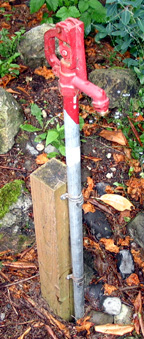
Is this a Frost Free Spiggot/Faucet

CalgaryKid33

New Member
Messages
11
Reaction score
0
Points
0
Location
Calgary, AB Canada
Hi Guys,
I recently bought this house, outside tap, I am used to a shut off valve in the basement, but the basement is developed and has been for several years. There is no shut off valve inside unless it has been enclosed. So I took a picture of the ouside Faucet and I hope it is a frost free faucet. I am in Canada and temps get below -30. Sorry I should of tried to get a shot from the front, for a brand name. Anyways I am hoping one of you experts recognize it. As mentioned, the plumbing is behind a bulkhead. I would prefer not to have to tear into a wall. Any help would be greatly appreciated.
 

Attachments

  • Faucet.JPG
    Faucet.JPG
    44.9 KB · Views: 2,926
I say no. A frost free faucet is like 12"+ long and the stop washer is on the far end of that long a stem.

A frost free hydrant sticks up out of the ground 3+ feet with the washer stem like 3' long to be down below the frost line in the yard.

yardhydrant_installed.jpg

They make yard hydrants that are self draining for winter use.
 
Last edited by a moderator:
It's been on the house for years and hasn't frozen? It's ok then.

If you'd like to be certain, shut-off the water to the house and then unscrew the brass fitting between the handle and the hose threads. You should be able to pull out a long valve stem once it's unscrewed.
 
That is definitely not a frost-free faucet.

I am trying to install a frost free faucet at the moment and would like some advice. I would like to use a flexible stainless steel faucet supply line to connect the faucet to my copper water line.

Copper pipe from the frost free faucet will run through the wall. I will then connect the threaded end to the threaded end of my copper water line using the SS flexible line, much like you would do when installing a kitchen faucet.

Is this OK? I am doing this to make replacement of the faucet easier in the future (it will reduce the amount of soldering I need to do as well), but have never seen it done before. Usually copper pipe is connected directly to the faucet.
 
Last edited:
It's been on the house for years and hasn't frozen? It's ok then.

If you'd like to be certain, shut-off the water to the house and then unscrew the brass fitting between the handle and the hose threads. You should be able to pull out a long valve stem once it's unscrewed.

Yeah CHH, I assumed since it hasn't frozen yet then it should be ok. I looked everywhere for a shut off valve too. IT is a rental unit that had been rented for several years and I doubt the renters would be shutting it off anyways.
 
If you'd like to be certain, shut-off the water to the house and then unscrew the brass fitting between the handle and the hose threads. You should be able to pull out a long valve stem once it's unscrewed.

SO if I do unscrew it and it isn't a long valve, can Iget one and put it in? Or Do I have to go purchase an actual full Frost free unit?
 
The hose bib would have to be replaced if you found a standard unit. Don't worry, you'll find a frost free sillcock.

I suspect the guys that are saying that its not frost free are allowing that cover plate to distract them. It looks to me like a normal brass body.

Another way to check is just watch the amount of water that runs out after it's shut off. If its only a little bit then it's not a freeze proof unit. If you get quarter to half a glass of water or so then the valve seat isn't near the outlet which indicates a freeze proof unit.
 
Same experience in MN

I had the same problem--I was a little concerned as our winters get cold too.

I did find a shut-off--it was 12 feet away! I just shut the line and opened the hose bibb--problem was solved. Make sure they didn't do something odd like this...
 
The hose bib would have to be replaced if you found a standard unit. Don't worry, you'll find a frost free sillcock. Sillcock and hose bib are the saem thing?.
SO hose bib is the brass body that the hose screws onto right?


I suspect the guys that are saying that its not frost free are allowing that cover plate to distract them. It looks to me like a normal brass body..
SO No way of replacing the normal valve wit ha frost free one while leaving the hose bib in place?
Another way to check is just watch the amount of water that runs out after it's shut off. If its only a little bit then it's not a freeze proof unit. If you get quarter to half a glass of water or so then the valve seat isn't near the outlet which indicates a freeze proof unit.
 
Wall Hydrant or Frost-proof wall faucet whatever you want to call it.
You do not have one what you have is a regular sediment faucets or garden hose faucet.
A wall faucets has a 1/2" thread at the end and there would be no way to get a chrome escutcheon on it (unless the flange is a spilt flange which you don't).
You can also see the thread outside which means it can be soldered or threaded and you wouldn't see that on a wall hydrant..
I can't see you living in Calgary and it not freezing if you don't stop the water getting to outside. There must be a shutoff inside somewhere. Now it may not be right beside the wall, i've seen them 10 feet away from the wall and they will have a shutoff with a drain in the side of it to drain all that water.

Ian Gills
The problem with connecting your faucet to a flex line is that it will be able to slide back and for through the wall unless you secure the hose bibb outside to the wall.
 
There must be a shutoff inside somewhere. Now it may not be right beside the wall, i've seen them 10 feet away from the wall and they will have a shutoff with a drain in the side of it to drain all that water..

Basement is developed and the line runs from furnace room into enclosed Bulkhead. So if there is a shut off it has been enclosed for several years. There is no shut off in furnaceroom.
 
Thanks Peanut. I will make sure I secure it both on the outside and the inside.
 
I can't see it not having a drain somewhere.
I'm in Ontario which is a bit warmer than you and last year my pipe in my garage froze and burst and it wasn't that bad last year.
You may have to open the ceiling where it's coming in the wall and install a access cover if you find one.
 
If you go to the trouble to open the ceiling behind the valve, install a frost free unit, or add a shut-off. Where you live, it's just too risky to leave a normal one on unprotected. Sure there isn't an access panel hidden somewhere?
 
Yup no acess hatch whatsover, if the is a valve it is well hidden, from what I can see from the Furnace room down through a small hole in the Bulk head, there are two lines one must be for the tap, but it runs the full length of the bulkhead with two 6" ducts for hot air from the furnace. Liek I said this is a rental unit that I just purchased and I doubt the tenants have been shutting it down and no burst pipes, and no shut off to be seen!!
 
Not to beat a dead horse, but you do not have a frost-free valve. They are about 12" in length and screw into the supply line which is inside the house. The part of the valve that actually stops the water is in the end of that pipe just before it connects to the supply line. What makes is frost-free is that when the valve is turned off, the pipe to the outside drains. A note on this. Do not leave a hose connected to the valve in the winter. That will prevent the water from draining out and you'll have a big leak in the spring when you try to use the valve. I have no answer as to why it has not frozen before, but there must be a way the valve is turned off somewhere.
 
I am going to look again a little closer tonight. Like i said the lines run up against the heating duck all the way up to the outside wall so I am wondering if maybe since the heat is always on the radiant heat from the duct and keeping everything from freezing. Regardless I assume the shut off valve, if it was properly done will be located about 12-15" from the outside wall. I might cut a access panel and take a look. Otherwise I think it will be far less work to through a shut off valve on then dick around on the outside of the house.
 
Found It!!!

Well I cut a hole, stuck a camera up it, lo and behold! Looks like the idiot who developed the basement left no hatch which also means that it hadn't been turned off in years. It took me quite a bit of strength to turn it off.
 

Attachments

  • email shut off.JPG
    email shut off.JPG
    48.9 KB · Views: 1,491
?

From CHH.
The hose bib would have to be replaced if you found a standard unit. Don't worry, you'll find a frost free sillcock.

I suspect the guys that are saying that its not frost free are allowing that cover plate to distract them. It looks to me like a normal brass body.

A case of the blind leading the blind. Frostproof hose bibbs do not have pipe threads behind the flange, nor will a 1/2" escutcheon slide over them. This is a common hose faucet soldered to to a copper tube, so DO NOT try to unscrew it.
 
They also installed the valve with a drain which is good because you can now drain the water enough that the water won't freeze in the wall.
 
Back
Top