My saddle valve is dripping.

LazyEye

New Member
Messages
2
Reaction score
0
Points
0
Leaking Saddle Valve

I have a leaking saddle valve with a bucket under it. It'ss no longer in use. It is capped off.

It is just above my water shut off, so I removed the cap to drain the line while doing a little plumbing. I replaced the cap and turned the water back on. It will not stop leaking from just below the cap. I have tightened the cap and every other aspect of the valve.

I know you hate saddle valves and I know you would cut off the section of pipe with the hole in it and replace it. I don't need to hear a criticism of the saddle valve I hate them as much you, if not more. I’m not cutting in to my water line tonight.

So what is the third reply? Is there a way to stop the drip for a few days while I study the situation? Is there some sort of saddle clamp that has no valve and would plug the hole? Would replacing the cap with a little teflon tape on the threads stop the dipping for the time being. The drip drip drip is driving me insane.
 
Last edited by a moderator:
Since you already know what the real answer is, I won't go into a diatribe about saddle valves. Is there a temporary stopgap? I don't know. You're free to try anything that comes to mind. At last resort, a big bucket until you can do the job right.

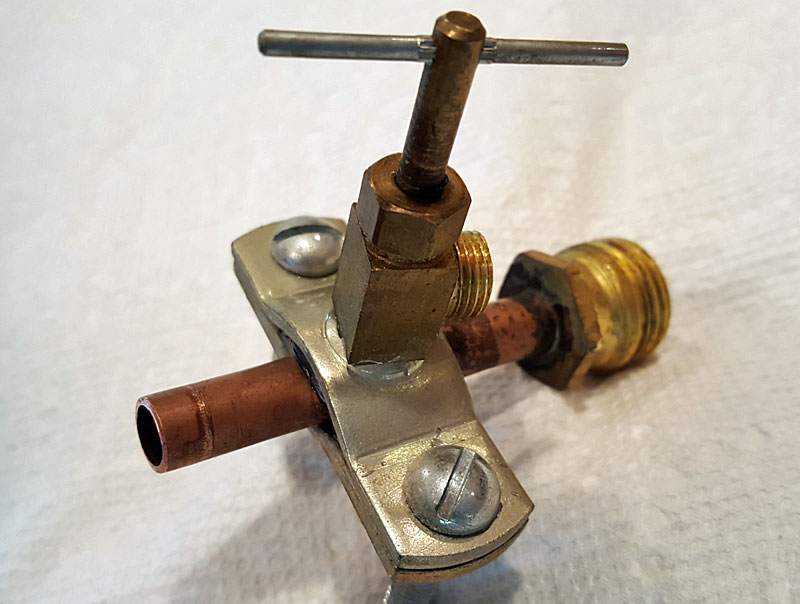
saddle-valve.jpg


Saddle valve
 
Last edited by a moderator:
Any ideas for a stopgap that would stop the drip? I need the lambs to stop screaming.


Gary Swart said:
Since you already know what the real answer is, I won't go into a diatribe about saddle valves. Is there a temporary stopgap? I don't know. You're free to try anything that comes to mind. At last resort, a big bucket until you can do the job right.
 
I'm not clear on what you refer to as a "cap" but I'm assuming you are talking about the nut around the valve stem. If so, you can take a shot at wrapping string around the valve stem (under the nut) and for good measure use some teflon tape or pipe dope on the threads. If you are talking about the cap being the part of the saddle that the valve is attached to then what has happened is that the rubber gasket has shifted or a bit out of alignment. You might be able to adjust it a little or replace it with a chunk of thick rubber (I've actually used a piece of bicycle inner tube before)... anything that works... creative engineering....
 
It seems to me you might spend more time monkeying with a temporary patch that may or may not hold than if you just cut the saddle valve out, and repair it right the first time. I hate so called temporary fixes, because they always seem to come back an bite me on the butt at the worst time possible.
 
Honestly, the one thing that everyone forgets to ask is: Is this saddle valve properly installed? I recently had a huge issue with one that I installed myself without knowing the facts first...

1. You MUST seal all the connections with teflon tape. This was my major mistake, and this can be easily corrected!
2. do NOT cheap out on the saddle valve, get the good one. if it's pre-existing then make sure the sections are properly sealed with teflon tape (with the main turned off).
3. Worst case: shut it completely off. if you turn it all the way regardless of teflon it should seal tight.

I'm no plumber, but I hope this helps other non plumbers who didn't know about tefloning every single joint!
 
If you do this job right, you don't need that worthless "Teflon" tape. You cut the supply line and solder a tee. Then solder a short piece of pipe into the tee, then a ball valve to that pipe. Then adapt the 1/2" ball valve to 1/4" tubing using compression fittings. The tubing goes to the ice maker. There is no such thing as a "good" saddle valve. They are intended for a novice DIY.
 
1. There are NO connections on a saddle valve the need, or are helped, with "teflon" tape.
2. There are FEW "good saddle valves" and the good ones, usually for a/c systems, are so expensive few people would use one.,
3. That is the ideal solution.
4, "Tefloning every single connection" is akin to "using silicone caulk on EVERY slip joint nut". Strictly amateur DIY procedures.

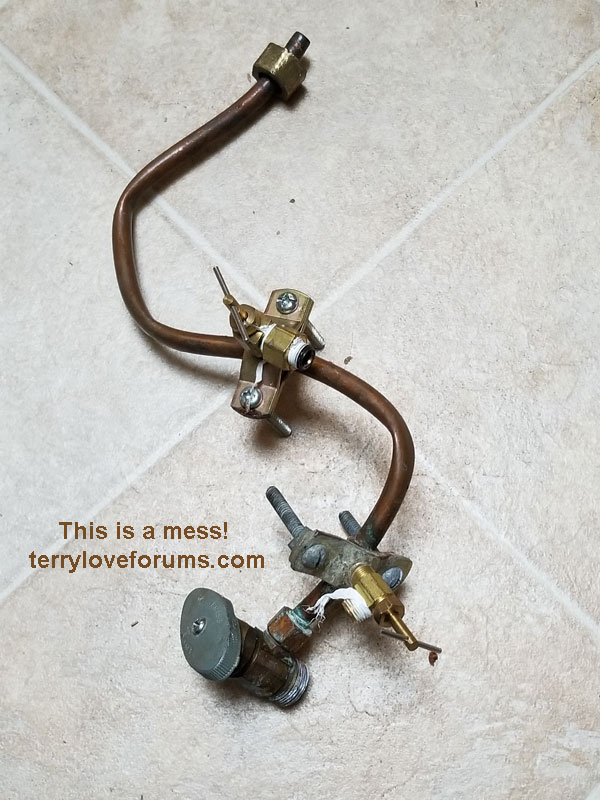
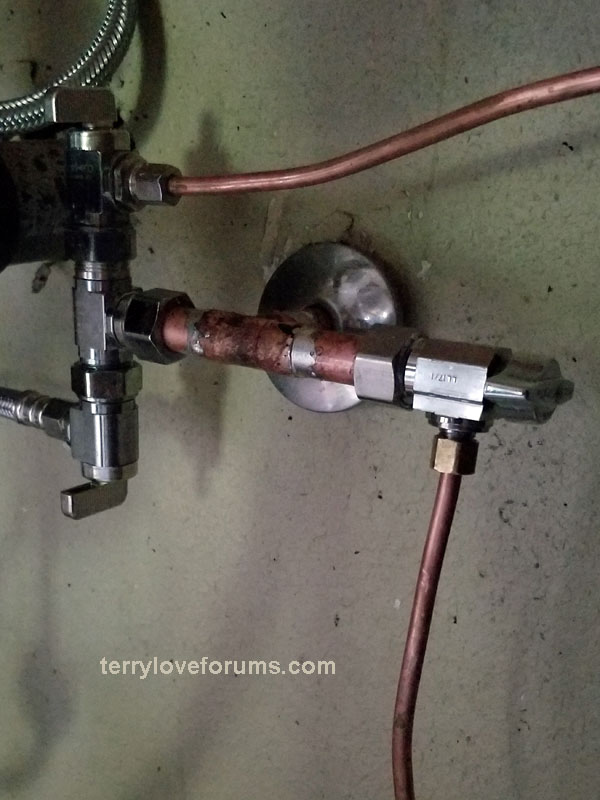
instant-hot-stop-2.jpg


instant-hot-stop-1.jpg
 
Last edited by a moderator:
Back
Top